


Nebraska online sports betting measures qualify for November ballot

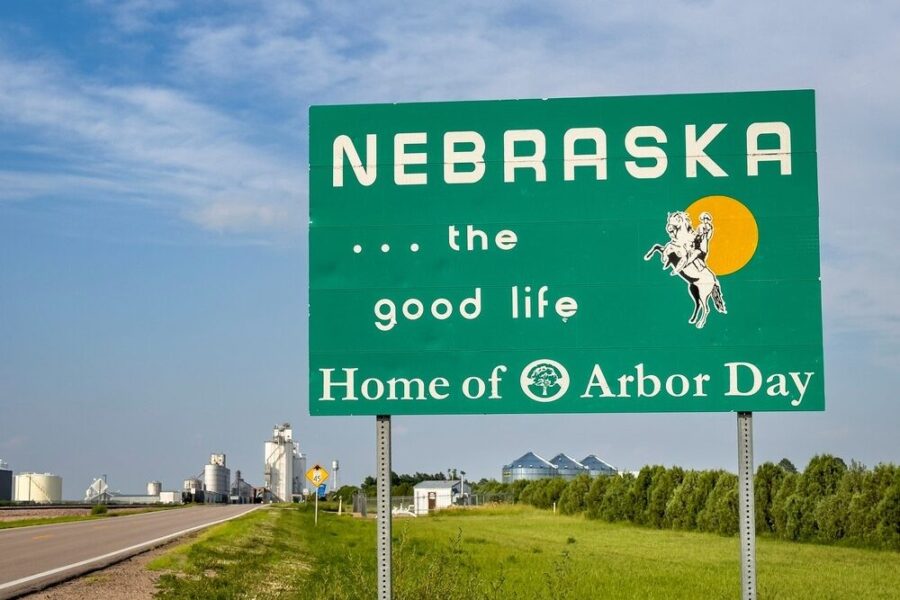
Two ballot measures aimed at regulating and legalizing online sports betting in Nebraska have secured a place on the state’s November election ballot.
According to the Nebraska Examiner, the Nebraska Secretary of State’s Office confirmed that the two petitions, backed by Tax Relief Nebraska, had secured enough valid signatures to proceed to the 3 November general election.

One measure would amend the Nebraska Constitution to authorize online sports betting through the state’s six licensed racetracks, while the other would amend three state laws to establish the rules governing the market.
Bettors and wagering servers would have to be physically located in Nebraska, while operators could offer up to two platforms at a time.
The constitutional amendments required at least 138,473 valid signatures, representing 10% of Nebraska’s electorate, while the proposed statutory measure needed 96,918 signatures, or 7%. Both petitions also required support from at least 5% of votes in 38 out of the state’s 93 counties.

If approved, the Nebraska Racing and Gaming Commission would have until 1 June next year to establish regulations for the new market.
“We are grateful to every Nebraskan who participated in the process and signed our petitions. We believe voters will agree that a legal and regulated online sports wagering marketplace will keep the money in Nebraska, generating new revenue for local communities and millions of dollars in property tax relief,” commented Jordan McGrain, a sponsor of the ballot measures.
The measures had previously faced concerns over potentially fraudulent signatures, with Lancaster County election officials having reported suspected irregularities to state authorities, although signatures identified as potentially fraudulent are not included in the valid totals.

The November vote could give Nebraska a new source of gambling-related tax revenue, with a Tax Relief Nebraska-commissioned report estimating around US$87 million over five years.
The proposals would allocate 70% of those funds to property tax relief.
Charlotte Capewell brings her passion for storytelling and expertise in writing, researching, and the gambling industry to every article she writes. Her specialties include the US gambling industry, regulator legislation, igaming, and more.

Dig Deeper
Related stories
 2026/08/19: Nebraska pushes for legalized online sports betting but petitions face fraud concerns
 2026/07/01: Campaign to legalize online sports betting in Nebraska gets 350,000 signatures
 2026/02/18: Nebraska online sports betting petitions approved for circulation
2026/04/15: Sportsbooks contributing millions to legalization campaign in Nebraska
2026/02/18: Nebraska online sports betting petitions approved for circulation
2026/04/15: Sportsbooks contributing millions to legalization campaign in Nebraska
2026/08/19: Nebraska pushes for legalized online sports betting but petitions face fraud concerns
2026/07/01: Campaign to legalize online sports betting in Nebraska gets 350,000 signatures
2026/02/18: Nebraska online sports betting petitions approved for circulation
2026/04/15: Sportsbooks contributing millions to legalization campaign in Nebraska
The Backstory
Ballot fight follows years of stalled legislation
Nebraska’s online sports betting debate has moved from the Legislature to the statewide ballot after repeated attempts to expand wagering beyond casino premises failed to clear the statehouse. Voters approved casino gambling in 2020, opening the door to retail sportsbooks at licensed racetracks, but mobile betting remained outside the law. That distinction has become the central issue for operators, racetrack casino interests and tax advocates who argue that the state is leaving money on the table while residents can cross borders or use offshore sites.
The current ballot qualification is the culmination of a petition strategy launched after legislative efforts stalled in 2024 and 2025. Earlier this year, Tax Relief Nebraska filed two measures designed to work together: one constitutional amendment to permit online wagering through licensed racetracks and one statutory initiative to set tax and regulatory rules. The measures were approved for circulation in February, giving supporters a narrow window to collect signatures across a state with both statewide and county-level thresholds.
The dual-track approach reflects Nebraska’s legal structure. Supporters need voter approval to expand the constitutional authorization for gambling, while also creating an operating framework for platforms, taxes and oversight. Without both pieces, the state could authorize online betting in principle without having the practical rules to launch the market.
Signature drive showed industry muscle
The petition campaign quickly became one of the most visible gambling expansion efforts in Nebraska since the 2020 casino vote. Tax Relief Nebraska gathered more than 350,000 signatures across the two petitions, according to earlier reporting, far above the raw minimums required before validation. The constitutional proposal drew more than 201,000 signatures, while the regulatory measure collected 146,000. Those totals gave the campaign a cushion against rejected signatures and county-level shortfalls.
The scale of the operation underscored how much national sportsbook companies and local casino interests have riding on the outcome. The campaign was backed by WarHorse Casinos, the Sports Betting Alliance and major operators including FanDuel and DraftKings. In the spring, disclosures showed that sportsbook operators were contributing millions to the legalization campaign, including more than US$1.1 million each from FanDuel and DraftKings to Tax Relief Nebraska in February and March.
Those contributions made clear that Nebraska, while smaller than many established online betting markets, remains strategically attractive. It sits in a region where mobile wagering has spread unevenly, and supporters say residents already encounter legal online options in neighboring states. The campaign’s pitch has focused less on gambling choice than on keeping activity and tax revenue inside Nebraska.
Property tax pitch anchors the campaign
Supporters have framed online sports betting as a property tax relief measure, a politically potent argument in a state where tax burdens are a recurring legislative issue. Under the proposal, online sports betting would be taxed at 20%, mirroring the rate on Nebraska’s land-based casino gambling. The plan would direct most proceeds toward property tax relief, with 70% of revenue allocated for that purpose and a smaller share set aside for responsible gambling programs.
That structure follows the model voters approved for casino gambling and is intended to make the online measure familiar to voters. A Tax Relief Nebraska-commissioned analysis by Eilers & Krejcik Gaming estimated the market could generate about US$87 million in state tax revenue over five years. Of that, roughly US$61 million would flow to property tax credits if the 70% allocation were applied. The estimate became a central part of the campaign, with supporters arguing that Nebraska is forgoing revenue that could support local communities.
Critics have challenged the scale of that benefit. State Sen. Brad von Gillern, chair of the Legislature’s Revenue Committee, has argued that the projected annual revenue would represent only a small fraction of Nebraska’s existing property tax program. As earlier coverage of the US$87 million revenue projection showed, the disagreement is not only over whether online sports betting should be legal, but whether it can deliver enough public benefit to justify expansion.
Fraud concerns tested the petition cushion
The campaign’s path to the ballot was not without complications. As county election officials reviewed signatures, Lancaster County Election Commissioner Todd Wiltgen reported concerns over potentially fraudulent signatures to the Nebraska Secretary of State’s Office and the county sheriff. The allegations introduced uncertainty into what had appeared to be a comfortable qualification effort and raised the possibility that invalid signatures could narrow the campaign’s margin.
Tax Relief Nebraska said it remained confident it had submitted enough valid signatures and said any wrongdoing by circulators should be prosecuted. That position reflected the practical reality of ballot campaigns: organizers often collect well above the legal minimum precisely because some signatures will be rejected during verification. In this case, the group’s large signature totals helped insulate the petitions from the effect of disputed entries.
The issue still matters politically. Opponents can use fraud concerns to question the credibility of the campaign, while supporters can point to the certification process as evidence that invalid names were excluded from the final count. The earlier report that the petitions faced fraud concerns foreshadowed a broader campaign dynamic: even if the measures cleared procedural hurdles, opponents were likely to scrutinize the industry-backed effort closely through Election Day.
Market design would favor racetrack partners
The proposals would tie online sports betting to Nebraska’s existing racetrack casino structure rather than creating a fully open licensing system. Licensed horse racing tracks would be allowed to partner with online operators, and each could offer up to two platforms. Bettors would have to be physically located in Nebraska, and wagering servers also would have to be within the state, a standard geolocation and infrastructure requirement in U.S. online betting markets.
That design gives Nebraska’s six licensed racetracks a central role as market gatekeepers. It also aligns with the political coalition that helped advance the petition campaign, including WarHorse Gaming and other casino interests. For national sportsbooks, the model offers a familiar route into the state: partner with an authorized land-based license holder, pay taxes and operate under racing and gaming commission rules.
If voters approve the measures, the Nebraska Racing and Gaming Commission would be responsible for writing regulations by June 1 next year. Those rules would determine the details that shape the market’s economics, including licensing procedures, technical controls, advertising standards and responsible gambling obligations. The ballot language provides the authorization, but the commission’s rulemaking would decide how quickly platforms can launch and how restrictive the operating environment becomes.
November vote could reset regional dynamics
Nebraska’s decision will be watched beyond its borders because the state sits in a competitive regional betting landscape. Supporters have argued that nearly every neighboring state already offers legal online sports betting, creating leakage when Nebraska residents cross state lines or when fans seek illegal alternatives. Legalization would not make Nebraska a large national market, but it would close a gap in the Midwest and give major operators another regulated foothold.
The stakes are also local. Approval would expand the gambling footprint voters authorized in 2020 and could deepen the relationship between racetrack casinos and national digital operators. Rejection would preserve the current retail-only model and likely send proponents back to the Legislature or a future ballot cycle. Given the money already spent and the industry’s strategic interest, a loss would probably delay rather than end the push.
The campaign began with more than 350,000 signatures submitted, moved through a verification process complicated by fraud allegations and now heads toward a statewide vote centered on tax relief, consumer protection and gambling expansion. The question for voters is whether the promise of regulated revenue outweighs concerns about broader access to betting on phones and computers. For operators and racetrack partners, the November ballot is the clearest path yet to turning Nebraska from a retail sports betting state into an online market.
