


NCAA sues DraftKings over March Madness trademarks

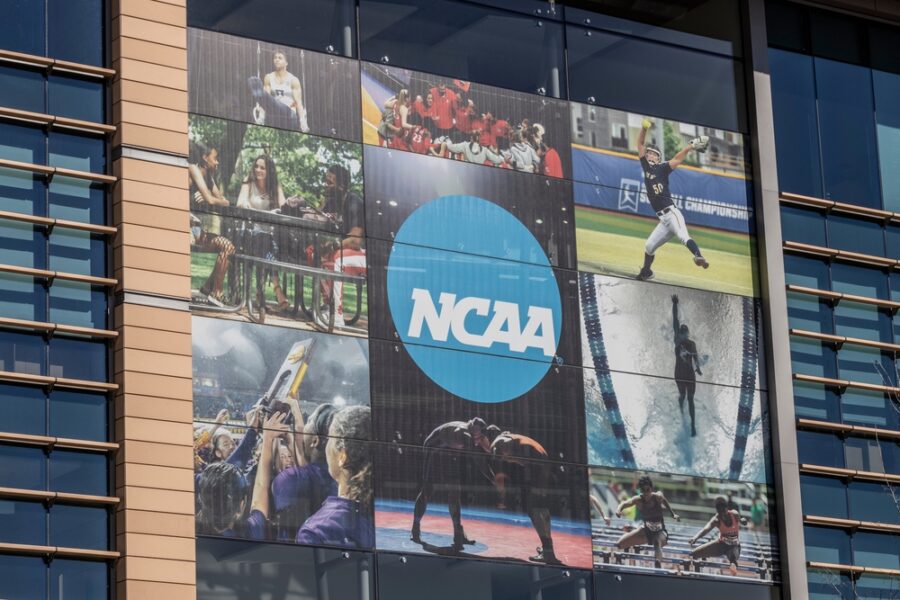
The NCAA has accused DraftKings of unauthorized use of some of its trademarks, including ‘March Madness,’ in online betting promotions.
The lawsuit, which was lodged in a federal court in Indiana on Friday, claims DraftKings used protected phrases tied to the NCAA’s men’s and women’s basketball tournaments.

This included the ‘Final Four,’ ‘Elite Eight,’ and ‘Sweet Sixteen,’ as well as other phrases that the NCAA argued were “confusingly similar.” According to the suit, all were used in a way that could mislead consumers into believing there is an official partnership between the two.
The NCAA added that it had deliberately avoided any association with gambling operators to preserve the integrity of college sports and protect its student-athletes.
The organization argues that DraftKings’ marketing undermines these principles, risks harm to its reputation and invites manipulation of its games by linking its events to betting activity.

There have been a number of high-profile gambling investigations into former NCAA men’s basketball players in relation to point shaving over the course of the last year. This previously led NCAA President Charlie Baker to call for a nationwide ban on individual player prop bets.
In comments to The Athletic, a DraftKings spokesperson said, “DraftKings does not use the term March Madness as a trademark, but rather uses it in plain text and as a fair use in the same manner that other tournaments are displayed, such as the NIT, in order to accurately identify the different tournaments and their respective games.”
Charlotte Capewell brings her passion for storytelling and expertise in writing, researching, and the gambling industry to every article she writes. Her specialties include the US gambling industry, regulator legislation, igaming, and more.

Dig Deeper
Related stories
 2026/03/30: Judge denies NCAA plea to stop DraftKings from using March Madness
2026/03/09: Men’s college basketball most wagered sport on Kalshi last month despite NCAA scrutiny
2026/03/30: Judge denies NCAA plea to stop DraftKings from using March Madness
2026/03/09: Men’s college basketball most wagered sport on Kalshi last month despite NCAA scrutiny
 2026/03/25: Kalshi hits March Madness record with US$800 million traded
 2025/03/14: American Gaming Association estimates legal wagers of US$3.1 billion during March Madness
2026/03/30: Judge denies NCAA plea to stop DraftKings from using March Madness
2026/03/09: Men’s college basketball most wagered sport on Kalshi last month despite NCAA scrutiny
2026/03/25: Kalshi hits March Madness record with US$800 million traded
2025/03/14: American Gaming Association estimates legal wagers of US$3.1 billion during March Madness
The Backstory
What set this clash in motion
The NCAA’s lawsuit against DraftKings over the use of “March Madness” and related tournament marks lands at the intersection of surging legal wagering, aggressive marketing and the association’s efforts to wall off college sports from direct gambling ties. The complaint argues that DraftKings’ promotions risk confusing consumers into believing an official tie to the NCAA’s men’s and women’s basketball tournaments. The filing comes after a year in which the NCAA pressed to curb certain bets and tightened integrity partnerships, even as regulated sportsbooks leaned on the tournament’s popularity to drive traffic and revenue.
The legal move follows a season of heightened attention on how sportsbooks present and advertise college-basketball wagering. Industry data shows the tournament has become one of the biggest legal betting events of the year. That scale amplifies any trademark or integrity dispute. It also sharpens the incentives for operators to differentiate offers in a crowded market, where brand recognition and timely promotions are critical.
Money momentum behind March Madness
Forecasts underscored the commercial gravity of the tournament ahead of tipoff. The American Gaming Association projected that fans could legally wager up to $3.1 billion on the men’s and women’s brackets this year, a 14.8% rise from 2024’s $2.7 billion. The trade group framed the growth as a function of expanding regulated markets and maturing consumer behavior. It paired the outlook with a responsible betting push that emphasized setting budgets and playing legally. Those initiatives were detailed in the AGA’s projection that legal wagers could reach $3.1 billion, reflecting the tournament’s outsize pull on the betting calendar.
Other indicators point in the same direction. In an advertising pulse check, the AGA cited Sensor Tower and Nielsen data showing that while overall sportsbook ad volume has eased from the 2021 peak, tournament season still concentrates attention and spend. The association flagged the rise of prediction market platforms and widening compliance gaps in digital promotions, illustrating how fast-growing and adjacent operators chase tournament eyeballs. Those findings were captured in a review of sports betting ad trends heading into March Madness, including a surge in impressions from prediction market brands and instances of missing responsible gaming disclosures.
Marketing edge, regulatory lines
That advertising backdrop helps explain why trademark boundaries matter. The NCAA alleges DraftKings’ promotions co-opted protected phrases such as “Final Four,” “Elite Eight” and “Sweet Sixteen,” creating a likelihood of confusion about sponsorship. DraftKings counters that it uses tournament names in plain text as fair use to identify events, not as trademarks. The dispute highlights a practical tension: operators want clear, timely references to games that drive engagement, while rights holders guard brand equity and policing obligations in a market where millions of dollars hinge on name recognition.
The regulatory context is also shifting. The AGA urged stricter adherence to state and tribal rules in digital ads, arguing that confidence in wagers starts with a compliant market. Its analysis warned that a material share of online betting impressions lacked required responsible gaming messaging, driven by the expanding footprint of prediction market ads. The association’s call for stricter compliance, outlined in its review of March Madness advertising, frames why rights owners and regulators may take a firmer line on how brands invoke marquee events.
Integrity and athlete protection at stake
The NCAA has tried to assert a firewall between its championships and commercial sportsbooks, while stepping up tools to protect athletes from gambling-related harm. In March, the association said that social media abuse tied to sports betting declined during this year’s tournaments, even as overall abuse trends diverged by gender. It credited monitoring partnerships and policy shifts, including restrictions on high-risk prop bets. Those efforts were detailed in the NCAA’s report that sports betting abuse toward athletes fell 23% across participants, with sharper drops on the women’s side.
The integrity narrative also stretches to consumer risks. Officials and cybersecurity experts warned that the tournament’s popularity creates a prime window for fraudsters to spin up unlicensed sites that mimic legitimate operators. The caution to stick with regulated brands and verify licensing echoed through advice issued as online betting scams rose during March Madness. For the NCAA, those concerns reinforce arguments that unauthorized or ambiguous branding around its events can confuse fans and expose them to harm.
DraftKings’ competitive calculus
For DraftKings, the legal battle lands amid a strong seasonal performance that underscores why the tournament is strategically pivotal. In New York, the company topped FanDuel in March revenue for the first time in 15 months. State figures show DraftKings grew winnings 28.3% while FanDuel fell 18.6%. Handle jumped 32% to $2.4 billion, with DraftKings edging FanDuel on share. Those results were captured in New York’s March report that March Madness lifted DraftKings past FanDuel, a shift that hints at how tournament-season marketing and product offers can swing market standings, at least temporarily.
That momentum raises the stakes of any constraints on how DraftKings can reference the NCAA’s events in promotions. Seasonally, the company and its rivals rely on clear event labeling and themed offers to convert casual fans. Any remedy that narrows those tools could ripple into acquisition costs and share battles in key states. Conversely, a court affirmation of fair-use parameters could codify how sportsbooks identify major events without crossing trademark lines.
What comes next
The case thrusts long-simmering friction into federal court: how to describe and monetize interest in a trademarked championship without implying endorsement. It arrives as the legal market matures, regulators tighten ad rules and the NCAA invests in athlete protections and data partnerships. Those threads suggest the outcome will resonate beyond one operator’s playbook. A negotiated settlement could define promotional guardrails ahead of the next tournament cycle. A broader ruling could set precedent on descriptive use of sports event names in betting contexts.
Either way, the incentives that brought the parties to this point will persist. The tournament remains a revenue catalyst for sportsbooks and a brand pillar for the NCAA. Advertising scrutiny is rising and fraud risks are evolving. Fans’ appetite to bet legally is growing, as the AGA’s projection of $3.1 billion in legal wagers suggests. That puts a premium on clarity — in how events are marketed, how athletes are protected and how consumers distinguish authorized partners from opportunistic lookalikes.
