


NCAA urges a ban on prop bets after new point shaving scandal

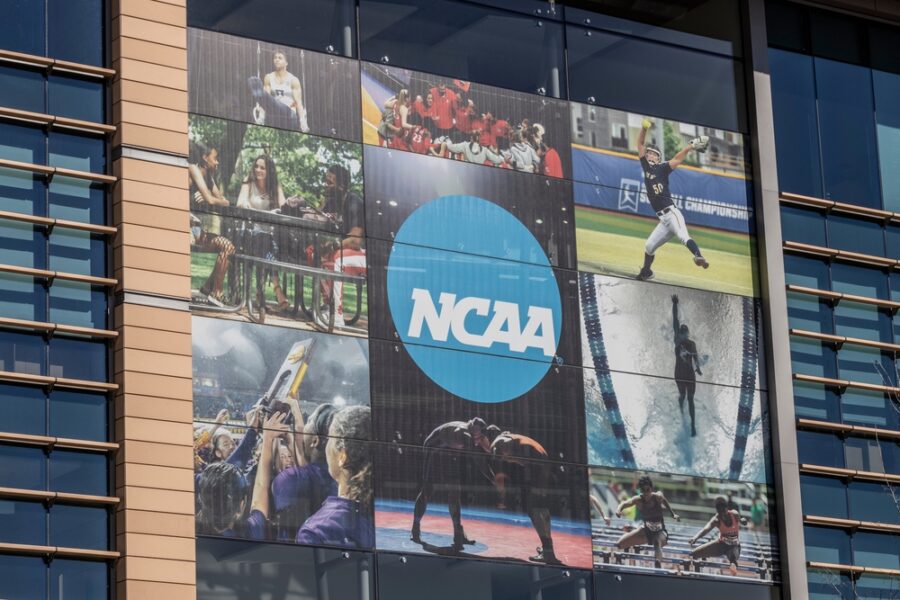
The NCAA has renewed its push for stronger restrictions on collegiate sports betting, urging state gambling regulators to eliminate individual proposition bets after news broke that 15 former NCAA players were involved in a gambling scandal.
Federal authorities charged 26 individuals with a point-shaving and bribery scheme in which athletes altered their performance so fixers could profit in sportsbooks by placing big bets. The indictment alleges that 39 players on more than 17 different NCAA Division I men’s basketball teams were involved.

NCAA President Charlie Baker sent letters Thursday to gambling commissions, highlighting concerns that prop bets pose threats to athlete welfare and competitive integrity.
In his statement, Baker said, “The Association has and will continue to aggressively pursue sports betting violations in college athletics using a layered integrity monitoring program that covers over 22,000 contests, but we still need the remaining states and regulators to eliminate threats to integrity to better protect athletes and leagues from integrity risks and predatory bettors.”
In addition to banning prop bets, Baker and the NCAA want tougher accountability for bettors who harass student-athletes or attempt to influence betting behavior, as well as a formal mechanism for the NCAA to provide input to regulators before certain betting markets are approved.

The statement also noted that Louisiana, Maryland, Ohio, and Vermont have all banned player prop bets on college sports, and that it hopes other states will follow suit in a positive direction.
This week, the NCAA has also called on the Commodity Futures Trading Commission to halt prediction markets on student-athletes until more safeguards are in place to protect athletes.
Charlotte Capewell brings her passion for storytelling and expertise in writing, researching, and the gambling industry to every article she writes. Her specialties include the US gambling industry, regulator legislation, igaming, and more.

Dig Deeper
Related stories

The Backstory
How the crackdown took shape
The NCAA’s latest push to curtail proposition bets in college sports did not happen in isolation. For more than a year, the association has been methodically tightening its stance while urging regulators to follow. After early warnings about harassment and integrity threats tied to player-specific markets, NCAA President Charlie Baker began to press for uniform limits state by state and discipline for bettors who target student-athletes. That campaign accelerated as lawmakers and regulators weighed narrower menus and integrity safeguards, setting the stage for the current call to eliminate individual prop bets following a major point-shaving case.
As state markets expanded, the NCAA leaned on data partnerships and monitoring to detect unusual activity, but it also looked to limit incentives that could make athletes targets. A key step came in the spring when the NCAA extended its agreement with Genius Sports and added a clause aimed at keeping certain markets off the board. The deal’s conditions signaled the NCAA’s broader shift: protect athletes from the most toxic bet types and push for rules that reduce direct financial pressure on individual performance.
Statehouses test the limits
One front in the policy debate runs through New Jersey, where a bill to outlaw player-specific prop bets on college sports advanced this year. The measure, SB 3080, passed a Senate committee with bipartisan support and received a second reading. Sponsors framed the bill as a response to mounting harassment of student-athletes and rising integrity concerns. If enacted, it would align New Jersey with states that already ban college player props while preserving broader wagering on game outcomes.
Ohio presents a different test. Gov. Mike DeWine urged the state’s casino control commission to remove prop bets in the wake of a probe involving two Cleveland Guardians pitchers. But the push met resistance from lawmakers who argue prop markets drive tax revenue and serve bettors who want granular action. Rep. Brian Stewart publicly opposed a ban, saying the state should keep the bets and restore college props that Ohio already bars. He cited strong receipts since launch while acknowledging the regulator is reviewing the matter. The clash, covered in reporting on Ohio’s split, captures a broader tension between consumer demand and integrity safeguards.
Massachusetts underscores another path: curbing in-play prop wagering to reduce compulsion and abuse. Sen. John Keenan introduced a broad package to restrict advertising during live games and prohibit in-game props, saying the state underestimated the societal costs when it legalized sports betting. The proposal, detailed in coverage of the Bettor Health Act, would also lift operator contributions to treatment programs. Massachusetts has collected substantial tax revenue since launch, but the bill argues the public health trade-offs are growing harder to ignore.
Data rules and “negative” markets
The NCAA’s attempt to choke off the most corrosive wagers is tied to its data pipeline. In an addendum to its long-term deal with Genius Sports, the association established limits intended to block “negative” prop markets that track a player’s failures or invite abuse. The condition, described in reporting on the extended Genius Sports pact, aims to starve sportsbooks of official data for bet types that correlate with harassment, particularly during high-profile events like March Madness.
The NCAA and athlete advocates point to a measurable surge in online abuse toward college players, with a disproportionate share aimed at women and a notable slice linked to betting chatter. Studies and internal surveys suggest heavy betting participation among young adults compounds the exposure. By limiting data access for negative props, the NCAA is leveraging a chokepoint. While operators can source unofficial feeds, official data remains a cornerstone for pricing, speed and integrity checks. Cutting supply raises friction for bookmakers considering such markets and strengthens the NCAA’s hand as it lobbies regulators.
Federal flashpoint: prediction markets
Beyond sportsbooks, the NCAA is pushing federal oversight of prediction markets that trade contracts tied to college sports. Baker asked the Commodity Futures Trading Commission to suspend these products until guardrails can be set, arguing they function as de facto betting without state-level consumer protections. The request, outlined in coverage of the CFTC appeal, follows legal wrangling over platforms like Kalshi, which operate under commodities law and have eyed college-related products such as transfer portal markets.
The NCAA’s concern is twofold. First, prediction markets could normalize trading in outcomes linked to amateur athletes, inviting similar integrity and harassment risks that have driven calls to curb props at sportsbooks. Second, the regulatory mismatch between federal commodities rules and state gambling frameworks could create gaps in monitoring and enforcement. By urging a pause, the NCAA seeks to avoid a scenario where college athletes become the center of a high-volume, lightly supervised market adjacent to sports betting.
Integrity stakes and the path ahead
The point-shaving case that spurred the latest NCAA warning crystallized the core risk: when the price of a single rebound, turnover or free throw is monetized, fixers can exploit small levers for outsize gains. Player-specific markets reduce the number of variables in play and can make manipulation harder to detect. The NCAA argues that integrity monitoring—while broader than ever—has limits if incentives remain misaligned.
State responses will likely stay fragmented. New Jersey’s bill targets college props but leaves pro player markets intact. Ohio is debating whether to step back from a popular category that delivers both engagement and revenue. Massachusetts is weighing a public-health-first approach that would cut into in-play options that drive time-on-app. Each route carries trade-offs: narrowing menus can push some bettors offshore, but a status quo risks another scandal and more athlete harassment.
The NCAA is trying to harmonize those choices with soft power. The Genius Sports clause pressures books via data access. The CFTC ask tries to block a parallel path that could recreate the same risks in a different wrapper. And continued outreach to regulators aims to give the NCAA a formal voice before markets launch.
The next phase will hinge on whether lawmakers accept the NCAA’s calculus that certain bet types are net harms. If more states follow New Jersey’s lead on college props or Massachusetts’s push on in-play wagers, sportsbooks will adjust menus and marketing. If Ohio’s resistance holds, a patchwork will persist, with athletes and compliance teams navigating different rules by state. What is clear after the latest charges is that prop bets remain a fault line between a fast-growing industry and the institutions trying to protect amateur sports.
