


MediaNug building creative systems that scale in gaming

As operators continue to invest heavily in paid media around igaming, sports betting, and social casino, the conversation is shifting toward what sustains performance over time. Channels are established, budgets are in place, and targeting capabilities are well understood. The constraint many teams are running into now is creative.
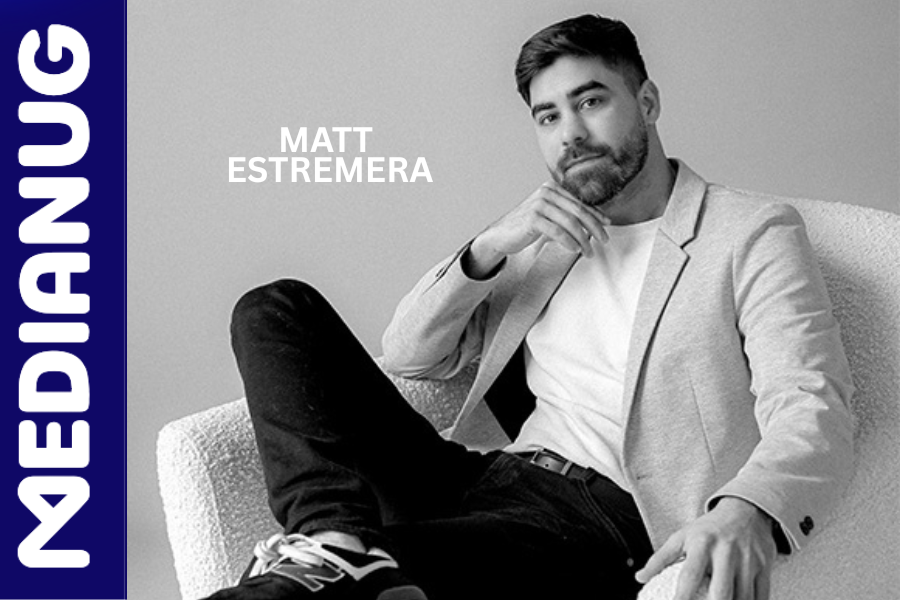
For Matt Estremera, Partner and Lead Creative Producer at MediaNug, that constraint shows up in output and process. His team focuses on developing performance-driven creative for paid social, working with brands that need to produce, test, and iterate content continuously.
“We develop creative from start to finish,” Estremera said. “That includes scripting, working with creators, and delivering content across platforms. The goal is to build something that performs in market, not just something that looks polished.”
That distinction shapes how MediaNug approaches its work. Creative is not treated as a one-time deliverable tied to a campaign. It is built as a system that supports ongoing testing and production, with formats and concepts evolving based on performance.
“The goal is to find your top-performing formats and expand on them,” Estremera said. “If something works, you build more around it. You test variations, different hooks, different creators, and keep refining from there.”
That approach reflects what is already happening across the category. Certain formats begin to repeat, not because of a lack of originality, but because they are producing results.
“You’ll see brands run multiple versions of the same format, because it’s working,” he said. “That’s performance guiding the creative direction.”
Maintaining that level of output introduces operational challenges, particularly within the regulatory environment that defines gaming marketing. Creative must move through internal approvals, legal review, and compliance checks before it can be launched and those timelines can limit how quickly teams respond to opportunities.
“I feel like we’re always working against the clock,” Estremera said. “You know when major events are coming, but briefs still come in late, and then you’re moving through approvals and revisions before anything goes live.”
Those constraints become more pronounced when creator-led content is involved. Coordinating talent, managing production, and ensuring compliance for multiple assets requires a level of infrastructure that many in-house teams are still building.
“Once you bring creators into the process, it becomes more complex,” he said. “There are more variables, and everything still has to meet regulatory standards. We manage that in-house, so content is ready before it goes through internal review.”
Understanding regulatory boundaries is a core part of that process. Messaging, disclaimers, and platform requirements all need to be accounted for during production rather than after the fact.
“You have to know what you can and can’t say from the beginning,” Estremera said. “If you don’t build that into the process, you’re going to slow things down later.”
From a performance standpoint, creative is closely tied to how efficiently media budgets are deployed. At higher levels of spend, underperforming assets limit scale, while strong creative allows campaigns to extend further.
“A lot of these brands are spending significant amounts on paid media every day,” he said. “If your creative performs well, you can scale faster and get more out of that investment.”
Beyond digital channels, Estremera pointed to localization as an area of opportunity, particularly for land-based operators.
“If you’re promoting a property in a specific region, the creative should reflect that,” he said. “People respond to what feels familiar to them.”
As more brands compete for the same audiences, differentiation is becoming less about broad messaging and more about execution. Creative that is clear, consistent, and aligned with the audience it is trying to reach is more likely to perform.
Estremera also emphasized the importance of building output outside of major campaign moments. While tentpole events continue to drive spikes in activity, sustained performance requires a steady pipeline of creative.
“Everyone focuses on big moments like major sporting events,” he said. “But what you’re doing in between those moments is just as important. That’s where you’re testing and learning what works.”
For MediaNug, that ongoing process is central to how they support operators. The focus is on building systems that allow teams to maintain production, adapt quickly, and continue improving over time.
“We’re there to help teams find what works and keep building on it,” Estremera said. “It’s about having a process that can keep delivering, not just one campaign that performs.”

Dig Deeper
Related stories
 2026/06/22: Investigation finds Polymarket paid creators to post staged videos: report
 2025/05/30: Beyond the spin: IGT focuses in on omnichannel
 2025/05/15: Omnichannel was the word salad at SBC Summit Americas, but AGS brought the receipts
 2026/06/26: Into the unknown with Light & Wonder’s New Markets guru
2026/06/22: Investigation finds Polymarket paid creators to post staged videos: report
2025/05/30: Beyond the spin: IGT focuses in on omnichannel
2025/05/15: Omnichannel was the word salad at SBC Summit Americas, but AGS brought the receipts
2026/06/26: Into the unknown with Light & Wonder’s New Markets guru
The Backstory
Why creative is now the constraint
Operators in igaming, sports betting and social casino have standardized their media buys, audience targeting and channel selection. As spend scales, the weak link has shifted from distribution to output. The market’s ceiling is increasingly defined by whether brands can sustain an always-on flow of testable, compliant assets that convert. That is the context in which performance shops have leaned into systems built for rapid iteration, creator-led formats and measurable lift across platforms. The goal is not a one-off campaign but a repeatable engine that finds winners, multiplies them and retires underperformers fast.
This creative bottleneck is not purely an execution problem. It is structural, tied to the regulatory cadence of gaming, fragmented compliance rules, platform guardrails and event-driven surges that compress timelines. When campaigns depend on creator pipelines, the pressure compounds. That has made prebuilt workflows, legal-aware scripting and modular formats table stakes. It has also raised the operational bar for in-house teams and partners that need to move at market speed without sacrificing approvals.
The pivot to systems thinking comes as operators face tighter competition for the same users and incremental gains rely on sharper messaging, localized nuance and persona-level relevance. In short, the returns now accrue to teams that can turn creative into an operating discipline rather than a deliverable.
Automation tests the edges of live casino
A parallel shift in product supply is reinforcing these creative demands. In live casino, software-driven alternatives are challenging studio capacity and staffing cycles that long constrained differentiation. Crypto casino BetHog’s move to spin its AI dealer technology into a B2B platform, Sentient Studios, is a case in point. Backed by a US$10 million Series A and a revenue share model with no setup fees or minimums, the company says early tests show its basic AI dealer outpulling human-led equivalents while improving retention and satisfaction. Read more in BetHog secures US$10 million to scale AI-dealer live casino feature.
If widely adopted, AI-hosted tables could scramble how operators plan inventory, language coverage and brand expression. Operators would gain control over capacity, launch cycles and persona design. That, in turn, would intensify the demand for agile creative systems that can seed, test and evolve branding around distinct dealer archetypes, seasonal themes and cohort-specific hooks. The feedback loop tightens: product can iterate faster, so creative must also iterate faster to capture the gains.
There are risk vectors too. As table experiences become more customizable, guardrails around claims, disclosures and responsible gaming prompts will need to be embedded upstream in production. That shifts compliance from a post-production hurdle to a design input, reinforcing the importance of process maturity for any team betting on AI-enabled experiences.
Policy whiplash in Southeast Asia resets digital bets
While technology expands what is possible, policy can narrow where it is viable. In the Philippines, shifting signals around online gambling have forced corporate strategy rewrites in real time. Lottery technology firm Pacific Online Systems Corporation initially stepped toward igaming via a 37.5% stake in HHR Philippines Inc., operator of a licensed icasino platform. But as government scrutiny mounted and officials weighed bans on certain categories of online operators, Pacific Online publicly reconsidered its commitment. The company framed the rethink as a response to uncertainty and potential policy changes. Details are in Pacific Online Systems Corporation reconsiders igaming plans.
That caution quickly hardened into a broader retrenchment. Pacific Online later disclosed a PHP280 million purchase of parent Belle Corp treasury shares while unwinding digital projects, including exiting its HHR stake and shelving an online lottery platform awarded by the national lottery authority. The company cited a regional clampdown on online betting and said it would redirect resources where the policy outlook is clearer. See Pacific Online Systems makes PHP280 million investment in Belle Corp shares.
The consequences land squarely on marketing operations. With launch timelines in flux or canceled outright, teams must recalibrate creative pipelines, redeploy spend and revisit localization strategies that assumed online channel growth. Creative systems built for flexibility have an edge here. They can scale down, pivot messages toward permissible products or geographies and preserve learnings for when markets reopen.
New openings raise the localization bar
Elsewhere, fresh licenses are pulling content and marketing playbooks into new jurisdictions with distinct tastes and regulatory requirements. Brazil’s rollout illustrates both the growth story and the operational ask. Online slots provider 3 Oaks Gaming secured approval from the Secretariat of Prizes and Bets, unlocking distribution of titles like Coin Volcano and 3 Hot Chillies with local partners such as Bet7K and F12.bet. The company has experience in Colombia and Mexico but labeled Brazil its top target as the market went live on Jan. 1, 2025. The company’s view on potential and its LatAm footprint are detailed in Brazillian regulator licenses 3 Oaks Gaming.
Brazil’s scale raises expectations around language nuance, cultural references, payment preferences and responsible gaming cues tuned to local norms. That places a premium on modular creative designed for rapid localization, creator networks with regional credibility and testing frameworks that can parse performance by microsegment. The operators and suppliers that win early typically pair aggressive distribution with disciplined, in-market creative iteration.
For brands balancing expansion in Brazil with caution in parts of Southeast Asia, the operational lesson is consistency of process rather than uniformity of message. A repeatable, compliance-aware creative engine lets teams port structure while swapping context. That is how global portfolios maintain pace as the regulatory map shifts.
People and process drive endurance
Amid technology flux and policy churn, talent remains the linchpin. The industry’s push to elevate operational craft — from data-literate marketers to producers fluent in legal, platform and creator workflows — shows up in who is getting recognized. Global Gaming Women’s latest “10 Women Rising in Gaming” highlights leaders reshaping communications, people operations and marketing strategy across suppliers and properties. The initiative, created to grow the pipeline of female leadership, underscores how adaptive skill sets and resilient networks sustain performance through cycles. Read the profile roundup in Global Gaming Women announces 10 Women Rising in Gaming.
Building durable creative systems is not just a tooling problem. It requires cross-functional leadership that can align legal, brand, analytics and production around short feedback loops and clear guardrails. It also requires organizations to reward testing discipline as much as breakout wins. The careers being celebrated reflect that shift from campaign heroics to operational excellence.
The stakes for media efficiency
As daily paid media budgets climb, the cost of subpar creative compounds. Underperforming assets cap efficient scale and waste bids. Strong creative not only lifts conversion but opens headroom to spend where it still clears return thresholds. In live casino, AI-driven format control may compress the time between idea and iteration, but only if the surrounding creative and compliance machinery can keep pace. In volatile policy environments, the same machinery enables rapid pivots without losing the thread of what works.
The through line is operational maturity. Markets like Brazil invite speed, while markets like the Philippines demand caution. Product innovation from AI dealers to localized slots is expanding canvas and complexity. The winners are likely to be those that treat creative as an evolving system — grounded in performance data, built for localization, resilient to regulatory change and led by teams that can translate constraints into repeatable process. The rest will keep spending more to learn what disciplined operators already know.
