


DigiPlus considering claim for Brazil license fee refund “and other fees paid”


Philippine Stock Exchange-listed DigiPlus Interactive Corp. is looking into whether it can recoup the fees it paid to get its gaming license in Brazil, after the country provisionally banned fixed-odds betting.
In a filing to the exchange in response to a media article, DigiPlus indicated that “the Company is assessing all available legal remedies, including whether to file an administrative claim for a refund of the license fees and other fees paid.”

DigiPlus had announced in December of 2024 that its Brazil subsidiary had paid the BRL30 million (US$5.2 million)1 BRL = 0.1718 USD
2026-11-26Powered by CMG CurrenShift license fee required of all operators, while DigiPlus’ board had approved a PHP660 million (US$10 million)1 PHP = 0.0157 USD
2026-11-26Powered by CMG CurrenShift funding allocation to enter the market.
The exchange filing comes after a 25 November report claiming that a DigiPlus executive had said the company was “focused on clawing back its license fee.”
However, DigiPlus, like all operators in the jurisdiction, is likely holding out hope that Brazil’s National Congress could reverse the decision implemented by President Luiz Inácio Lula da Silva, who in October won his fourth term.

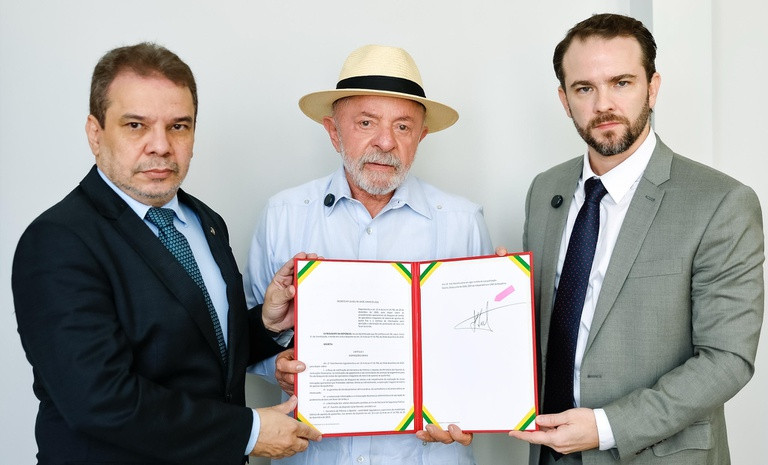
In its clarification, the company notes that “On or before the March 4, 2027 deadline, the National Congress must review the Provisional Measure, and may approve it in full, amend it, or reject it.”
The group furthers that, if the National Congress doesn’t approve the measure before the 4 March date, “the Provisional Measure ceases to be valid.” In further hints at its hopes for reversal of the ban, DigiPlus noted that “The Provisional Measure is also being challenged before the Brazil Federal Supreme Court.”
Uncertainty

Some 99 amendments to the provisional ban were proposed by lawmakers, many of which supported the ongoing ban of online casinos but left open the possibility for sports betting.
The committee that will need to review the proposed amendments has not yet been installed.
Despite the uncertainty regarding a possible recoup of its investment, or the chance for it to successfully operate in Brazil, DigiPlus “maintains that these developments are not expected to have a material impact on DigiPlus’ overall financial or operating position.”
For the third quarter of this year, DigiPlus registered a loss of PHP947.58 million (US$14.9 million)1 PHP = 0.0157 USD
2026-11-26Powered by CMG CurrenShift, compared to a profit of PHP1.71 billion (US$26.8 million)1 PHP = 0.0157 USD
2026-11-26Powered by CMG CurrenShift in 3Q25. Despite this, EBITDA was up by nearly 40% yearly to nearly PHP2.85 billion (US$44.7 million)1 PHP = 0.0157 USD
2026-11-26Powered by CMG CurrenShift. The figure was impacted by a PHP4.52 billion (US$70.9 million)1 PHP = 0.0157 USD
2026-11-26Powered by CMG CurrenShift loss on financial assets, partially related to its investment in LaVie Resort & Casino, its venture into land-based gaming.
The company never officially reported any revenue from Brazil in its quarterly results.
The Brazilian government has indicated that it is not planning to refund any of the license fees for the 85 licenses. However, two companies were allowed to continue operating after the ban: Stake Brazil and CDA Group (Casa de Apostas). Despite winning their appeals, both companies’ Brazil operations were suspended by the court within days of winning their appeals to continue operating.

Dig Deeper
Related stories
 2026/09/27: Brazil bans all sports betting and online casino gaming
 2026/08/25: Total Philippines gambling ad ban seen handing market back to illegal operators, data from five countries show
 2026/04/17: Philippine online gaming surpasses land-based casinos as largest revenue source
 2026/09/28: DigiPlus complying with Brazil provisional igaming ban, says situation is “not final”
2026/09/27: Brazil bans all sports betting and online casino gaming
2026/08/25: Total Philippines gambling ad ban seen handing market back to illegal operators, data from five countries show
2026/04/17: Philippine online gaming surpasses land-based casinos as largest revenue source
2026/09/28: DigiPlus complying with Brazil provisional igaming ban, says situation is “not final”
The Backstory
Brazil’s abrupt reversal left licensed operators stranded
DigiPlus Interactive Corp.’s review of possible claims for a Brazil license fee refund follows one of the sharpest regulatory reversals to hit a newly opened gambling market. Brazil had spent years moving toward a federal fixed-odds betting system, with licensed operators paying BRL30 million for five-year authorizations and preparing to operate under the Ministry of Finance’s Secretariat of Prizes and Betting. The market formally opened Jan. 1, 2025, offering international and local companies a path into one of the world’s largest consumer economies.
That framework was upended when President Luiz Inácio Lula da Silva signed Provisional Measure 1,394, which banned sports betting and online casino gaming nationwide. The measure took effect on publication Sept. 25 and barred licensed platforms from taking new bets or deposits. Operators were required to keep systems open only long enough for customers to withdraw funds, then make websites and apps inaccessible in Brazil from Oct. 6.
The measure also sought to extinguish the economic value of authorizations already granted. It stated that existing concessions, permits and authorizations would expire 30 days after publication and that operators would not be entitled to recover all or part of authorization fees or receive compensation for the closure of the market. That clause is central to the dispute now facing DigiPlus and other licensees: companies paid for legal market access only to be told the market would close before they could build scale.
DigiPlus had positioned Brazil as its first major overseas test
For DigiPlus, Brazil was more than a passive license investment. The Philippine-listed operator had announced in December 2024 that its Brazilian subsidiary paid the BRL30 million license fee required of operators. Its board also approved a PHP660 million funding allocation to support entry into the market. The company subsequently launched its BingoPlus brand in Brazil and joined the Brazilian Institute for Responsible Gaming, signaling an intent to operate within the new federal regime rather than test the market from offshore.
After the ban was announced, DigiPlus said it was complying with the government’s directive while emphasizing that the outcome was not settled. In an earlier statement, the company said the Brazil situation remained “fluid and is not final”. It said its immediate priority was processing withdrawals and returning customer funds within the prescribed timeline, while continuing to monitor legislative and legal developments.
That response reflected the narrow room licensed operators had once the provisional measure took effect. Companies could not continue taking bets while awaiting court or congressional review. They also had to preserve regulatory credibility by complying with wind-down obligations, even as they assessed whether the government could lawfully strip away paid authorizations without reimbursement.
DigiPlus has repeatedly said the Brazil developments are not expected to have a material effect on its overall financial or operating position. That position is helped by the fact that the company had not reported Brazil revenue in its quarterly results. Still, the dispute matters because it tests whether licensees can rely on regulatory commitments in emerging gambling markets and whether the cost of market entry can become unrecoverable political risk.
Legal pressure has moved to Congress and the Supreme Court
Brazil’s provisional measures carry immediate force but are not permanent unless Congress approves them. The measure at issue has an initial 60-day validity period that can be extended by another 60 days. If lawmakers do not approve it within the required period, it lapses. In DigiPlus’ exchange filings, the company pointed to a March 4, 2027 deadline for congressional review, saying lawmakers may approve the measure in full, amend it or reject it.
That legislative process has become the main route for the industry to salvage some form of regulated betting. Lawmakers have proposed dozens of amendments, including options that could maintain restrictions on online casino games while leaving room for sports betting. The committee that must examine those amendments had not yet been installed, leaving operators in a holding pattern.
The court challenge is moving in parallel. The National Association of Games and Lotteries and the Brazilian Institute of Responsible Gaming asked the Supreme Federal Court to suspend the ban’s effects until Congress acts. Their petition to Brazil’s Supreme Court argues that the government lacked the constitutional urgency required to use a provisional measure and that the decree undermines the regulatory model Congress approved in 2023.
The associations also put license fees and sunk investment at the center of the case. Because each operator paid BRL30 million for a five-year authorization running to the end of 2029, the ban raises questions over reimbursement and compensation. DigiPlus’ own review of administrative remedies sits within that broader challenge: even if the market is not reopened, operators may seek to establish that the state cannot retain the full price of licenses it made unusable.
The fee fight highlights a wider channelization risk
The Brazil dispute is not only about refunds. It also revives a broader argument over prohibition and channelization, the regulatory strategy of steering bettors from illegal operators into licensed platforms that verify customers, pay taxes and follow responsible-gaming rules. Industry groups warned before the ban that demand would not disappear if legal websites closed. It would move to unlicensed platforms beyond the reach of Brazil’s consumer protections, tax collection and advertising controls.
That concern mirrors debates in the Philippines, where DigiPlus is one of the most prominent licensed online gaming operators. Philippine policymakers are weighing restrictions on gambling promotion, and market participants have argued that a total advertising ban could hand traffic back to offshore sites. A recent analysis of proposed Philippine legislation said total gambling ad bans can strengthen illegal operators by silencing licensed brands while unlicensed sites continue to market through digital channels.
Brazil’s measure goes further than an advertising ban by shutting licensed fixed-odds betting outright. But the policy tension is similar. The state can remove licensed supply from public view, yet it cannot easily eliminate offshore demand or block every replacement domain. Brazil already had a significant illegal-market challenge before the ban, with tens of thousands of unauthorized betting domains blocked between January 2025 and September 2026. The government’s new enforcement committee is intended to coordinate action against illegal operators, but blocking and payment restrictions have historically struggled to keep pace with mirror sites and informal marketing networks.
For investors and operators, the channelization question affects expected returns. A license is valuable only if it grants durable access to customers under enforceable rules. If governments can close a market after collecting large upfront fees, the risk premium for future regulated launches rises. Operators may demand clearer compensation clauses, stage-gated license payments or stronger judicial protections before committing capital.
DigiPlus faces Brazil uncertainty while investors press for capital discipline
The Brazil episode comes as DigiPlus is managing other pressures. The company reported a third-quarter loss after a large financial-asset charge linked partly to its LaVie Resort & Casino investment, even as EBITDA rose sharply year on year. In the Philippines, licensed online operators also have faced tighter rules on payments, advertising and player access, including measures that disrupted transaction flows and weighed on the broader sector.
Those pressures have fed investor scrutiny over capital allocation. A DigiPlus shareholder recently urged the board to pursue a substantial buyback, arguing that the company’s valuation was disconnected from its cash generation and market position. The letter from Juroszek family investment foundations called for a substantial DigiPlus share repurchase, saying buybacks at current prices would be more value-accretive than other uses of capital.
That argument gives the Brazil refund question additional relevance. While DigiPlus says Brazil is not material to its overall position, any recovered license fee or related payment would return capital from a stalled expansion into a business where investors are urging discipline. Conversely, a failed recovery would underline the cost of entering politically volatile markets and could strengthen the case for focusing cash on core operations or shareholder returns.
The stakes now depend on institutions outside DigiPlus’ control. Congress could reject or amend the provisional measure, the Supreme Court could suspend it or the government could prevail and keep the ban intact without refunds. Until then, DigiPlus’ legal review is both a defensive financial step and a signal to other jurisdictions: operators that paid for regulated access may accept tougher oversight, but they are unlikely to absorb the full cost of a market closure without challenge.