


Investor urges DigiPlus to launch substantial share repurchase due to “absurd” valuation of shares

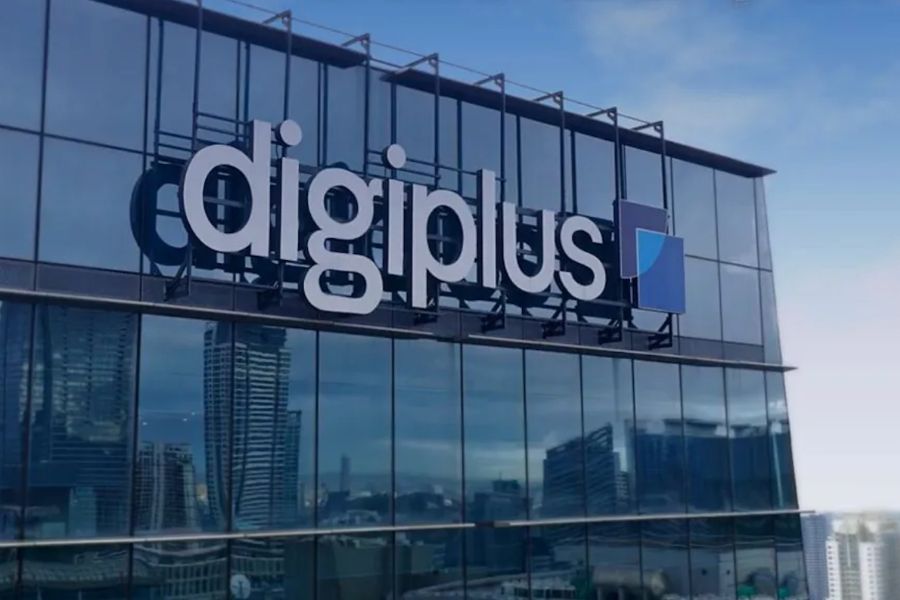
A shareholder of Philippines online gaming giant DigiPlus Interactive Corp has penned an open letter to the company’s Board of Directors urging it to embark on a substantial share repurchase drive in order to capitalize on the current low valuation of its shares.
The letter, signed by Tomasz Juroszek on behalf of Juroszek family investment foundations Betplay Capital Foundation, ZJ Foundation and MJ Foundation – which hold a combined 1.4% stake in DigiPlus – outlines the investment group’s belief that a substantial share repurchase would be the “single most value-accretive action available to DigiPlus today.” Such investment should be “executed consistently at current prices, funded from the company’s own cash generation and, where sensible, in place of deferrable capital expenditure,” it goes on to state.

According to Juroszek, this view is based both on the current valuation of DigiPlus shares and its belief in the company’s product, competitive position and economics.
On valuation, the letter states that the investor’s detailed analysis comparing DigiPlus with the “global universe of listed B2C gaming operators” found that DigiPlus currently trades as the lowest-valued B2C operator in the entire peer group “across every major valuation metric, and by a wide margin.” Specifically, it observes that DigiPlus trades at 2.4x on an EV/EBITDA basis, representing roughly a third of the peer median, yet offers 32% on free cash flow yield, making it the highest in the entire peer group and more than six times the peer median of roughly 5%.
The current valuation, Juroszek argues, cannot be explained by fundamentals, growth, balance sheet or cash but is instead a pure sentiment discount. “And sentiment discounts do not last,” he writes, adding, “What the market has done to the valuation in the meantime is, in our view, simply absurd.”

“The shares are so far below any reasonable estimate of fair value that buying them back is worth more to shareholders than any other use of that capital we can identify.”
Facing the headwinds
According to the investment group, DigiPlus remains a “heavily tested but fundamentally intact business” that is well-positioned to ride out prevailing headwinds.

“We are fully aware that the past 12 months have tested the company severely,” the letter states. “The delinking of e-wallet in-app access from licensed online gaming platforms disrupted user activity and transaction flows through 2025 and created an exceptionally demanding comparison base, while 2026 opened with an external macro shock, as the war in Iran triggered a global fuel crisis and tempered consumer sentiment across the region. It is important to stress that neither of these headwinds reflects any deterioration in the competitive position, the product or the economics of DigiPlus itself.
“The company has responded exactly as a market leader should: adapting its payments ecosystem, reducing reliance on third-party access points and continuing to expand its offering. Revenue has already stabilized sequentially, the balance sheet remains a fortress with over Php20 billion (US$325 million)1 PHP = 0.0163 USD
2026-07-06Powered by CMG CurrenShift of cash and virtually no debt, and as these transitory pressures normalize, we expect the return to growth in 2027 to bring the company’s trading multiples back towards industry standards.”
The letter describes the Juroszek family investment foundations as investors strictly connected with the igaming sector and with “deep experience” on both the operating and investment sides of the industry. Betplay Capital, it explains, is an investment fund dedicated exclusively to the global gaming and digital entertainment sector.
The group currently holds 1.4% of DigiPlus but noted that it continues to increase its position at current prices.

Dig Deeper
Related stories
 2026/07/09: DigiPlus approves new US$87 million Share Buy-Back Program in wake of shareholder encouragement
 2025/02/27: Philippine gaming technology firm DigiPlus setting up Singapore office to drive global expansion
 2025/05/06: DigiPlus Interactive launches global hub in Singapore
 2025/07/02: DigiPlus announces Brazil launch for September
2026/07/09: DigiPlus approves new US$87 million Share Buy-Back Program in wake of shareholder encouragement
2025/02/27: Philippine gaming technology firm DigiPlus setting up Singapore office to drive global expansion
2025/05/06: DigiPlus Interactive launches global hub in Singapore
2025/07/02: DigiPlus announces Brazil launch for September
The Backstory
A valuation fight after a year of disruption
The pressure on DigiPlus Interactive Corp. to buy back stock is rooted in a sharp disconnect between its operating scale and the market’s view of its prospects. The Philippine online gaming operator has remained profitable, cash-generative and dominant in its home market, yet its shares have been marked down after a series of regulatory and macroeconomic shocks. That gap has now drawn a public challenge from an investor that says the company’s own balance sheet should be used to address what it calls an untenable valuation.
The investor letter comes after a difficult stretch in which DigiPlus had to rewire parts of its payments ecosystem, protect its higher-value users and defend confidence in a business that had previously been rewarded for rapid growth. The company’s current position is therefore not only about whether management sees value in its shares. It is about whether investors believe the disruption is temporary or evidence that the economics of Philippine online gaming have changed.
DigiPlus has argued consistently that the core business remains intact. Its critics in the market have focused on the immediate effects of lower activity, weaker transaction flows and slower user migration after payment changes. The proposed repurchase campaign sits between those two readings: If the company is right, buying shares at depressed levels could amplify future returns. If the market is right, conserving cash may look more prudent.
E-wallet rules changed the growth equation
The main operational shock began with government-backed efforts to separate online gaming access from widely used mobile wallets. DigiPlus President Andy Tsui said the delinking took effect in mid-August and forced the company to redirect users toward its own websites and applications. The move disrupted a channel that had helped make online gaming transactions fast and familiar for customers, creating a sudden test of loyalty and platform stickiness.
By the time the company outlined a recovery plan, DigiPlus was already emphasizing retention over broad acquisition. It said more than half of users had shifted to its own digital channels, while the company worked to bring back long-term, high-value customers. That strategy, described in its effort to recover its user base after the e-wallet setback, showed how a regulatory change quickly became a customer behavior problem.
The payment issue also became a capital markets problem. Investors could see that revenue had not disappeared but had become less frictionless. The transition required more user education, broader payment coverage and tighter control over compliance. For a company whose valuation had depended on fast digital adoption, even a temporary slowdown was enough to compress expectations.
DigiPlus responded by broadening payment options through physical and alternative channels. It added partnerships, including with Bayad Center and later with Pay&Go, to reduce reliance on any single e-wallet pathway. The company’s Pay&Go partnership for e-wallet top-ups gave BingoPlus users access to more than 3,500 kiosks nationwide, with planned expansion to ArenaPlus and GameZone. The shift was defensive but also strategic: More payment routes could make the business less vulnerable to future regulatory adjustments.
Weak earnings sharpened the debate
The consequences of the payment disruption showed up in the numbers. DigiPlus reported that first-quarter 2026 net income fell 33% from a year earlier to PHP2.8 billion, while revenue declined 25% to PHP17.2 billion. EBITDA dropped 42%. The company attributed the performance to payment-channel restrictions that reduced user activity and transaction volumes after major e-wallet providers delinked from gambling operators.
That disclosure, covered in the company’s first-quarter earnings decline tied to regulatory and global factors, helped explain why investors became more cautious. A high-growth online gaming company can absorb a single weak quarter if the market believes the cause is temporary. But when the weakness follows a structural rule change, investors tend to demand proof that revenue can recover without the old distribution channel.
DigiPlus tried to separate short-term softness from long-term fundamentals. Chairman Eusebio Tanco said the business remained on a long-term growth trajectory as it adapted its payments ecosystem, strengthened engagement and maintained a focus on responsible digital entertainment. The company also noted sequential stability, with quarterly revenue broadly consistent with the prior quarter and net income up 15%, supported in part by gains from financial investments.
Still, the year-on-year decline gave bears an argument that the online gaming market had become more expensive to serve. More direct channels may improve control, but they can require additional marketing, product work and payments integration. That is why the investor’s call for a buyback is consequential: It asks DigiPlus to prioritize share repurchases over some deferrable capital spending at a time when the company is still adapting its operating model.
Insiders and management signaled confidence
Before the investor letter, DigiPlus had already received a public vote of confidence from its chairman. Tanco bought 63.1 million additional shares, increasing his stake while the company was navigating weaker earnings and regulatory headwinds. The purchase was framed as a sign of belief in DigiPlus’ expansion prospects in the Philippines and abroad.
The chairman’s 63.1 million-share purchase mattered because it aligned insider behavior with management’s message that the downturn did not reflect a broken business. DigiPlus had reported PHP66.8 billion in revenue for the first nine months of 2025, up 30%, and net income of PHP10.1 billion, up 16%, despite a weak third quarter. Those figures gave management a basis to argue that the company’s trajectory had not been erased by the payment disruption.
The broader growth agenda also remained in place. DigiPlus was investing in research and development, gaming products and player protection, while exploring overseas markets. It applied for licenses in South Africa’s Western Cape and planned a Brazil launch after postponing its earlier timetable. International expansion offers a way to reduce dependence on the Philippine regulatory cycle, though it also requires capital and execution in unfamiliar markets.
That creates a tension at the heart of the buyback request. A large repurchase would tell the market that management views its shares as the best available investment. But DigiPlus is also building new payment infrastructure, strengthening compliance and pursuing expansion. The question is not whether the company has cash. It is whether the highest-return use of that cash is internal growth, overseas optionality or buying back stock at distressed multiples.
Regulation is becoming part of the investment case
The Philippine market is moving toward more formal oversight of online gaming, making regulation central to how investors value operators. Payment controls, advertising rules and player-protection measures are no longer peripheral risks. They shape access, conversion, retention and margins. DigiPlus has said it is in discussions with regulators and lawmakers on potential reforms, including stricter controls on payments and advertising.
The wider ecosystem is also professionalizing. Gaming Laboratories International became the first gaming testing company accredited as an Independent Testing Laboratory by PAGCOR, with a focus that its Asia-Pacific leadership said was strongly skewed toward iGaming. That development, noted in Inside Asian Gaming’s coverage of CVC’s completed investment in GLI and its Philippine regulatory role, points to a market where technical standards and certification will play a bigger role.
For DigiPlus, tighter oversight is a double-edged force. It can raise compliance costs and disrupt legacy channels, as the e-wallet delinking showed. But it can also entrench licensed operators with scale, audited systems and the capacity to work with regulators. Smaller or less compliant competitors may find the market harder to navigate. That is one reason the investor letter argues the company’s competitive position and economics have not deteriorated even if sentiment has.
The stakes are therefore larger than a single repurchase decision. DigiPlus is being tested on capital allocation, regulatory adaptation and investor communication at the same time. A buyback could help reset market confidence if operating results stabilize and cash generation remains strong. But the durability of any rerating will depend on whether the company proves that users can be retained, payments can be diversified and growth can resume under a more demanding regulatory framework.
