


CVC completes investment into global gaming test lab GLI


CVC Strategic Opportunities, the investment platform of New Jersey-based private equity firm CVC Capital Partners, has completed the acquisition of a controlling stake in Gaming Laboratories International (GLI) in what the companies are describing as a “strategic partnership to support GLI’s continued growth and long-term development.”
GLI, an international test lab covering both online and land-based gaming across over 710 jurisdictions globally, said the investment by CVC will provide resources and expertise to enhance the capabilities and growth prospects of the company.

Talks between the two entities were first made public in July 2025 via antitrust filings lodged in Austria and Malta, which revealed the intention of CVC to acquire “more than 50% of the shares in and sole control over” GLI and its entities.

GLI’s CEO James Maida told this media group in October that, although the deal would provide financial security and greater expansion opportunities, the day-to-day leadership of the company and relationships within the industry would not change.
In announcing completion of the deal overnight, Maida added, “We are truly excited and honored to welcome CVC as a strategic investment partner. CVC shares our vision, values and long-term commitment to the global gaming industry. This partnership creates new opportunities for growth and innovation, allowing GLI to invest even more in the success of the future of the global gaming industry as well as investing in related and adjacent sectors. Our leadership, values, and culture focused on customer service remain unchanged. I will continue as CEO and our leadership team remains intact. Together we will stay focused on quality, speed and the customer experience while continuing to drive innovation and outstanding service worldwide.”

Matt Turner, Partner at CVC and GLI Board Member, added, “Within CVC Strategic Opportunities, we seek to partner with exceptional businesses that have histories of consistent success, strong market positions and significant long-term growth potential. GLI fits perfectly with that approach, as over nearly 40 years James and Paul have built GLI into the clear leader in its industry. The company plays a critical role in the global regulated gaming ecosystem and has established itself as a trusted partner to regulators, operators and suppliers around the world. This positions the business extremely well for continued growth, and we are looking forward to working alongside James and the talented team at GLI to support the company’s future success.”
New opportunities in Asia
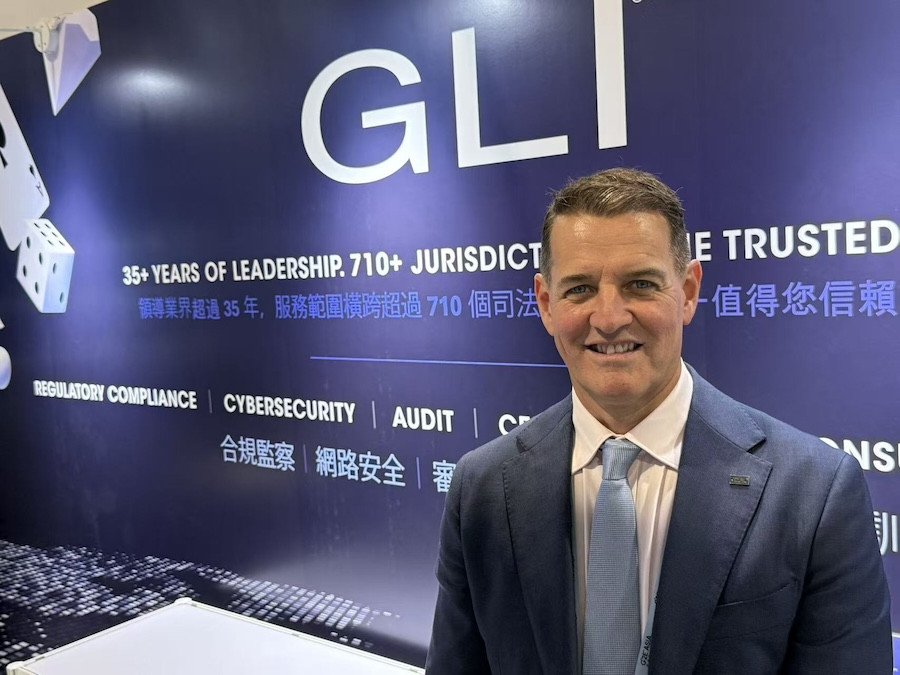
GLI’s recent moves in Asia include becoming the first gaming testing company to achieve accreditation as an Independent Testing Laboratory (ITL) by Philippine gaming regulator PAGCOR.

The accreditation covers all of the company’s platforms, although GLI’s Managing Director Asia-Pacific, Richard Howarth, recently told Complete iGaming that its Philippines focus was “very strongly skewed towards iGaming.”
As such, Howarth explained, GLI will work side-by-side with PAGCOR in growing the Philippines’ regulated online gaming industry.
While GLI is already well-embedded in the Philippines, Howarth said that gaining ITL accreditation at a time when PAGCOR is enhancing its oversight of the online industry opens plenty of doors.

“As far as having and operating a regulated market, [accreditation] provides us with more testing and certifying opportunities there. And in this case, as GLI has done many times, we are first in market with the regulator, first in market to help regulate the jurisdiction and first in market to be accredited by PAGCOR.
“Part of [our remit] will be advising them on regulatory standards on iGaming, [which is] sort of conversational on one level and then formal training later to come.”

Dig Deeper
Related stories
 2026/03/24: GLI becomes first testing lab to receive igaming accreditation from Philippine regulator PAGCOR
2026/05/26: PAGCOR sets 31 July deadline for igaming suppliers to fulfill new compliance requirements
2026/03/24: GLI becomes first testing lab to receive igaming accreditation from Philippine regulator PAGCOR
2026/05/26: PAGCOR sets 31 July deadline for igaming suppliers to fulfill new compliance requirements
 2025/06/20: GLI bolsters headcount to keep pace with the growth in gaming
 2026/06/26: Into the unknown with Light & Wonder’s New Markets guru
2026/03/24: GLI becomes first testing lab to receive igaming accreditation from Philippine regulator PAGCOR
2026/05/26: PAGCOR sets 31 July deadline for igaming suppliers to fulfill new compliance requirements
2025/06/20: GLI bolsters headcount to keep pace with the growth in gaming
2026/06/26: Into the unknown with Light & Wonder’s New Markets guru
The Backstory
Private capital moves deeper into gaming infrastructure
CVC’s completed investment in Gaming Laboratories International lands at a point when the gambling industry’s most important growth markets are becoming more regulated, more digital and more technically demanding. GLI sits in the middle of that shift. It tests and certifies gaming systems across more than 710 jurisdictions, giving it a role that is less visible than that of operators or suppliers but essential to market access, product approvals and regulatory confidence.
The deal also reflects a broader turn by private capital toward gaming infrastructure rather than only consumer-facing operators. The sector’s back-end businesses — compliance, testing, payments, data, aggregation and platform technology — are gaining value as governments tighten oversight and operators expand into online channels. CVC’s move follows other large-scale transactions, including Apollo’s $6.3 billion acquisition of IGT’s gaming and digital business and Everi, which created a privately held Las Vegas-based gaming, digital and fintech supplier under the IGT name.
Those deals differ in size and focus, but they point to the same underlying thesis: regulated gaming is becoming a technology and compliance business as much as an entertainment business. Investors are betting that the companies able to support regulators, suppliers and operators across multiple jurisdictions will be better positioned than businesses tied to a single market cycle.
Regulation is creating the opportunity
GLI’s investment story is closely tied to the expansion of regulated online gambling, particularly in Asia. The Philippines has become one of the clearest examples. PAGCOR, the country’s gaming regulator, has been tightening requirements for online suppliers as it seeks to expand the market while reducing risks around player protection, tax leakage and unlicensed activity.
That backdrop helps explain the importance of GLI becoming the first testing lab to receive iGaming accreditation from PAGCOR. The accreditation authorizes GLI to test and certify iGaming platforms in the Philippines under PAGCOR’s framework, including against GLI-19 standards for interactive gaming systems. It also gives the regulator an external technical partner as it raises compliance expectations for business-to-business suppliers operating in the country.
The causality is direct. As PAGCOR requires more suppliers to be accredited and certified, demand rises for independent testing, cybersecurity review, systems audits and advisory work. That increases the value of companies with global testing capacity and local regulatory credibility. For GLI, the Philippines is not simply another jurisdiction; it is a fast-growing online market where land-based casino groups, technology suppliers and content aggregators are moving quickly to build scale.
GLI’s Asia-Pacific leadership has said its Philippines focus is heavily skewed toward iGaming, a reflection of where the growth is. The company’s role could extend beyond certification into regulator training and standards development. That positions GLI not just as a service provider to suppliers, but as part of the institutional framework that allows online gambling markets to expand with government approval.
Philippines online growth raises the stakes
The Philippines market is also attracting suppliers that need clear certification pathways. Solaire, one of the country’s leading integrated resort brands, has been investing in online platforms as major casino operators look to extend their brands beyond physical properties. Light & Wonder’s agreement to bring games and aggregation partners to Solaire Online and FUNaloMax showed how quickly the country’s online ecosystem is developing.
That deal, described in Light & Wonder’s agreement with Solaire to add games and aggregation partners, followed the supplier becoming the first international accredited systems aggregator and game content provider licensed by PAGCOR. The sequence matters. First, the regulator creates a licensing and accreditation framework. Then major suppliers and operators enter or expand. As the number of products and platforms grows, independent testing becomes a gatekeeper for market participation.
For CVC, that dynamic likely enhances the appeal of GLI. Gaming laboratories benefit when more jurisdictions shift from gray-market tolerance to formal licensing and certification. They also benefit when operators add more vendors, more games, more payment tools and more player-account systems. Each integration can introduce technical, fairness, security and audit requirements that regulators need to verify.
The stakes are not limited to the Philippines. Asia’s regulated online gambling landscape remains uneven, with some markets expanding and others restricting activity. But the region’s direction of travel, where legal online channels exist, is toward stronger oversight. A testing company with long-standing regulator relationships can help suppliers navigate that complexity while giving regulators confidence that new products meet local standards.
GLI has been scaling before the deal
CVC is buying into a company that had already been preparing for heavier demand. GLI has been adding staff to keep pace with market growth, including more than 150 employees this year and plans for further hiring. The recruitment focus has been on technology, mathematics and cybersecurity, the areas most exposed to the industry’s shift toward online platforms and more sophisticated threat environments.
That expansion was detailed in GLI’s effort to bolster headcount as gaming grows. The company has also created a dedicated innovation division, led by Sangeeta Reddy, to formalize work around emerging technologies. That is significant because testing laboratories are under pressure to evaluate products that do not fit neatly into older regulatory categories, including artificial intelligence tools, blockchain-based features, crypto-related systems, sweepstakes models and prediction-market-adjacent products.
Regulators often move more slowly than technology developers. GLI’s advantage is that it can see product trends across jurisdictions before they become mainstream in any one market. That global view can be converted into training, advisory services and technical standards. The company’s GLI University programs and regulator roundtables give it channels to influence how oversight evolves, even when it is not writing the law.
CVC’s capital could accelerate that work. More resources may allow GLI to invest in automation, cybersecurity capabilities, new technical standards and regional hiring. The company has said leadership and day-to-day operations will remain unchanged, but the strategic partnership gives it deeper financial backing at a time when its clients are asking for faster approvals without lower testing quality.
Data, AI and fintech reshape certification demands
The investment also comes as the supplier base GLI serves becomes more complex. Gaming companies are increasingly using data analytics, artificial intelligence, payments technology and automation to manage operations and customer engagement. That creates new compliance questions around data integrity, reporting, responsible gambling controls, cybersecurity and auditability.
Recent investment in the sector underscores that shift. Vyking Ventures’ backing of data and artificial intelligence firm PlayAIO showed how operators and suppliers are looking for tools that turn fragmented market information into commercial decisions. Such platforms may not be gambling content in the traditional sense, but they can affect operational controls, reporting and risk management. As more of these systems connect to regulated platforms, certification and advisory work become more technical.
The Apollo-IGT-Everi transaction points in the same direction. The combined company’s planned divisions — gaming, digital and fintech — reflect the convergence of casino content, online systems and payments. In that environment, a test lab must understand not only game math and random number generation, but also wallets, account systems, data flows, cybersecurity protocols and regulatory reporting.
For regulators, the risk is that innovation outpaces supervision. For operators and suppliers, the risk is that products are delayed or blocked because they cannot demonstrate compliance. GLI’s business sits between those pressures. CVC’s investment suggests confidence that demand for independent technical assurance will grow as gaming becomes more interconnected and regulators insist on clearer evidence that systems are fair, secure and auditable.
A trusted intermediary becomes a strategic asset
The transaction’s importance is less about a change in GLI’s daily operations than about what it says regarding the industry’s direction. Testing and certification used to be treated as a procedural step before launch. They are now part of market strategy. Suppliers need certification to enter jurisdictions, operators need compliant vendors to scale and regulators need independent expertise to manage products that are evolving faster than statutes.
CVC is taking control of GLI at a time when that intermediary role is becoming more valuable. The firm’s appeal lies in its regulator relationships, global jurisdictional reach and technical knowledge accumulated over decades. Those attributes are difficult to replicate quickly, especially in markets where trust with public authorities matters as much as commercial relationships.
The immediate impact may be continuity: GLI’s leadership remains in place and clients are being told service standards will not change. The longer-term question is how aggressively the company uses CVC’s backing to expand in fast-regulating markets and adjacent sectors. If online gaming continues to move from fragmented local activity toward formalized, audited and technology-heavy markets, GLI’s position could become more central rather than less.
That is why the deal is more than another private equity investment. It is a bet that the future of gaming growth depends on infrastructure that can make regulators comfortable, help suppliers move faster and give operators confidence that new products can withstand scrutiny. In a sector where trust is a license to operate, the testing lab has become a strategic prize.
