Brazil bans all sports betting and online casino gaming
27 September 2026 at 2:07pm UTC-4
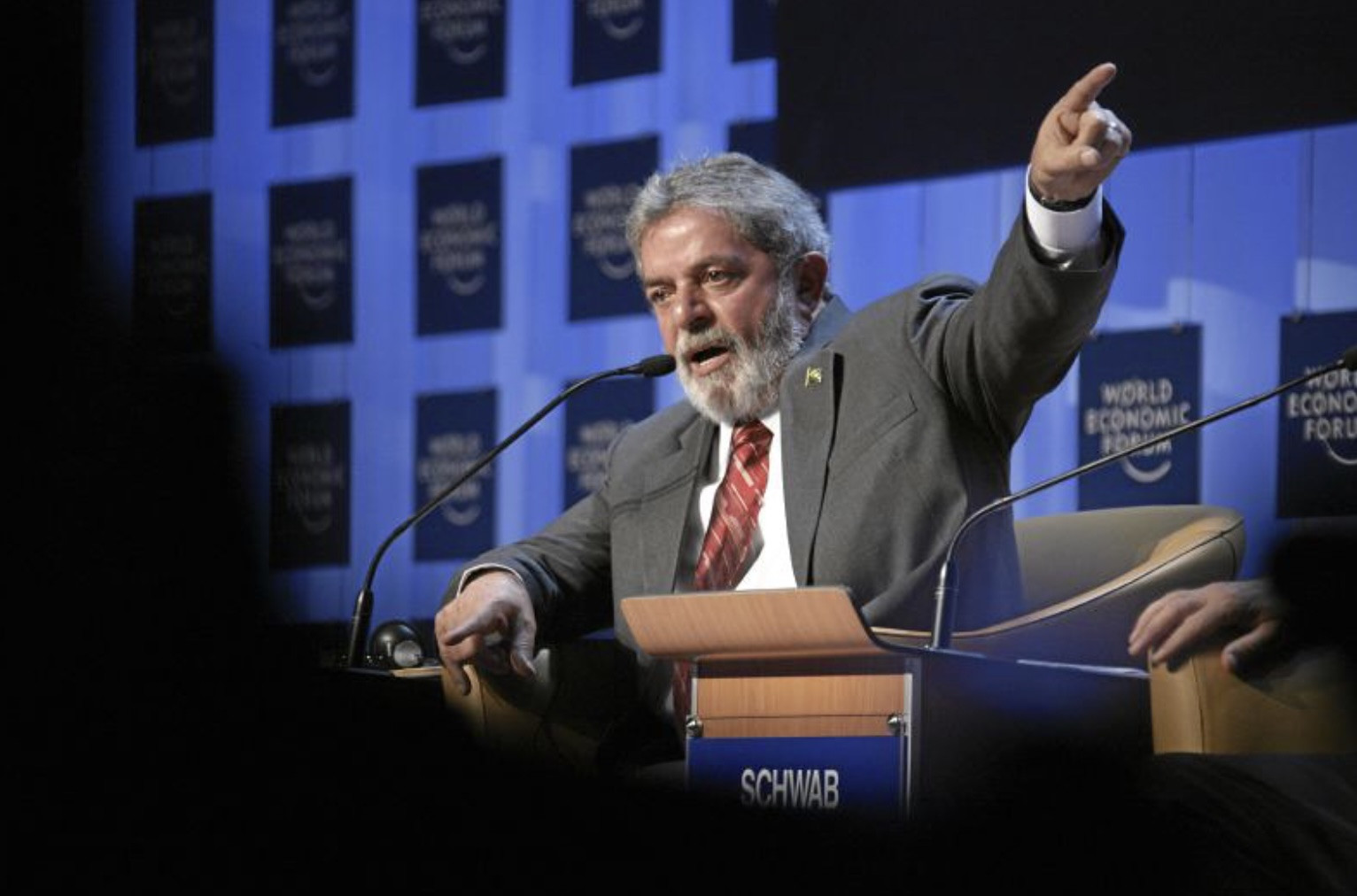
Brazilian President Luiz Inácio Lula da Silva
Brazilian President Luiz Inácio Lula da Silva has signed a provisional measure banning sports betting and online casino games nationwide and setting out the closure of currently authorized platforms. The measure has had force of law since its publication, although it must be approved by Congress to remain in effect.
Provisional Measure 1,394, published on 25 September, prohibits the operation, offering, intermediation and advertising of fixed-odds betting through both physical and online channels. The ban covers betting on real sporting events and online games and also applies to operations authorised by Brazil’s states and Federal District.
Article continues below ad
The measure does not affect other lottery products authorised under Brazilian law.
The decision follows several weeks of consultations initiated by Lula over the future of the sector. Earlier in September, the president met representatives of religious and social organizations and other parts of civil society to discuss the impact of betting. The betting industry was not invited to the meeting.
The ban took effect when the provisional measure was published on 25 September, although the regulated market will close in stages. From that date, operators were barred from accepting new deposits and new bets.
Article continues below ad
Platforms will remain accessible until 11:59pm on 5 October so customers can withdraw deposited funds. That is also the deadline for the removal of betting-related advertising and sponsorship.
From 6 October, betting websites and apps must become inaccessible in Brazil. Bets that remain open and whose outcomes have not been determined by the end of the transition period must be cancelled and the amounts wagered refunded in full.
Operators must subsequently report any balances that customers have not withdrawn to financial institutions so the funds can be returned to bettors.
Article continues below ad
Existing concessions, permits and authorisations will formally expire 30 days after publication of the provisional measure. The measure also states that operators will not be entitled to recover all or part of the authorisation fees already paid or receive compensation from the state for the closure of the market.
The text also prevents financial institutions, payment providers and other participants in the financial system from processing transactions for fixed-odds betting, except those requiredto wind down operations and return funds to bettors.
The measure reverses the federal regulated fixed-odds betting model that became fully operational on 1 January 2025 under the supervision of the Secretariat of Prizes and Betting (SPA) within the Ministry of Finance.
Article continues below ad
The provisional measure prohibits the granting of new authorizations from the date of publication and terminates applications that were still awaiting a decision.
The decision has prompted warnings that demand could shift to unauthorized operators. The Brazilian Association of Games and Lotteries (ANJL) said following publication of the measure that the ban would push more than 30 million bettors towards the illegal market.
A day before the measure was published, nine industry associations had jointly warned that a ban would not eliminate demand for betting and could instead drive players towards illegal platforms operating outside the controls and player-protection mechanisms established for the regulated market.
The illegal market was already a challenge for Brazilian authorities before the ban. Between January 2025 and September 2026, Brazil blocked 66,482 domains linked to unauthorised betting platforms, while ANJL identified 6,409 illegal domains operating between 11 and 18 September 2026.
ANJL has said it will challenge the measure in court. Among other issues, the association disputes the decision not to refund the fees paid by companies to obtain their authorisations and has said operators could also seek compensation for investments made in the regulated market.
The provisional measure also creates an Interinstitutional Committee for the Oversight of Illegal Fixed-Odds Betting Operations and Advertising, coordinated by the Chief of Staff’s Office, to coordinate enforcement by different authorities against illegal betting once the authorised market has closed.
Brazilian provisional measures have an initial validity of 60 days, which can be extended for a further 60 days if Congress has not completed its vote.
Locations:Verticals:Sectors:
Dig Deeper
The Backstory
From launch to reversal in less than two years
Brazil’s decision to ban sports betting and online casino games marks a sharp break from the regulatory model the federal government had spent years building. The fixed-odds betting market became fully operational on Jan. 1, 2025, under the Secretariat of Prizes and Betting within the Ministry of Finance, with licensed operators paying for federal authorization and operating under a framework intended to separate regulated platforms from offshore and illegal sites.
That framework was built around channelization: bringing existing demand into supervised companies that could be taxed, monitored and held to consumer-protection rules. By 2026, Brazil had become one of the world’s largest betting markets. A recent industry discussion noted that Brazil had 86 authorized betting companies and 188 approved platforms, while Regulus Partners ranked the country as the world’s fifth-largest betting market. The same scale that made Brazil commercially attractive also made it politically exposed.
The provisional measure signed by President Luiz Inácio Lula da Silva now reverses that approach. Instead of tightening rules around an operating legal market, the government is moving to close that market in stages, stop new deposits and bets, unwind customer balances and block access to betting sites and apps. The policy shift follows rising concern over consumer harm, household finances, advertising and the persistence of illegal gambling.
Illegal operators were already the core test
Before the ban, the main policy dispute was not whether Brazil had too much betting activity, but whether legal operators could displace illegal ones. Industry representatives had argued that licensed companies were being judged alongside operators outside the law, despite facing taxes, compliance obligations and supervision.
That concern was central to an ANJL-backed debate on the
challenges facing Brazil’s regulated betting market. ANJL President Plínio Lemos said Brazil needed to distinguish regulated betting sites, which practice responsible gambling, from illegal operators linked to consumer harm and organized crime. The association’s argument was that enforcement, not prohibition, should be the main response.
The illegal market was not marginal. Research by LCA Consultores estimated that unlicensed operators accounted for 38% to 44% of online betting in Brazil in the first half of 2026. ANJL had been working with the Secretariat of Prizes and Betting and the National Telecommunications Agency to identify unlawful operators, while a tracking system involving the Ministry of Justice and the Federal Police was expected to begin operating. Those efforts suggested the government recognized enforcement as a central weakness even before choosing to shut the licensed market.
The ban changes the enforcement problem. Once licensed operators leave, authorities will no longer be distinguishing legal sites from illegal sites for consumers; they will be pursuing a market where demand may continue without a domestic legal outlet. The government’s new interinstitutional committee is designed to coordinate action against illegal betting and advertising, but it will face the same practical issues that existed under regulation: mirror domains, payment workarounds, offshore operators and advertising channels beyond Brazil’s immediate reach.
Tax pressure helped harden the politics
Brazil’s betting debate also unfolded against a fiscal backdrop. The government sought new revenue sources for 2026, and gambling repeatedly appeared as a target. A provisional tax measure was withdrawn after the Chamber of Deputies blocked a vote, but not before lawmakers had debated raising the online sports betting tax from 12% to 18%.
The collapse of that proposal, detailed in coverage of Brazil’s
failed provisional tax measure, deferred the government’s revenue problem rather than resolving it. The measure had been central to the Finance Ministry’s plan to reach a primary surplus target of 0.25% of gross domestic product in 2026. Once it failed, the government said it could use budget blocks and contingencies to offset lost revenue.
Betting was also drawn into public-security financing. The Chamber later removed a proposed 15% levy on fixed-odds betting from the Anti-Faction Bill, though lawmakers left the door open to consider the tax separately. That episode showed how the industry had become a convenient fiscal target even as its legitimacy was contested. The removed levy, known as CIDE-Bets, was presented as a way to fund prison construction and modernization, with Senate estimates suggesting it could raise about BRL 30 billion.
Those fiscal debates created a contradiction. On one hand, a licensed betting market offered revenue that could be directed to public budgets. On the other, the industry’s growth made it vulnerable to political campaigns portraying betting as a social cost rather than a regulated economic activity. The provisional ban resolves that tension by sacrificing future regulated revenue in favor of a public-health and social-protection argument.
Advertising became the visible flashpoint
Advertising has been one of the clearest causes of political backlash across regulated gambling markets. Brazil’s measure prohibits not only the operation and intermediation of fixed-odds betting, but also advertising. Operators must remove betting-related ads and sponsorships during the transition period, severing one of the legal market’s main tools for brand recognition.
The risk of advertising bans shifting demand toward illegal operators has been raised in other jurisdictions. A recent analysis of the Philippines warned that a total gambling ad ban could hand the market back to offshore sites, citing experiences in Italy, Belgium, France, the Netherlands and the United Kingdom. That article argued that advertising is one of the ways players identify licensed platforms, while illegal operators continue promoting through influencers, private groups and offshore channels regardless of domestic prohibitions.
That same channelization logic applies to Brazil. When legal operators advertise, regulators can impose content standards, require responsible-gaming messages and sanction breaches. When illegal operators advertise, authorities must rely on blocking, payment disruption and platform cooperation. A total ban on lawful advertising may reduce visibility of licensed brands quickly, but it does not automatically reduce consumer demand or offshore marketing.
Brazil’s policymakers appear to have concluded that the broader social costs outweigh the benefits of keeping licensed marketing in place. Industry groups have reached the opposite conclusion, warning that the ban gives illegal operators a larger opening and removes the consumer-facing distinction between regulated and unregulated platforms. The dispute is likely to shape court challenges and congressional debate over whether the provisional measure should remain in force.
A global industry shaped by regulatory swings
Brazil’s reversal fits a broader pattern in online gambling: rapid market openings are often followed by political retrenchment once participation, advertising and payment volumes become visible. Industry veterans have long described igaming as cyclical, with new jurisdictions moving from enthusiasm to regulation, stabilization and renewed controversy over loopholes or social harm.
Sue Schneider, a longtime igaming executive profiled in a discussion on
keeping doors open for igaming innovators, framed the industry’s development around waves of legalization and pushback. Her comments focused heavily on the U.S., but the same dynamic applies in Brazil: companies enter when a jurisdiction opens, invest in licenses and infrastructure, then face shifting legal and political conditions as public scrutiny grows.
For operators, Brazil’s ban raises questions beyond immediate market exit. The measure says companies will not be entitled to recover authorization fees or receive compensation from the state for closure of the market. That provision turns a regulatory reversal into a potential investment dispute and gives ANJL and individual operators grounds to challenge the government’s approach.
For policymakers, the stakes are different. The government must show that prohibition can reduce harm without simply displacing players into illegal channels. It must also prove that financial institutions, payment providers, telecom companies and enforcement agencies can contain offshore demand more effectively than the regulated model did. The experience of other markets suggests that task will be difficult.
Congress and the courts now become decisive
Brazilian provisional measures take effect immediately but require congressional approval to remain valid. That gives lawmakers a central role in deciding whether the ban becomes lasting policy, is amended or expires after the constitutional window. Congress has already shown willingness to resist parts of the government’s fiscal agenda involving betting, including proposed tax increases and earmarked levies.
The debate now shifts from tax rates and market rules to the existence of the market itself. Supporters of the ban can argue that the federal experiment expanded betting too quickly and exposed households to unacceptable risk. Opponents can point to sunk license fees, legal uncertainty, lost tax revenue and the possibility that tens of millions of bettors move to unauthorized platforms.
The legal fight may be equally important. ANJL has said it will challenge the measure, including the refusal to refund authorization fees. Courts may be asked to weigh the government’s authority to close a newly authorized market against operators’ expectations after paying for licenses and building compliant businesses.
Brazil’s regulated betting system was created to make an existing market visible. The ban is an attempt to make that market disappear. Whether it succeeds will depend less on the formal shutdown of licensed platforms than on what happens next to players, payments and advertising outside the reach of the licenses Brazil is now ending.








 2026/08/25: Total Philippines gambling ad ban seen handing market back to illegal operators, data from five countries show
 2025/10/10: Brazil’s lower chamber fails to pass latest provisional tax measure
 2025/07/08: Sue Schneider: Holding the door open for igaming innovators
 2026/02/26: Brazil strips 15% betting tax from Anti-Faction Bill
