


Coalition of 17 US attorneys general and the Indian Gaming Association urge Senators to reject revised CLARITY Act

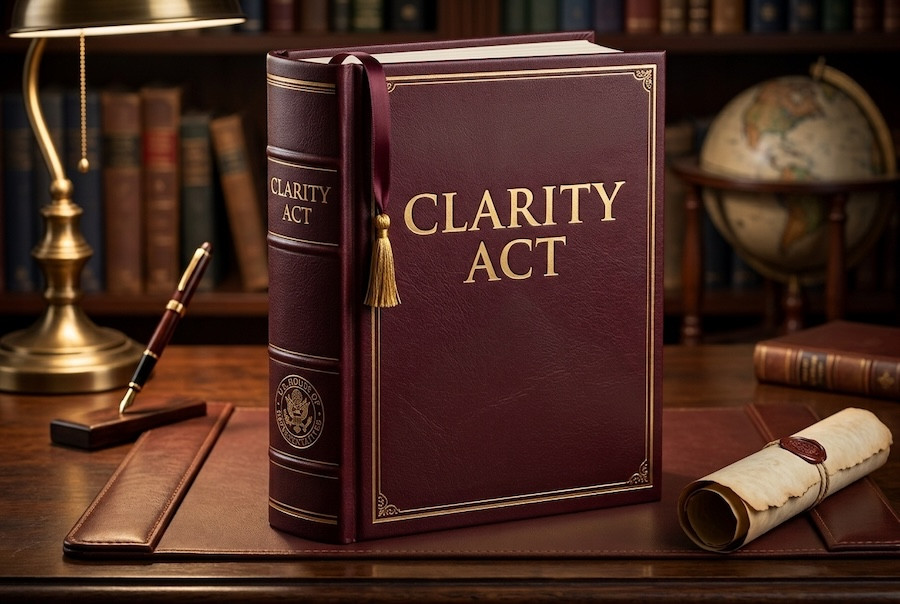
Ahead of a key vote that would either make or break the US Congress’ crypto regulation bill, the CLARITY Act, a bipartisan coalition of 17 attorneys general and the Indian Gaming Association (IGA) has called on senators to reject the current bill.
The calls come after President Donald Trump reportedly agreed to provisions in the bill that would grant attorneys general stronger enforcement power regarding cryptocurrencies over the weekend.

But on Monday, the coalition signed a letter arguing that if the CLARITY Act were passed, it would prevent states from bringing lawsuits against online scams under existing securities and commodities authorities.
“We write to urge the Senate to expressly preserve the police powers of the states and ensure that the states remain armed with the tools necessary to protect the American people from predatory scammers,” the letter reads.
“As the epidemic of online scams continues to grow, we remain firmly opposed to any federal statutory changes that would displace states’ authority to oversee the securities and commodities markets to protect everyday Americans,” it continues.

Separate from the attorneys general coalition, the IGA also opposed the bill on Monday, arguing that Senators should reject the legislation because it does not explicitly include protections for tribal sovereignty, the Indian Gaming Regulatory Act, as well as state and tribal sovereignty over gaming.
The IGA has repeatedly warned, along with other industry bodies, including the American Gaming Association, that the CLARITY Act would enable prediction market platforms to expand on their offerings of sports-event contracts that encroach on tribal and state gaming laws.
Wyoming senator Cynthia Lummis updated the bill’s language following growing concern from industry bodies about the threat posed by prediction markets, but, according to the IGA, it was not enough.

“We want to make it absolutely clear that Indian Country is opposed to this version of the CLARITY Act,” IGA Chairman David Bean had said. “While we appreciate that Senator Lummis has acknowledged the legitimate concerns raised by Tribal Nations, the proposed changes do not address the fundamental concerns of Indian Country.”
With the vote scheduled for 15 September, both the coalition of attorneys general and the IGA will have to wait to see whether the Senate passes the CLARITY Act.
Charlotte Capewell brings her passion for storytelling and expertise in writing, researching, and the gambling industry to every article she writes. Her specialties include the US gambling industry, regulator legislation, igaming, and more.

Dig Deeper
Related stories
 2026/07/15: Indian Gaming Association takes prediction market fight to Washington, D.C.
 2026/09/04: Indian Gaming Association warns again about prediction markets, examines more avenues to counter them
 2026/09/14: Donald Trump agrees to state enforcement role in CLARITY Act
 2026/08/25: Kalshi enters MLB partnerships despite strong regulatory opposition
2026/07/15: Indian Gaming Association takes prediction market fight to Washington, D.C.
2026/09/04: Indian Gaming Association warns again about prediction markets, examines more avenues to counter them
2026/09/14: Donald Trump agrees to state enforcement role in CLARITY Act
2026/08/25: Kalshi enters MLB partnerships despite strong regulatory opposition
The Backstory
A crypto bill becomes a gaming fight
The dispute over the CLARITY Act has moved beyond digital-asset oversight and into a long-running fight over who controls gambling in the United States. What began as a market-structure bill to divide cryptocurrency supervision between the Securities and Exchange Commission and the Commodity Futures Trading Commission has become a test of state police powers, tribal sovereignty and the future of sports-event contracts.
The current push by 17 attorneys general and the Indian Gaming Association reflects two overlapping concerns. State officials argue the bill could weaken their ability to pursue online fraud under securities and commodities laws. Tribal gaming leaders say the measure could leave a path for prediction-market operators to offer products that resemble sports betting or casino gambling without complying with tribal-state compacts, state gambling statutes or the Indian Gaming Regulatory Act.
Those objections intensified after President Donald Trump reportedly accepted language giving state attorneys general a stronger role in enforcing the bill. The change was meant to address criticism that federal legislation could leave gaps in consumer protection. But opponents said the compromise did not go far enough if it failed to expressly preserve state and tribal authority over gaming and related enforcement.
Tribal leaders escalated months before the vote
The Indian Gaming Association’s opposition has been building for months. In July, the group brought tribal leaders to Washington for a two-day legislative summit focused on what it described as the growing threat of prediction-market gambling. The meeting was aimed at senators and congressional staff as lawmakers worked through the CLARITY Act and its implications for emerging financial products.
At that point, the association was pressing senators to add language barring sports and casino-style gambling through prediction markets and making clear that the bill would not preempt tribal, state or federal gaming laws. The effort was outlined in the IGA’s campaign to take the prediction-market fight to Washington, where Chairman David Z. Bean warned that the issue was among the most serious threats tribal government gaming had faced in a generation.
The association’s argument centers on the legal characterization of event contracts. Prediction-market companies and their supporters have generally framed the products as federally regulated financial contracts. Tribal gaming advocates say sports-event contracts are gambling by another name when consumers wager on game outcomes or similar events. If those products are allowed nationwide under CFTC oversight, they argue, operators could bypass the licensing, revenue-sharing and consumer-protection systems that states and tribes have built over decades.
That distinction matters because tribal gaming is not merely a commercial enterprise. Revenue from tribal casinos supports government services including health care, education, housing, public safety and language preservation. The IGA’s position is that any federal bill affecting prediction markets must preserve the structure Congress created under the Indian Gaming Regulatory Act, which balances tribal sovereignty, state compacts and federal oversight.
Delay gave opponents time to organize
The Senate’s decision to postpone a procedural vote on the CLARITY Act until September gave both crypto advocates and gaming opponents more time to shape the legislation. The delay followed broader disputes over stablecoin rewards, ethics rules for public officials with crypto interests and whether law enforcement would have enough power to police unlawful finance.
For the digital-asset industry, the postponement was a setback after more than a year of negotiations. For gaming interests, it opened a window to press senators on the prediction-market language. The delay, described in the report on the Senate postponing the CLARITY Act vote, underscored how a crypto bill had attracted scrutiny from industries well outside the traditional digital-asset lobby.
The 60-vote threshold in the Senate also increased the leverage of lawmakers seeking changes. Democrats were already wary of the bill’s political implications, including questions about Trump’s crypto holdings and whether public officials should face tighter restrictions on issuing or profiting from digital assets. That created space for Republicans and Democrats to negotiate enforcement provisions and ethics safeguards, while attorneys general and tribal gaming groups pressed for clearer protection of their authorities.
The result is a legislative package carrying multiple, sometimes conflicting priorities. Crypto firms want regulatory clarity and a predictable federal framework. State officials want to retain tools to police scams. Tribal governments want assurance that financial-market legislation will not be used to erode gaming sovereignty. The coalition opposing the current bill argues that without explicit protections, federal preemption could become the central consequence, even if not the stated goal.
State enforcement became a late concession
The reported Trump-backed enforcement compromise was intended to help move the CLARITY Act toward a vote. Republican senators involved in the negotiations said the president agreed to give state attorneys general a meaningful enforcement role, including potential authority to sue cryptocurrency exchanges that list banned digital assets. The revised language also was expected to require officials with significant financial interests in crypto issuers to divest or place holdings in a blind trust.
Those changes came after Sen. Thom Tillis, a Republican, and Sen. Ruben Gallego, a Democrat, pushed for stronger state enforcement powers alongside the Justice Department. The negotiations were detailed in the report that Trump agreed to a state enforcement role in the CLARITY Act, a development that reflected concern that federal oversight alone would not satisfy enough senators to advance the measure.
But the attorneys general coalition’s latest objection shows the concession did not settle the issue. Their concern is not only whether states can enforce selected provisions of a new crypto law. It is whether the federal statute would displace existing state authority under securities and commodities regimes, particularly in cases involving online scams. They argue that preserving traditional police powers must be explicit, not inferred.
For tribal gaming leaders, the enforcement compromise addressed a different problem than the one they have raised. Their focus is not primarily on crypto fraud. It is whether the bill’s treatment of digital commodities and CFTC-regulated products could strengthen prediction-market claims that sports-event contracts sit outside gambling law. Without express language preserving IGRA and gaming regulation, they say, the bill could invite litigation and market expansion that shifts power away from states and tribes.
Prediction markets move while lawmakers debate
The urgency around the CLARITY Act has been reinforced by activity in the prediction-market sector. Kalshi, one of the most prominent platforms, has continued to pursue sports visibility despite regulatory challenges. Its sponsorship arrangements with the Los Angeles Dodgers and Boston Red Sox showed how prediction-market companies are seeking mainstream sports partnerships even as states and tribes challenge the legality of sports-event contracts.
The tension was evident in the report on Kalshi’s MLB partnerships despite regulatory opposition. In California, the Dodgers deal sat alongside the team’s tribal casino relationship with the San Manuel Nation, an outspoken critic of prediction markets. In Massachusetts, the Red Sox connection came against the backdrop of state action against Kalshi and a court decision allowing the state to block the platform.
Those conflicts help explain why gaming groups view the federal bill as more than an abstract jurisdictional debate. If prediction-market companies can build brand presence with major sports teams while asserting federal commodities jurisdiction, state gambling regulators and tribal authorities could face a fragmented enforcement landscape. Each new partnership raises the stakes for lawmakers deciding whether to draw a bright line between financial contracts and regulated gambling.
The IGA has also broadened its strategy beyond Congress. At a September tribal gaming regulators conference in Minnesota, Bean warned that prediction markets should concern every tribal gaming regulator and said the products were attempting to operate outside established gaming systems. The association said it was considering additional responses through the IGA-NCAI Tribal Leaders Task Force, including regulatory notices, cease-and-desist actions and other exercises of tribal regulatory authority. That escalation, described in the IGA’s warning that it was examining more avenues to counter prediction markets, shows the fight is likely to continue regardless of one Senate vote.
The vote could set the next battlefield
The immediate question is whether the Senate advances the CLARITY Act with the current language. But the larger issue is what kind of precedent Congress sets for emerging products that blur the line between finance and gambling. A bill written to clarify crypto oversight could reshape the legal footing for prediction markets if it leaves operators room to argue that federal commodities law supersedes state and tribal gambling restrictions.
That is why the coalition now opposing the bill pairs consumer-protection concerns with sovereignty arguments. Attorneys general want to preserve their ability to pursue scammers. Tribal governments want to protect a gaming framework that funds public services and rests on government-to-government agreements. Both groups see preemption as the risk linking those concerns.
If senators amend the bill to preserve state and tribal authority, crypto regulation could advance without resolving every prediction-market dispute. If they do not, the CLARITY Act may become the vehicle for a broader legal battle over sports betting, event contracts and the limits of federal financial regulation.
