


Indian Gaming Association warns again about prediction markets, examines more avenues to counter them


The Chairman of the Indian Gaming Association highlighted the group’s efforts to “protect Indian gaming at its core,” while also warning that prediction markets “should concern every Tribal gaming regulator in this country.”
Gathered together at the National Tribal Gaming Commissioners & Regulators Conference – running from 1 to 3 September in Minnesota – IGA officials were joined by tribal gaming commissioners, regulatory professionals, legal experts and industry leaders for general assemblies, panel discussions, roundtables and workshops.

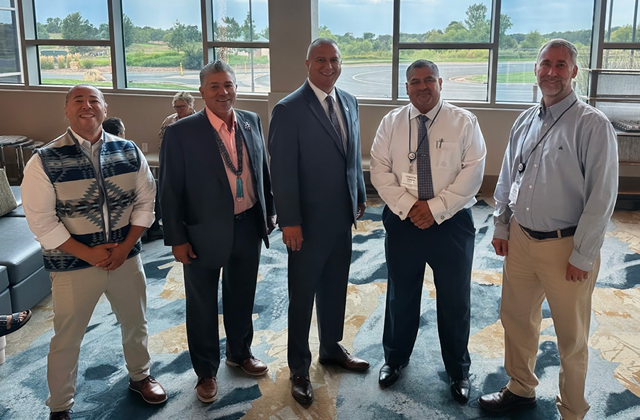
During the NTGCR General Assembly, IGA Chairman Bean noted that, “Our regulators do more than oversee gaming operations. They protect Tribal governments, Tribal economies, our employees, our customers, and the integrity of an industry that supports Native communities throughout Indian Country.”
Protecting the regulatory rights of tribal gaming operators has been a key part of the IGA’s fight against prediction markets, which has already gone to Washington D.C.
Speaking of prediction markets, Bean noted that “This is not simply a debate over a new financial product. These platforms are offering what we know is gambling while attempting to operate outside the laws and regulatory systems that govern legal gaming. We cannot allow a new name or a different technology platform to become a pathway around Tribal sovereignty, IGRA, Tribal-state compacts, and established gaming laws.”

Bean furthered that this concern goes beyond just sports wagering, with indications prediction market platforms are exploring products that could resemble traditional casino gaming.
The group notes that its efforts so far include “litigation, congressional advocacy, regulatory engagement, and collaboration with Tribal Nations, states, commercial gaming interests, attorneys general, consumer protection advocates, and other organizations concerned about the growth of gambling outside existing regulatory structures.”
The next phase of the plan involves working through the IGA-NCAI (National Congress of American Indians) Tribal Leaders Task Force, in consultation with Tribal governments to find further regulatory strategies, “including examining the use of Tribal regulatory notices, cease-and-desist actions, and other available exercises of Tribal regulatory authority.”

Dig Deeper
Related stories
 2026/07/15: Indian Gaming Association takes prediction market fight to Washington, D.C.
 2026/02/17: Indian Gaming Association says prediction markets pose urgent threat to tribes
 2026/08/25: Kalshi enters MLB partnerships despite strong regulatory opposition
 2025/04/01: FanDuel and DraftKings made peace with California tribes over sports betting expansion
2026/07/15: Indian Gaming Association takes prediction market fight to Washington, D.C.
2026/02/17: Indian Gaming Association says prediction markets pose urgent threat to tribes
2026/08/25: Kalshi enters MLB partnerships despite strong regulatory opposition
2025/04/01: FanDuel and DraftKings made peace with California tribes over sports betting expansion
The Backstory
Tribes see a sovereignty fight, not a product dispute
The Indian Gaming Association’s latest warning over prediction markets is the product of a months-long escalation in which tribal leaders have recast the issue from a narrow debate over financial contracts into a direct challenge to tribal sovereignty, state gambling authority and the Indian Gaming Regulatory Act.
At the center is the growth of sports-event contracts and related products offered by federally regulated prediction market platforms. Those companies argue they operate under commodities law, with oversight from the Commodity Futures Trading Commission. Tribal leaders, state regulators and much of the casino industry say the products function as sports betting and should be governed by gaming law, including tribal-state compacts that define where and how gambling may occur.
That distinction carries high stakes for tribes. Gaming revenue funds health care, housing, education, public safety and other government services across Indian Country. If platforms can offer sports or casino-style wagers nationwide under a commodities framework, tribal leaders say it could weaken compact rights negotiated over decades and allow gambling activity on tribal lands without tribal consent.
Capitol Hill became an early pressure point
The association’s campaign moved into federal politics as tribal leaders sought to pressure lawmakers before prediction markets became more deeply embedded in the U.S. wagering market. At a Capitol Hill briefing, the group argued that sports-event contracts were being routed through futures exchanges to avoid gambling law and bypass tribal authority. The briefing framed the issue as one of jurisdiction and consumer protection, citing concerns over limited geofencing and gaps in oversight.
That message hardened as the association convened leaders in Washington for a legislative push. In July, the group used its Summer Legislative Summit to take the prediction market fight to Washington, D.C., urging senators to address the issue in the CLARITY Act, a broader crypto-market structure bill. The association sought language prohibiting sports and casino-style gambling through prediction markets and clarifying that the bill would not preempt tribal, state or federal gaming laws.
The CLARITY Act became a natural target because the dispute overlaps with the boundary between digital assets, commodities regulation and gambling oversight. Tribal leaders said that if Congress establishes new authority for the CFTC or related markets without clear gambling carve-outs, prediction platforms could cite federal law to expand products that resemble sports betting or casino games.
Regulators and courts have deepened the divide
The conflict has been sharpened by the CFTC’s stance that certain prediction market contracts fall within its jurisdiction. That position has frustrated state gaming regulators and tribal governments that argue the agency is effectively allowing products that states and tribes would otherwise regulate, tax or prohibit. The disagreement has created a patchwork of legal challenges and enforcement efforts as states test whether they can block sports-event contracts.
Massachusetts has been one of the clearest examples. The state moved against Kalshi, and a state court decision allowed Massachusetts to block the company’s activity. California tribes have raised parallel concerns, arguing that sports-event contracts offered in the state infringe on tribal gaming rights and conflict with the compact-based system that governs gambling there.
Those disputes gained more visibility when Kalshi entered baseball sponsorships despite regulatory scrutiny. Its quiet deals with the Los Angeles Dodgers and Boston Red Sox put prediction markets directly into major sports venues, even as the company faced opposition in both California and Massachusetts. The Dodgers’ relationship was especially sensitive because the team also has a tribal casino partner, the San Manuel Nation, which has opposed prediction markets. The deals showed how quickly the companies can gain mainstream sports exposure while the legal framework remains unsettled.
The wider gambling industry is aligning against the model
Tribal leaders are not alone in challenging prediction markets. The American Gaming Association has also raised alarms, arguing that the products risk accelerating the “gamblefication” of financial markets and consumer behavior. At ICE 2026 in Barcelona, tribal officials and the AGA confronted the prediction markets issue in a public forum that underscored growing coordination between tribal and commercial gaming interests.
The industry’s concern is partly competitive and partly regulatory. Legal sports betting operators have spent years securing state licenses, building compliance systems, paying taxes and meeting responsible gambling obligations. Prediction market firms, critics say, can market similar outcomes as financial contracts without the same state-by-state licensing structure, compact requirements or consumer protection rules.
Responsible gambling has become a key part of that argument. Sportsbooks generally present betting as entertainment and operate under advertising, age verification and self-exclusion rules. Prediction market platforms, opponents argue, often present event contracts as trading or investment products, blurring the distinction between speculation, wagering and financial planning. Tribal leaders have also pointed to risks involving crypto payments, source-of-funds checks and potential insider trading on event outcomes.
Sportsbook relationships add another layer
The dispute is complicated by the role of major sportsbook companies, many of which have tribal partnerships in regulated sports betting markets. Some tribal leaders have questioned whether partners that benefit from tribal market access can also pursue prediction market strategies that tribes view as hostile to their sovereignty.
That tension follows a period in which leading operators tried to repair relationships with tribes, particularly in California. After the collapse of competing 2022 ballot initiatives, DraftKings and FanDuel executives used the Indian Gaming Association’s annual convention to acknowledge missteps and signal that any future California sports betting effort would need to be led by tribes. The companies’ effort to make peace with California tribes over sports betting expansion reflected a broader industry lesson: access to major tribal-led markets depends on respecting sovereignty.
Prediction markets threaten to reopen those questions. If sportsbook operators or their affiliates participate in event-contract markets, tribes may reassess whether those companies are aligned with tribal long-term interests. That could affect partnerships in existing and future markets, especially where tribes control or heavily influence online sports betting legislation.
The next phase is enforcement and political leverage
The association’s current posture reflects a shift from warning to action. Earlier efforts focused on education, congressional advocacy and public briefings. Now tribal leaders are discussing a broader toolkit: litigation, engagement with regulators, coordination with states and commercial gaming groups and potential exercises of tribal regulatory authority such as notices and cease-and-desist actions.
That strategy recognizes that the dispute may not be resolved in one venue. Congress could clarify the boundary between prediction markets and gambling. State courts could uphold or limit state enforcement actions. The CFTC could alter its approach or face pressure from lawmakers. Tribal regulators may also seek to assert authority when platforms operate on tribal lands or affect compact rights.
The stakes extend beyond sports. Tribal leaders say prediction market companies are already looking at products that could resemble traditional casino gaming. If that occurs, the fight would move from sports-event contracts into the core of tribal casino economics. For an industry built on exclusivity provisions, negotiated compacts and sovereign regulation, the fear is that a federal commodities label could become a workaround to the legal foundation of Indian gaming.
That is why the association continues to cast the issue as generational. The question is not only whether a contract on a game outcome is a swap or a bet. It is whether emerging financial technology can bypass the regulatory systems that created the modern tribal gaming economy.
