


Indian Gaming Association takes prediction market fight to Washington, D.C.

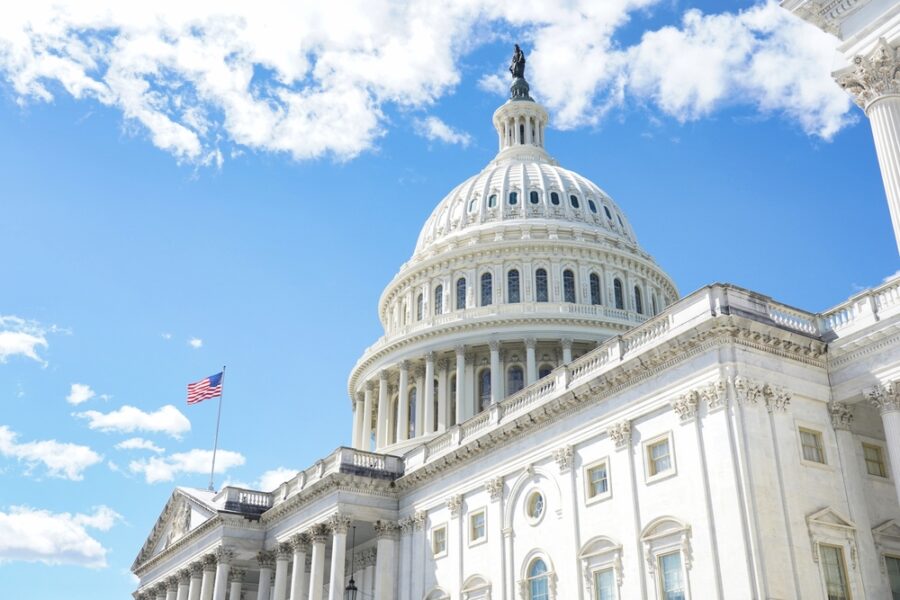
The Indian Gaming Association (IGA) is gathering tribal leaders to “urge immediate action to address the growing threat posed by prediction market gambling” and gather support to protect tribal sovereignty and state gaming authority.
This comes as IGA Chairman David Z. Bean noted that “this is one of the greatest threats tribal government gaming has faced in a generation.”

The group launched its 2026 Summer Legislative Summit at its headquarters in Washington, D.C., on 14 July, with the two-day event including meetings with United States Senators and congressional staff.
In a statement, the IGA noted that its meeting “comes as Indian Country is engaged in a coordinated, nationwide effort to stop online sports betting and casino-style gambling that the Commodity Futures Trading Commission has allowed to proliferate across the country.”
In terms of approach, the IGA is “urging senators to amend the CLARITY Act by including language that prohibits all forms of sports and casino-style gambling through prediction markets and affirms that nothing in the legislation preempts tribal, state, or federal gaming laws, including the Indian Gaming Regulatory Act.”

The CLARITY Act, supported by US President Donald Trump, is a crypto-market structure bill aiming to establish which federal authority has oversight of digital assets – the Securities and Exchange Commission (SEC) or the Commodity Futures Trading Commission (CFTC). It currently is still up for debate and hasn’t been passed, with a possible August deadline.
Tribal gaming groups have been strongly opposed to the CFTC’s position to allow prediction markets to operate what they deem to be sports betting activities within their legal purview, while the CFTC has staunchly defended its oversight ability over what it deems to be contract swaps.
Speaking of its stance, the IGA Chairman noted that “By relying on the fiction that sports bets are “swaps,” the prediction markets undermine tribal sovereignty, violate the government-to-government agreements tribes have built with their states, and threaten the revenues our tribal nations depend on to fund healthcare, education, housing, public safety, language preservation, and essential government services.”

The IGA indicated that it aims to “preserve the intent of the Indian Gaming Regulatory Act while ensuring that emerging financial technologies cannot be used to circumvent decades of tribal, state, and federal gaming law.”

Dig Deeper
Related stories
 2025/04/01: FanDuel and DraftKings made peace with California tribes over sports betting expansion
 2026/02/17: Indian Gaming Association says prediction markets pose urgent threat to tribes
 2026/07/21: AGA and IGA call for ban on sports event contracts ahead of Congressional hearing
 2026/06/29: US Democrats try to block CFTC funding supporting prediction market cases
2025/04/01: FanDuel and DraftKings made peace with California tribes over sports betting expansion
2026/02/17: Indian Gaming Association says prediction markets pose urgent threat to tribes
2026/07/21: AGA and IGA call for ban on sports event contracts ahead of Congressional hearing
2026/06/29: US Democrats try to block CFTC funding supporting prediction market cases
The Backstory
Why tribes are pressing Congress now
The Indian Gaming Association’s push in Washington marks an attempt to move the prediction-market fight from courtrooms and state regulatory agencies to Congress, where lawmakers are weighing broader rules for digital assets. Tribal leaders see the debate as a narrow but urgent opening: If Congress clarifies federal oversight of crypto and derivatives markets without addressing sports and casino-style event contracts, they argue it could entrench a route around state gaming compacts and the Indian Gaming Regulatory Act.
The immediate focus is the CLARITY Act, a market-structure bill backed by President Donald Trump that seeks to define the roles of the Securities and Exchange Commission and the Commodity Futures Trading Commission in supervising digital assets. For tribes, the issue is not only which federal agency oversees new financial products. It is whether federally regulated exchanges can list sports-event contracts that look and function like wagers while operating outside the licensing, tax, geolocation and responsible-gaming systems that govern legal sports betting.
That concern has grown as prediction-market operators have argued that their contracts are swaps under federal commodities law, not bets subject to state or tribal gaming regulation. The Indian Gaming Association has framed that position as a direct challenge to tribal sovereignty because it could allow gambling-like products to reach customers on tribal lands without tribal authorization or revenue-sharing agreements.
A dispute that began with product design
Prediction markets have existed for years as venues for trading contracts tied to political, economic or cultural outcomes. The current conflict escalated as platforms expanded into sports, offering contracts based on the results of games and tournaments. Tribal gaming leaders, state regulators and casino interests say that shift crossed a legal and practical line because sports outcomes are the foundation of regulated sports betting.
At a recent Capitol Hill briefing, the Indian Gaming Association warned that sports-event contracts pose an urgent threat to tribal gaming, citing the absence of familiar gambling safeguards. Panelists said platforms can operate without the same geofencing tools required of licensed sportsbooks, raising the possibility that contracts could be accessed from tribal jurisdictions where operators have no compact or approval.
The argument is economic as well as legal. Tribal casinos and sportsbooks fund health care, education, housing, public safety and language-preservation programs in many communities. If prediction markets can offer functionally similar products without compact obligations, licensing fees or tribal oversight, tribes say the result would be a leakage of gaming revenue and a weakening of the government-to-government framework that has governed Indian gaming for decades.
States have opened a parallel front
Tribal concerns have developed alongside a widening state enforcement campaign. Nevada, one of the country’s most influential gaming jurisdictions, has been among the most aggressive. The Nevada Gaming Control Board filed a civil enforcement action against Kalshi in Carson City District Court, accusing the company of violating state gaming laws and seeking an injunction to block services to Nevada residents.
The case followed a March cease-and-desist notice and an April injunction that allowed Kalshi to keep operating while litigation proceeded. Nevada regulators later said the company expanded its business despite the dispute. In a new enforcement step against Kalshi, the state challenged the platform’s marketing of sports contracts as legal nationwide, arguing that such claims undercut licensed operators and threaten Nevada’s regulated gaming economy.
Nevada has also moved against other prediction-market activity. Before the Super Bowl, regulators sought temporary relief involving Polymarket and took action against Coinbase. Those cases illustrate the core state position: Federal commodities oversight does not give platforms a blanket right to offer products that states classify as gambling. Kalshi and similar companies counter that state regulators are intruding on federally supervised markets.
Courts have not delivered a uniform answer. Judges in Nevada and Massachusetts have sided with state regulators on key points, while a judge in Tennessee gave Kalshi temporary room to continue operating. That uneven record has increased pressure on Congress and federal agencies to clarify where derivatives regulation ends and gaming regulation begins.
Tribal sovereignty raises the stakes
The tribal dimension makes the dispute more complex than a standard state-federal preemption fight. Under the Indian Gaming Regulatory Act, tribes negotiate compacts with states to operate gaming and retain authority over gambling on tribal lands. Prediction-market contracts that reach tribal customers without tribal approval could bypass that structure, according to tribal leaders.
The Ho-Chunk Nation’s case against Kalshi and Robinhood has become a focal point. A coalition of Native American tribes filed a legal brief supporting the nation’s effort to block event contracts on tribal land, saying gaming is not merely commercial for tribes but essential to self-government. The filing, described in coverage of tribal support for the Ho-Chunk Nation’s fight against Kalshi and Robinhood, placed sovereignty and economic survival at the center of the legal challenge.
That argument resonates because Indian gaming was built around a bargain: Tribes could generate revenue through highly regulated gaming, while states and the federal government would recognize tribal authority within a defined legal framework. Prediction markets disrupt that bargain if they can operate across jurisdictions through federal registration while avoiding the compact terms that govern comparable gaming activity.
The concern is also political. Tribal governments have spent decades building relationships with states, regulators and commercial partners. If sports-event contracts proliferate outside those systems, tribes could lose leverage in compact negotiations and face pressure from commercial firms that can reach customers without bearing the same regulatory burdens.
Industry lines are shifting
The American Gaming Association has increasingly aligned with tribal critics, warning that prediction markets risk blurring the distinction between regulated wagering and speculative financial products. At ICE 2026 in Barcelona, leaders from the AGA and Indian Gaming Association said the rapid spread of event contracts contributed to the “gamblefication of everything” and could weaken consumer protections that have underpinned legal sports betting since the Supreme Court struck down the federal sports-betting ban in 2018.
The session underscored how the debate has expanded beyond tribal governments. In coverage of tribal leaders and the American Gaming Association confronting prediction markets, industry officials argued that licensed sportsbooks operate under strict responsible-gaming requirements, while prediction platforms often present similar activity as financial trading. That distinction matters because investment-style marketing may encourage users to view sports outcomes as part of a portfolio rather than entertainment with betting risk.
There are also tensions inside the broader gambling industry. Some sportsbooks and technology companies have explored prediction-market products or partnerships, creating friction with tribes that already work with commercial operators in regulated sports betting. Tribal leaders have warned that such moves could force a reevaluation of business relationships if partners support products viewed as undermining tribal compacts.
Kalshi, meanwhile, has responded to scrutiny with a more assertive policy strategy. The company opened a Washington office and hired a federal government relations lead, signaling that it intends to influence the debate as Congress and regulators weigh the future of the sector. Its expanded lobbying presence in Washington shows that prediction-market operators also view the current moment as decisive.
The policy question ahead
The central unresolved issue is whether Congress will preserve a bright line between federally regulated event contracts and gambling products governed by state and tribal law. The Commodity Futures Trading Commission has defended its authority over contract markets, while critics say sports and casino-style contracts should not be permitted to use that framework to avoid gaming rules.
For the Indian Gaming Association, the legislative request is targeted: Amend the CLARITY Act to prohibit sports and casino-style gambling through prediction markets and make clear that the bill does not preempt tribal, state or federal gaming laws, including the Indian Gaming Regulatory Act. That approach would not settle every dispute over prediction markets, but it would prevent digital-asset legislation from becoming an unintended shield for gambling-like products.
The outcome will shape more than one product category. It will determine whether emerging financial platforms can compete with casinos and sportsbooks without gaming licenses, whether states can enforce their gambling laws against federally registered exchanges and whether tribes retain practical control over gaming activity tied to their lands and compacts. That is why tribal leaders are treating the CLARITY Act debate as a sovereignty fight, not a technical derivatives issue.
