


Blask: Philippines tops Index in September, surpassing Brazil, after 87% yearly increase in search demand

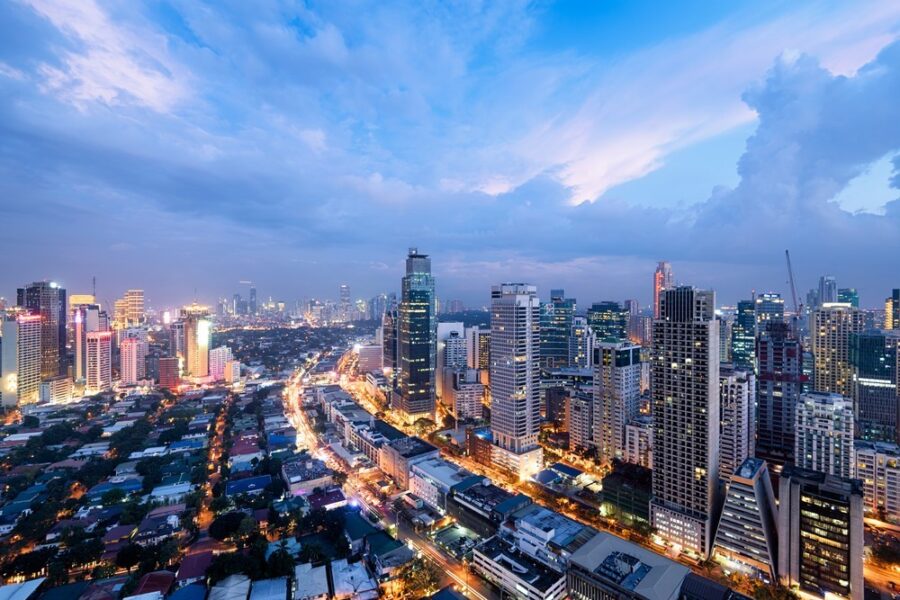
The Philippines topped the Blask Index in September, surpassing even Brazil, after 87% annual growth in search demand, according to the firm’s recent update.
“The Philippines became the largest market by iGaming search demand among countries tracked by Blask in September 2026. It finished ahead of Brazil and India, reversing the pattern seen throughout the first eight months of the year, when Brazilian demand consistently exceeded Philippine levels,” indicated the group.

However, the group notes that “the change at the top does not extend to revenue estimates. Brazil’s September CEB (competitive earning baseline), Blask’s projected revenue metric, was 53% higher than the Philippine figure. Licensed operators also accounted for a much larger proportion of the Brazilian total: 97%, compared with 62% in the Philippines. Higher search demand therefore did not translate into a higher revenue benchmark.”
The search trend comes amongst the massive uncertainty over Brazil’s igaming market, after its abrupt cancellation, and ongoing interest in the Philippines – as evidenced by the strong turnout at the inaugural CiG iDEA Summit in Manila in September.
Looking at the figures, the Blask Index saw an 8% increase month-on-month in Philippine searches and an 87% increase year-on-year, while Brazil saw a 9% monthly decline and a 31% yearly drop.

“Three brands attracted more than half of Philippine search demand during September: PlayTime, Casino Plus and Bingo Plus. Their combined share shows how much of the country’s growing interest remained concentrated around a small group of operators,” indicates the company’s recent report.
The group highlights that the shift in attention to the Philippines came even before the 28 September announcement by the Brazilian government.
“September’s decline in Brazilian search demand came before authorized sites were taken offline. On 6 October, the justice ministry reported the first day without licensed betting platforms operating online. The monthly figures thus capture the Philippines moving into first place during the opening stage of Brazil’s market closure, before the full effect of the October shutdown could appear in Blask Index.”

Dig Deeper
Related stories
 2026/08/25: Total Philippines gambling ad ban seen handing market back to illegal operators, data from five countries show
 2026/09/27: Brazil bans all sports betting and online casino gaming
 2026/10/08: “Institutional self-sabotage” – Blask report identifies key repercussions in Brazil’s igaming shutdown
 2026/06/26: Into the unknown with Light & Wonder’s New Markets guru
2026/08/25: Total Philippines gambling ad ban seen handing market back to illegal operators, data from five countries show
2026/09/27: Brazil bans all sports betting and online casino gaming
2026/10/08: “Institutional self-sabotage” – Blask report identifies key repercussions in Brazil’s igaming shutdown
2026/06/26: Into the unknown with Light & Wonder’s New Markets guru
The Backstory
Search surge lands amid a regulatory crossroads
The Philippines’ rise to the top of Blask’s September search-demand index reflects more than a shift in consumer attention. It comes as two of the world’s most closely watched emerging iGaming markets move in opposite directions: the Philippines is still trying to channel players into a regulated system while Brazil has abruptly moved to shut its legal market.
Blask’s finding that Philippine iGaming search demand rose 87% from a year earlier, enough to overtake Brazil, is significant because the Philippines has become one of Asia’s most advanced regulated online gambling markets. But the same data also show the limits of attention as a proxy for market value. Brazil still generated a higher competitive earnings baseline, and its licensed operators accounted for a far larger share of estimated revenue than those in the Philippines.
That gap points to the central issue facing Philippine regulators and lawmakers: whether rising demand is being captured by licensed platforms or leaking to illegal operators. In the Philippine market, channelization has become the organizing principle of policy. The goal is not to create demand, regulators and industry participants argue, but to move existing demand into systems where age checks, payment controls, responsible-gaming tools and tax collection apply.
Brazil’s reversal changed the global comparison
The September rankings were shaped by Brazil’s political shock. President Luiz Inácio Lula da Silva signed a provisional measure that banned sports betting and online casino games nationwide, ending a federal regulated model that had fully opened Jan. 1, 2025. The measure barred new deposits and bets from Sept. 25, required advertising and sponsorship to be removed by Oct. 5 and ordered betting sites and apps to become inaccessible from Oct. 6.
The decision reversed a framework that had drawn major operators, suppliers and investors into Brazil after years of gray-market activity. Existing authorizations were set to expire 30 days after publication, with no refund of authorization fees. Financial institutions and payment providers also were barred from processing betting transactions except those needed to return customer funds.
Industry groups warned that the ban would not extinguish demand. The Brazilian Association of Games and Lotteries said more than 30 million bettors could be pushed toward illegal platforms. Even before the ban, Brazilian authorities had blocked 66,482 unauthorized betting domains between January 2025 and September 2026, while the association identified 6,409 illegal domains operating in one week in September.
That context matters for the Philippines’ September lead. Blask said Brazil’s search demand had already declined before licensed sites went dark in October. The Philippines’ move into first place therefore occurred during the opening stage of Brazil’s closure, not after the full effect of the shutdown had appeared in search data.
Illegal-market risk is the common thread
A subsequent Blask analysis described Brazil’s shutdown and India’s block of real-money gaming as policy decisions that amounted to “institutional self-sabotage.” The report said Brazil was closing a $6.6 billion gross gaming revenue industry and eliminating $1.8 billion in federal tax while canceling 85 licenses that cost $5.4 million each. It warned that the black market would absorb the legal one.
The immediate data supported that concern. In the week after the ban, searches for licensed brands fell sharply, while offshore brands declined far less, increasing their share of search. Blask said most legal bettors had not yet fully migrated, but licensed-only bettors were visiting unlicensed sites more often and those who switched tended to seek familiar names through international sites and mirror domains.
That pattern is relevant to Manila because the Philippine debate is now centered on whether restrictions on legal operators could have similar effects. A proposed total gambling advertising ban would prohibit gambling advertising and sponsorship across broadcast, print, outdoor, websites, applications and social media, while also banning celebrity and influencer endorsements. Licensed operators could advertise only on their own premises and owned digital channels.
In an analysis of the proposal, Tonet Quiogue argued that a total Philippines gambling ad ban could hand the market back to illegal operators. The argument rests on a practical enforcement distinction: licensed operators are reachable by the state, while offshore operators already breaking advertising rules are not. A ban would silence the compliant side more effectively than the illegal one.
Channelization has driven Philippine gains
The Philippines did not arrive at its current position by accident. PAGCOR has cut e-games license fees, required know-your-customer verification and real-time wager monitoring, accredited operators and marketing affiliates and expanded enforcement against illegal sites. Those steps were designed to make legality commercially viable while increasing state visibility into transactions.
Independent estimates cited in the advertising-ban analysis show how far the market has moved. In 2022, the offshore market was estimated at nearly four times the size of the licensed one. By late 2025 and early 2026, estimates from monitoring and analytics firms suggested licensed operators had moved above half of the market for the first time. Licensed e-games revenue more than tripled from 2023 to 2025, largely reflecting migration from illegal to legal platforms rather than a simple threefold increase in gambling activity.
That migration affects both consumer protection and public finance. Licensed platforms must verify age and identity, use certified games, offer limits, display responsible-gaming information and answer to PAGCOR in disputes. They also must enforce exclusion programs, including self-exclusion and family-initiated exclusion through the National Database of Restricted Persons. Illegal platforms do not honor those barriers.
The fiscal stakes are also large. PAGCOR remittances help fund enforcement and broader government programs. If licensed revenue contracts while demand persists offshore, the government loses both oversight and resources. That is the cautionary lesson Philippine policymakers are drawing from markets where legal operators were constrained more heavily than illegal competitors.
Suppliers and operators see Asia through Manila
The Philippines’ importance is not limited to local operators. It has become a test case for global suppliers looking at regulated Asian online gambling. Light & Wonder’s experience shows why the market is both attractive and difficult. The company became the first supplier licensed by PAGCOR and has treated the Philippines as a gateway for understanding how online regulation may develop elsewhere in Asia.
In an interview about emerging markets, Light & Wonder executive Magdalena Podhorska-Okolow said the company learned that the Philippine online audience is not simply the land-based casino audience moving to a digital channel. Many online players live far from casinos and may have little familiarity with traditional casino brands. That forced the supplier to adapt its assumptions and localize its product strategy. The lesson, described in Light & Wonder’s push into new markets, is that regulation opens opportunity but does not erase local market structure.
Brazil offered a parallel lesson before its shutdown. International groups entered expecting a large regulated opportunity, only to find a complex market divided between global and local operators, multiple brands and platform structures. Philippine companies also looked outward. DigiPlus Interactive, operator of BingoPlus, ArenaPlus and GameZone, expanded into Brazil and joined the Brazilian Institute for Responsible Gaming to support a compliant market. Its decision to join Brazil’s responsible-gaming institute underscored how Philippine operators were trying to export regulatory experience into another high-growth jurisdiction.
Demand is rising, but control remains the test
The Blask index puts a spotlight on the Philippines at a sensitive moment. Search demand suggests consumer interest is broadening, with major brands such as PlayTime, Casino Plus and Bingo Plus accounting for more than half of Philippine searches in September. Concentration around a few visible operators can help channel players toward regulated brands, but it also increases political scrutiny over advertising, celebrity promotions and public exposure.
The question for the Philippines is whether it can keep legal platforms visible enough to compete with offshore operators while tightening standards around content, targeting and responsible gambling. Brazil’s sudden reversal shows what happens when a regulated market is switched off before illegal demand is neutralized. The search data now place the Philippines ahead of Brazil, but the more important contest is not rankings. It is whether rising interest can remain inside a system the state can supervise, tax and discipline.
