


Arizona regulator releases self-exclusion gambling campaign

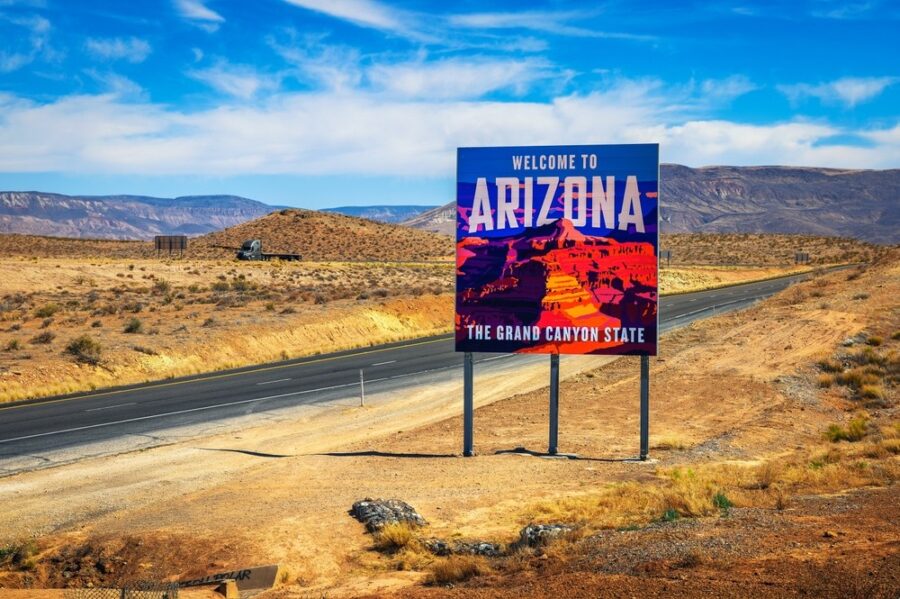
The Arizona Department of Gaming has launched a public awareness campaign to promote responsible gambling and expand the use of its voluntary self-exclusion program.
The “Take Back the Game” initiative launched on March 30 and includes advertising across social media, television, and radio in both English and Spanish.

The campaign informs residents that they can block themselves from participating in gambling activities if it begins to negatively affect their lives.
A voluntary self-exclusion program launched in the state in the early 2000s for tribal casinos has since expanded to include sports betting and fantasy sports apps.
“Today, with the ‘Take Back the Game’ campaign, our agency affirms the value of self-exclusion as an empowering, practical tool that has positive impacts for thousands of Arizonans,” said Jackie Johnson, director of the Arizona Department of Gaming.

The program is intended as a voluntary fallback for individuals who feel their gambling habits have become harmful. Once they are enlisted in the program, individuals are prevented from using gambling services and are removed from any marketing lists licensed gambling operators may use.
They are also barred from collecting winnings during the exclusion period.
Earlier in the month, Arizona’s Attorney General filed criminal charges against prediction market operator Kalshi for offering illegal gambling in the state.

Dig Deeper
Related stories
 2025/05/21: Unibet fined over AU$1 million for breaching Australian self-exclusion rules
2025/06/09: Australian regulator warns betting companies over self-exclusion breaches
2025/05/21: Unibet fined over AU$1 million for breaching Australian self-exclusion rules
2025/06/09: Australian regulator warns betting companies over self-exclusion breaches
 2026/07/27: South Korean esports star made honorary police officer for anti-gambling campaign
 2025/01/30: Illinois and Maryland consider legalization of DFS contests
2025/05/21: Unibet fined over AU$1 million for breaching Australian self-exclusion rules
2025/06/09: Australian regulator warns betting companies over self-exclusion breaches
2026/07/27: South Korean esports star made honorary police officer for anti-gambling campaign
2025/01/30: Illinois and Maryland consider legalization of DFS contests
The Backstory
Why Arizona is elevating self-exclusion now
Arizona’s “Take Back the Game” campaign puts the state’s voluntary self-exclusion program at the center of its responsible gambling push, extending a tool first designed for tribal casinos into sports betting and fantasy apps. The emphasis reflects a broader regulatory pivot: move earlier in the risk curve and reduce harm once consumers signal they need a break. Arizona officials say the system blocks access to gambling services, removes users from marketing lists and voids winnings during the exclusion period. The move arrives as the market expands and enforcement quickens, including recent criminal charges by the state’s attorney general against prediction market operator Kalshi for alleged illegal gambling. The policy stakes are clear. Regulators want to show they can curb risky behavior within the regulated market while pressuring unlicensed operators and tightening compliance gaps among legal ones.
A crackdown on illegal operators at home
Arizona has paired prevention messaging with enforcement. Earlier this year, the Arizona Department of Gaming issued cease-and-desist orders against four unlicensed online operators accused of offering sportsbook and sweepstakes casino-style products to residents without authorization. The department warned that such businesses expose players to fraud and financial loss and may constitute felony criminal enterprises under state law. It also reminded consumers that placement on an app store does not equal legality. The enforcement posture underscores the state’s dual-track strategy: tighten player protections in the licensed market and push illegal actors out. That context helps explain the timing of the new campaign. By making self-exclusion more visible, Arizona aims to steer at-risk consumers toward regulated safeguards while highlighting the consumer-protection gap that persists in the gray market, where recourse and refunds are rare.
Australia’s enforcement playbook
Internationally, regulators are testing how far they can go to make self-exclusion stick. In Australia, the communications watchdog has escalated action against operators that fail to honor the national self-exclusion register, BetStop. The regulator recently warned Buddybet, Ultrabet, Topbet and VicBet for breaching self-exclusion rules, citing failures to close accounts and halt marketing to self-excluded individuals. Separately, it issued a remedial direction to ReadyBet after finding that it sent hundreds of messages and push notifications to people on the register and failed to promote BetStop in required communications. The through line: push operators to install stronger controls, verify customer status in real time and treat self-exclusion signals as hard stops for both wagering and outreach. Arizona’s refresh mirrors elements of that approach, emphasizing cross-channel messaging and removal from promotions as essential parts of the tool.
When lapses become liabilities for brands
The compliance risk is not abstract. In one of the highest-profile cases to date, Australia’s regulator fined Unibet more than AU$1 million after finding over 100,000 violations tied to delayed account closures for customers on the self-exclusion register and the reopening of old accounts once exclusion periods ended. Even though no bets were placed during the exclusion periods, the delayed closures and account handling failures were deemed serious enough to warrant a large penalty and a two-year court-enforceable undertaking. The message to the market is blunt: slow or sloppy execution can convert a safety tool into a legal and reputational hazard. For U.S. operators watching from afar, the case offers a cautionary tale. Self-exclusion must be integrated across identity verification, CRM and risk systems, not relegated to front-end toggles or one-off workflows.
A push for cross-state tools in fantasy sports
Alongside state programs, industry groups are experimenting with broader guardrails. The Coalition for Fantasy Sports says it has expanded a national self-exclusion tool to 15 states through a partnership with idPair, covering operators such as PrizePicks, Underdog, Betr, Dabble and Splash Sports. The group reported that two thirds of users opt into the national system, which aims to let players carry their exclusion across jurisdictions and brands. The pilot launched in February 2025 and is positioned as a step toward a national consumer-protection standard in fantasy sports. For Arizona, which already includes daily fantasy platforms in its self-exclusion framework, the development points to a likely next chapter: interoperability. Cross-brand, cross-state verification can reduce seams where at-risk players might slip from one app to another after self-excluding on a single platform.
The stakes for operators and consumers
Arizona’s campaign lands at a moment when regulators are linking responsible gambling outcomes to operational discipline. The lesson from recent actions abroad is that self-exclusion is only as strong as the systems behind it. Failures around account closure, marketing suppression and post-exclusion account handling now attract financial penalties, audits and undertakings that can reshape a company’s tech stack and training. For consumers, the promise is a clearer, more enforceable off-ramp when gambling becomes harmful. For operators, the cost of underinvestment is rising. Arizona’s choice to foreground self-exclusion while pursuing illegal providers signals where policy is heading: fewer excuses for lapses in the licensed market and less tolerance for unregulated alternatives. The result is a competitive environment where compliance readiness and consumer trust become differentiators, not check-the-box obligations, and where prevention is treated as a core product feature rather than a regulatory afterthought.
