


Wisconsin sues prediction markets over alleged illegal sports betting

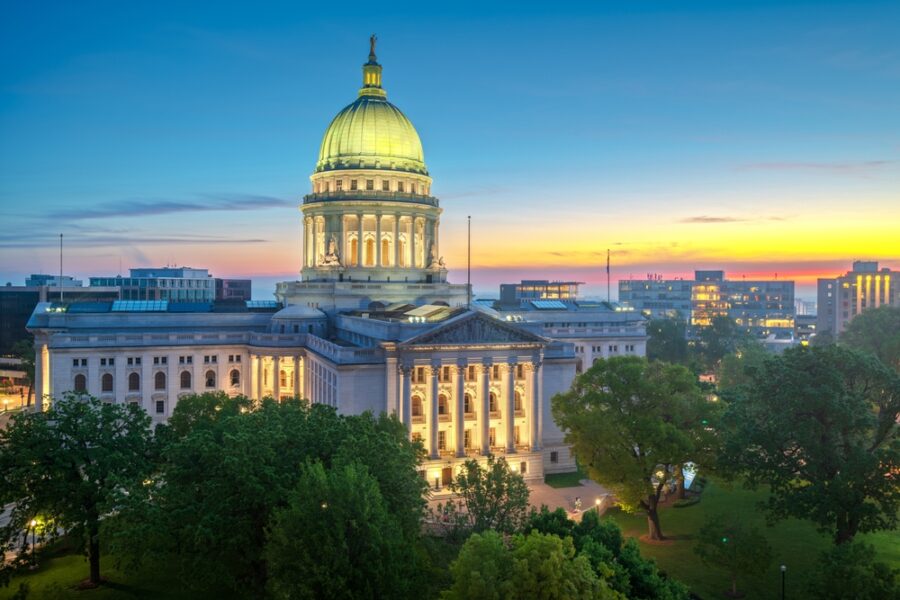
Wisconsin’s Department of Justice has filed three lawsuits against several prediction platforms, claiming they are enabling illegal sports betting.
The legal action is being taken against several operators, including Kalshi, Robinhood, Coinbase, Polymarket, and Crypto.com, accusing them of offering contracts tied to sporting events that the state alleges function as traditional gambling products.

Wisconsin follows other US states that have taken similar legal action against prediction markets for offering what gambling regulatory bodies believe is a product too similar to sports wagering.
Back in March, for example, Arizona Attorney General Kristin Mayes filed criminal charges against prediction market operator Kalshi.
Prediction markets argue that they fall under the jurisdiction of the Commodity Futures Trading Commission and that states do not have the legal footing to block them from operating.

Wisconsin Attorney General Josh Kaul said during a news conference, “These companies have chosen to flout Wisconsin law by thinly disguising the sports betting that they facilitate through what are called event contracts. But our position in this case is that event contracts are no different than ordinary sports bets.”
Wisconsin legislators have been working with 11 native tribes to create a pact that would include online gambling being available in the state. Officials say the latest lawsuits are not tied to recently passed legislation that is working towards this expansion.

Dig Deeper
Related stories
 2026/04/30: CFTC sues Wisconsin over prediction market dispute
 2026/05/11: Wisconsin’s prediction market feud could land in the Supreme Court
2026/06/24: CFTC sues Kentucky for trying to block prediction markets
2026/05/11: Wisconsin’s prediction market feud could land in the Supreme Court
2026/06/24: CFTC sues Kentucky for trying to block prediction markets
 2025/11/19: Wisconsin lawmaker warns prediction markets will launch even if sports betting is not approved
2026/04/30: CFTC sues Wisconsin over prediction market dispute
2026/05/11: Wisconsin’s prediction market feud could land in the Supreme Court
2026/06/24: CFTC sues Kentucky for trying to block prediction markets
2025/11/19: Wisconsin lawmaker warns prediction markets will launch even if sports betting is not approved
The Backstory
How Wisconsin fits into a rolling national fight
Wisconsin’s lawsuits land amid a months-long push by state officials to corral event-based trading that looks and feels like sports wagering. Attorneys general and gaming regulators from coast to coast have argued that contracts tied to game outcomes are, in practice, bets that require state licenses. Prediction market operators counter that they are offering federally regulated financial products, not gambling, and answer to the Commodity Futures Trading Commission, not state gaming boards.
The most visible flashpoints have come as high-profile crypto and fintech brands backed or launched event markets, bringing a niche product closer to the sports-betting mainstream. New York escalated the standoff by suing two exchange-affiliated venues, alleging they ran unlicensed gambling operations that ducked taxes and oversight. In that complaint, the state targeted Coinbase Financial Markets’ and Gemini Titan’s prediction platforms, arguing that “event contracts” are simply wagers by another name. Coinbase has said the issue belongs under federal supervision and is being litigated in federal court, underscoring the jurisdictional tug of war.
Michigan has pursued a similar theory against sector pioneer Kalshi, seeking a permanent injunction by framing its markets as an online sportsbook that lacks the licenses mandated by the Lawful Sports Betting Act. The case, which the state positioned as a consumer-protection measure, is a template for Wisconsin’s approach. See Michigan Attorney General’s lawsuit against Kalshi for the state’s argument that only commercial and tribal casinos may offer sports wagering.
States sharpen their playbook
Connecticut has been an early mover with direct orders. Its consumer protection department issued cease-and-desist letters to multiple platforms and warned of potential criminal exposure for continuing to offer sports event contracts to residents. The agency’s public notice framed the products as unlicensed gambling, flagged underage access risks, and cited integrity gaps around insider trading and payout certainty. The state’s rationale is detailed in Connecticut’s stop-order on sports event contracts, and reinforced by formal notices to individual firms, including Kalshi, Robinhood and Crypto.com.
Other states have followed with litigation or tribal regulatory actions, creating a patchwork that makes multistate compliance increasingly difficult. In this environment, Wisconsin’s gambit is less an outlier than a reinforcement of a trend: press the sports-bet equivalency theory in court and force platforms to either geofence, seek state licensure or exit sports-related markets altogether.
The strategy hinges on defining the product. If a state can persuade a judge that event contracts tied to sports outcomes function as wagers with expected value driven by the game, the products migrate from the CFTC’s orbit to state gaming laws. Michigan’s filing against Kalshi, available through the attorney general’s office, and Connecticut’s administrative orders show how regulators are building the record around consumer risk, tax obligations and competitive fairness. For reference, Michigan’s public complaint against Kalshi can be found here.
Federal turf battle spills into court
The state-led crackdown has forced a broader examination of who, if anyone, has the last word on event markets. The CFTC’s remit includes certain event contracts, and market operators say their offerings meet federal standards for exchange-traded products. But even within financial regulation, fissures are appearing. Fantasy sports operator Sleeper Markets sued the CFTC and its acting chair, alleging the agency improperly stalled its futures commission merchant license while a rival advanced. The company argues the move distorted competition and undercut transparent rulemaking. Details are in Sleeper Markets’ lawsuit against the CFTC, which seeks a court order to prevent further interference and affirm eligibility under the Commodity Exchange Act.
That complaint, while not directly about sports prediction contracts, illustrates the uncertainty confronting firms that want to operate inside federal guardrails. If even federally supervised paths are unpredictable, platforms face a two-front battle: state actions that classify their products as gambling and federal processes that can be slow or opaque. This dynamic helps explain why operators are pivoting to policy advocacy alongside litigation.
Industry mounts a coordinated response
Facing divergent state rulings, major players formed the Coalition for Prediction Markets to press for a uniform federal regime. The group, which counts Kalshi, Crypto.com, Coinbase, Robinhood and Underdog among its members, argues that consumers benefit from centralized oversight, clearer integrity standards and protections against insider abuse. The coalition also warns that inconsistent state-by-state rules will funnel users to offshore venues with fewer safeguards. Its agenda and early priorities are outlined in the coalition’s launch announcement, which cites escalating enforcement and the risk of balkanized compliance burdens.
The coalition’s timing tracks with the rise of mainstream brands experimenting in prediction markets, often via partnerships. That visibility cuts both ways: it helps normalize event-based trading for retail customers but also invites closer scrutiny from attorneys general and gaming commissions alarmed by lookalike sports wagers appearing outside the state-licensed ecosystem.
What’s at stake for Wisconsin and beyond
For Wisconsin, the immediate stakes are straightforward: whether courts accept that sports-linked event contracts are illegal bets under state law. A win would embolden regulators to push for broader removals or settlements, potentially carving sports outcomes out of prediction markets operating in the state. A loss could strengthen the industry’s claim that federal law preempts conflicting state gambling statutes when products are offered through CFTC-supervised venues.
Nationally, the outcome will ripple through strategy decisions by platforms and their partners. If the state theory prevails in multiple jurisdictions, expect more geofencing, fewer sports markets and greater emphasis on non-sports events that are less likely to trigger gambling definitions. If federal jurisdiction solidifies in court, firms may accelerate product rollouts and seek licenses and approvals through futures market channels rather than gaming agencies.
Either way, the legal path is crowded. New York’s action against Coinbase- and Gemini-affiliated venues, Connecticut’s cease-and-desist orders backed by formal notices to Robinhood, Crypto.com and Kalshi, and Michigan’s injunction bid against Kalshi will provide parallel readings for judges weighing Wisconsin’s claims. As those dockets move, the coalition’s policy push may define the next phase: whether Congress or the CFTC clarifies the boundaries for event contracts in a way that preempts the state-by-state grind.
