


Uzbekistan delays rollout of online gambling licenses

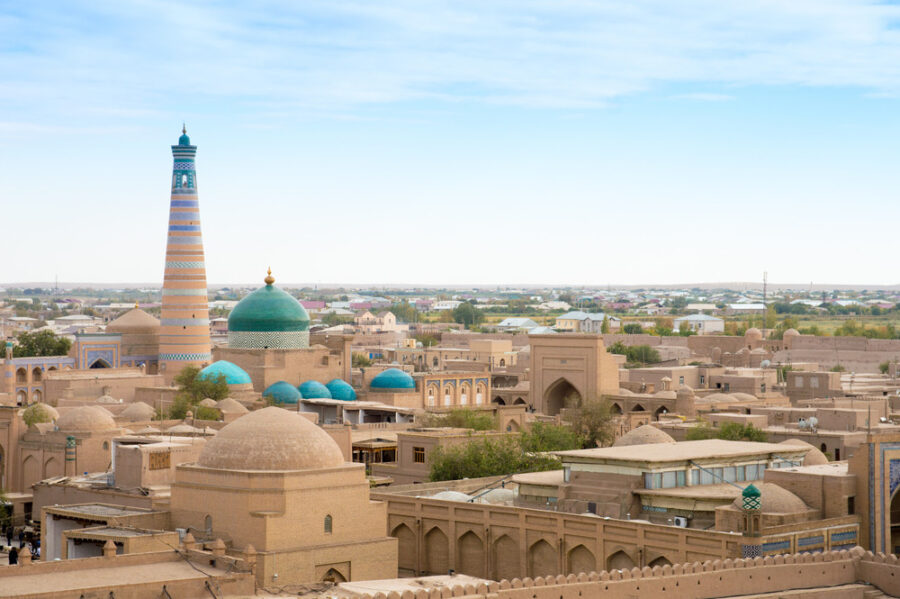
Authorities in Uzbekistan have confirmed they have not yet issued any licenses for online gambling, despite the launch of a new legal framework.
On March 18 a spokesperson for the National Agency for Prospective Projects, Askarjon Zakirov, said that while applications have been submitted, no approvals have been given, according to Uz Daily.

Zakirov explained that the delay is part of an effort to reduce fraud risks and limit access for socially vulnerable groups.
Regulators are currently working on a Unified State Registry of Bets and Players, a system that is intended to track activity and enforce compliance across the sector.
That platform is technically ready, according to Zakirov, but work is ongoing before its launch.

Uzbekistan legalized gambling in April 2024 under laws signed off by President Shavkat Mirziyoyev, which officials said was necessary to cut down illegal activity and consumer harm.
Rules introduced in December 2024 outlined guidelines for operators, including minimum capital thresholds, reserve funds, and mandatory player registration procedures.
Further legislation passed in 2025 established restrictions on certain groups taking part in gambling and outlined penalties for violations. Authorities said fines collected from breaches would be split between the state budget and accounts controlled by the National Agency for Prospective Projects.

Dig Deeper
Related stories
 2026/03/17: Philippine Presidential Anti-Organized Crime Commission partners with cybercrime agency to tackle illegal igaming
 2025/11/03: PAGCOR revenue up 5.8% and net income surges 49%
 2025/10/15: Bangladesh accuses ESPN of breaching online gambling advertising laws
 2025/10/31: Indonesia forecasts online gambling turnover to reach RP150.36 trillion
2026/03/17: Philippine Presidential Anti-Organized Crime Commission partners with cybercrime agency to tackle illegal igaming
2025/11/03: PAGCOR revenue up 5.8% and net income surges 49%
2025/10/15: Bangladesh accuses ESPN of breaching online gambling advertising laws
2025/10/31: Indonesia forecasts online gambling turnover to reach RP150.36 trillion
The Backstory
Why Tashkent is tapping the brakes
Uzbekistan’s pause on issuing online gambling licenses fits a broader pattern of regulators prioritizing control before commercialization. The country legalized wagering in April 2024 to displace illegal operators and cut harm, then followed with detailed rules in December including capital thresholds, reserve funds and mandatory player verification. Further measures this year restricted participation and set penalties. The missing piece is execution. Officials say a unified registry for bets and players is technically ready but still undergoing checks — a prerequisite they argue is essential to contain fraud and shield vulnerable groups. The delay underscores a policy choice: build supervisory plumbing first, then open the tap.
That sequencing has become a hallmark for governments trying to balance tax and growth ambitions with social safeguards. It also signals to prospective licensees that technical integrity and traceability will be nonnegotiable. In markets where illicit networks are entrenched, regulators have learned that licensing without enforcement tools risks legitimizing bad actors and eroding public trust.
Aftershocks from a regional crackdown
Near Uzbekistan, a cautionary tale has unfolded. Timor-Leste’s cabinet moved to revoke all current and pending online gambling licenses after a United Nations report linked criminal activity to operations in the Oecussi enclave. Authorities arrested 10 people and the probe touched a politically sensitive nerve when a government member was found to own one of the hotels implicated. In announcing the reversal, Dili framed the decision as a defensive step to protect security, social stability and the national brand as it readies to join the Association of Southeast Asian Nations in October. Read more about the Council of Ministers’ resolution in our coverage of Timor-Leste’s cancellation of gambling licenses.
The Timor-Leste pivot reflects how fast permissive regimes can harden if enforcement gaps appear or reputational risks mount. It also mirrors actions elsewhere in Southeast Asia, where governments have tightened oversight or boosted cross-border cooperation to combat online fraud and illegal betting hubs. For regulators in Tashkent, the message is clear: if compliance tools lag market rollout, political costs rise quickly.
India’s hard line and a long legal runway
India has tested the limits of rapid policy shifts. The Promotion and Regulation of Online Gaming Act 2025 in effect reoriented the landscape by differentiating esports from gambling and empowering authorities to curtail real-money gaming. Industry pushback has focused on process and constitutional questions over who can regulate what. Yet the country’s top court has set a slow timetable. As reported in our piece on the Supreme Court’s January hearing date, a three-judge bench will take up challenges on Jan. 21, 2026, despite pleas for an expedited review.
The lag has real-world effects. Head Digital Works, operator of A23, told the court that publication of the law triggered a de facto shutdown as banks, payment gateways and intermediaries cut services. The company said revenue fell to zero, costs rose and headcount plunged from 606 to 178. That chilling effect shows how market access can hinge not only on statutory language but also on risk tolerance across financial rails. It also gives regulators leverage, since intermediaries often move faster than courts.
Political rhetoric has reinforced the shift. Prime Minister Narendra Modi, speaking to students, drew a bright line between gaming as skill-building and gambling as harm, saying those who play for money will be “ruined.” Our report on Modi’s remarks, which cites coverage from Mathrubhumi, outlines how the government is framing igaming as a social risk while elevating esports under certain conditions. The combination of legal uncertainty, payments pressure and public messaging has effectively tightened the market even before the Supreme Court rules.
When policy meets process: a U.S. case study
The mechanics of oversight can be as decisive as the rules themselves. In the United States, the crypto prediction platform Polymarket illustrates how administrative timing can sway outcomes. The company sought to reenter the market by self-certifying contracts with the Commodity Futures Trading Commission on Sept. 30. The federal government shut down the next day, freezing the one-day review window the CFTC typically has to object. Former agency officials told Front Office Sports the shutdown was likely the reason for the holdup. See our full account of how a government shutdown delayed Polymarket’s return.
Polymarket, which paid a $1.4 million penalty in 2022, has since acquired a regulated venue and lined up backing from Intercontinental Exchange to reestablish U.S. access. Yet the episode underscores a universal lesson for would-be licensees in Uzbekistan and beyond: regulatory pathways depend on functioning institutions as much as on policy intent. Even well-capitalized operators can be sidelined by process risk — court calendars, agency staffing or fiscal politics.
Operators pick sides — and restructure
Facing this environment, global operators are recalibrating. Yolo Group, a crypto-forward gambling company that built scale in gray markets, said it will shutter its flagship unregulated brands Sportsbet.io and Bitcasino.io to pursue a fully licensed strategy. The firm is in the final stages of securing two B2B vendor licenses in the United Arab Emirates and will consolidate under a single regulated brand, Yolo.com. The repositioning will cost jobs across its consumer arm but aims to meet the expectations of strict domestic regulators. Our coverage details how Yolo is exiting gray markets to chase UAE licenses.
Founder Tim Heath framed the decision bluntly in a public memo: operators cannot be “white and gray” at once. The company plans MiCA-compliant crypto payments in Europe, a launch pathway through its licensed casino in Tallinn and expansion in Canada, Sweden and Finland. Analyst Alun Bowden called the move a “seismic shift” for crypto gambling in a LinkedIn post.
For Uzbekistan, these pivots validate a cautious rollout. A strong registry, hard identity checks and credible penalties make the domestic license more valuable and defensible — and raise the cost of straddling gray markets. The tradeoff is time. But as Timor-Leste’s retreat, India’s enforcement chill and Polymarket’s bureaucratic detour show, moving fast without resilient guardrails can backfire. Tashkent’s bet is that delaying issuance until surveillance and compliance are truly ready will attract operators prepared to pick a side — and stay on it.
