


Indian Prime Minister warns students that ‘gambling is ruin’

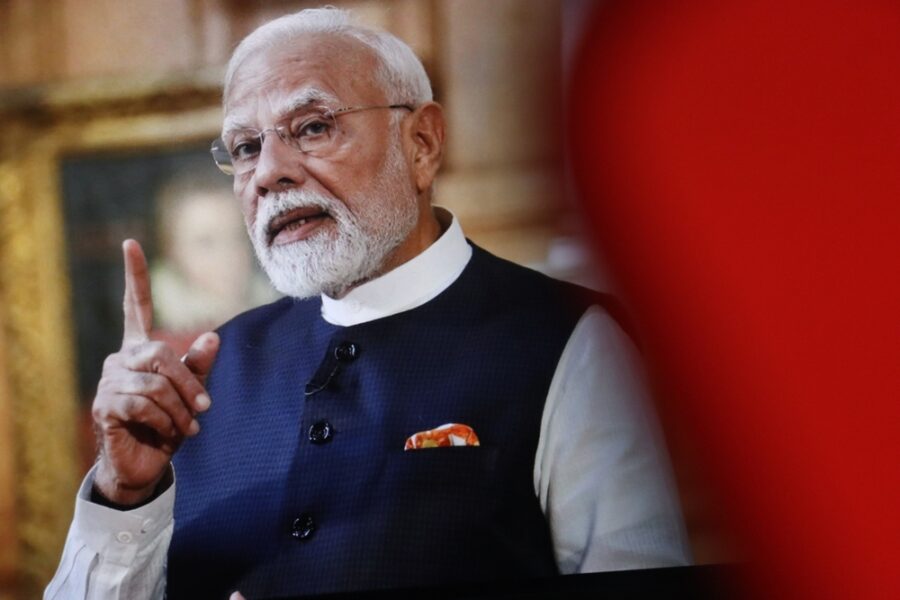
India Prime Minister Narendra Modi has warned students about the dangers of igaming, contrasting it with the potential benefits of gaming, according to mathrubhumi.com.
Speaking in New Delhi, he discussed a variety of subjects with students, parents, and teachers, including the effect of the internet on young people. While he acknowledged that gaming could sharpen alertness and speed, he cautioned against gaming as a time-killer, while adding a further warning about igaming.

“Those who indulge in gaming for money will only be ruined. We do not have to encourage gambling in the country. I have made a law against online gambling,” he said.
He encouraged students who were interested in gambling to instead use the skills developed through gaming to transition from consuming content to becoming creators and to focus on their studies.
Modi was referring to the Promotion and Regulation of Online Gaming Act, which was introduced last year. The law differentiated between esports and gambling, with the former permitted under certain conditions, including recognition as a sport under Indian law.

In the months after the passage of the act, operators and other stakeholders have protested the lack of consultation, and several legal challenges have been filed with the Indian Supreme Court.
Abi Bray brings strong researching skills to the forefront of all of her writing, whether it’s the newest slots, industry trends or the ever changing legislation across the U.S, Asia and Australia, she maintains a keen eye for detail and a passion for reporting.

Verticals:
Sectors:
Dig Deeper
Related stories
 2026/03/12: India’s Cyber Crime Police take down illegal online gambling advertisements
 2025/09/03: Mobile Premier League to cut staff by 60% after India bans paid gaming
2025/10/07: Indian Ministry of Electronics and Information Technology publishes draft rules for online gaming bill
2025/09/03: Mobile Premier League to cut staff by 60% after India bans paid gaming
2025/10/07: Indian Ministry of Electronics and Information Technology publishes draft rules for online gaming bill
 2025/08/29: A23 files first challenge to India’s igaming ban
2026/03/12: India’s Cyber Crime Police take down illegal online gambling advertisements
2025/09/03: Mobile Premier League to cut staff by 60% after India bans paid gaming
2025/10/07: Indian Ministry of Electronics and Information Technology publishes draft rules for online gaming bill
2025/08/29: A23 files first challenge to India’s igaming ban
The Backstory
Why Modi’s warning lands now
Prime Minister Narendra Modi’s admonition to students that “gambling is ruin” arrives amid a fast-moving reshuffle of global online betting rules, enforcement and criminal exploitation. India’s recent attempt to split the difference by recognizing esports while clamping down on online gambling sets the backdrop. The distinction reflects a policy arc seen elsewhere: acknowledge digital entertainment’s economic upside while trying to cordon off its high-risk financial edge. The practical challenge is that enforcement gaps, cross-border platforms and gray-market operators often move faster than regulators, and users do too. That is the cautionary thread running through recent developments from the United States to Southeast Asia.
Modi framed the issue as one of youth focus and long-term risk, urging students to channel skills toward creation rather than wagering. The message dovetails with a wider policy stance. New rules aim to separate skill-based play and sport from gambling, a move designed to enable investment and legitimacy for parts of the gaming ecosystem while isolating chance-based betting. But the gulf between law and lived behavior is becoming the central test, and it is widening in several markets.
Bans versus behavior on campus
Universities offer a real-time stress test of gambling controls. In Mississippi, where mobile sports betting is illegal off casino property, a new survey of 1,600 students found that nearly 60% of those who gambled last year reported placing online bets with ostensibly legal sportsbooks. Many bypassed controls by using virtual private networks or asked friends and family to place wagers. The study, by the University of Mississippi, estimated that between 4,700 and 6,400 students at the state’s public universities face serious gambling issues, with up to 30% at risk of developing a disorder. The findings suggest that perceived legality, not formal rules, shapes behavior for a large share of young bettors. Read more on the findings and the call for addiction funding tied to tax receipts in the Mississippi student betting study.
The Mississippi picture is instructive for India’s policy makers. It underscores how education campaigns and platform-level controls need to match young users’ technical savvy. It also suggests that even clear prohibitions may be porous when friction is low and peer networks are active. For a government trying to shore up the wall between esports and wagering, the campus gap is a leading indicator of what enforcement alone may not solve.
Crackdowns that scatter the problem
Indonesia’s top legal official put a fine point on a common enforcement obstacle: targeting sites and operators without cutting off the money. After one year of stepped-up actions, the government conceded its online gambling crackdown remains “not optimal,” with plans to lean harder on anti-money laundering tools to trace and seize proceeds. Indonesia’s watchdog recorded 2025 transactions of 155 trillion rupiah through October, down from 359 trillion in 2024, but still forecast turnover of roughly 150.36 trillion rupiah for the year. The emphasis is shifting from platform takedowns to financial choke points and cross-border cooperation. Details are in Jakarta’s review of an underperforming crackdown.
A United Nations report widens the lens. The UN Office on Drugs and Crime estimates the Asian scam industry — spanning illegal gambling, fraud and laundering — at about $40 billion. With enforcement tightening in parts of Southeast Asia, industrial-scale operations are migrating and embedding in new markets, from Africa to South America. Brazil has emerged as a hot spot for cyber-enabled fraud and gambling-linked laundering with ties to Southeast Asian groups. The report argues governments must prepare for a professionalized, mobile set of actors that exploit jurisdictional gaps. That dynamic is detailed in the UN’s warning on the spread of gambling and fraud scams.
For India, the lesson cuts both ways. Stricter domestic rules may reduce local exposure, but they can also push operations offshore while leaving consumers reachable online. That raises the stakes for payment scrutiny, data sharing and diplomacy with neighbors where platforms and processors are based or routed.
Regulators in flux test credibility
Clear rules require credible referees. Curaçao’s experience shows the risks when oversight is unsettled. After the entire board of the newly launched Curaçao Gaming Authority resigned, Prime Minister Gilmar Pisas stepped in to supervise the regulator directly. The authority, created to replace the Gaming Control Board and burnish the jurisdiction’s reputation, had yet to be formally registered as a foundation months after launch. Finance Minister Javier Silvania, whose portfolio covers the regulator, skipped a recent meeting as political tensions rose. The uncertainty clouds reform plans aimed at transparency and oversight in a jurisdiction that hosts many international online operations. The governance shake-up is outlined in Curaçao’s regulator oversight shift.
Why it matters elsewhere: when licensing centers wobble, operators can arbitrage jurisdictions, and compliance standards can slip in pursuit of speed. For countries drawing hard lines at home, the resilience of foreign regulatory partners can determine how effective those lines are. Weak links become on-ramps for both gray-market operators and criminal networks that thrive on lax supervision.
Funding choices and incentives
Another unresolved question is whether to steer gambling revenue to social causes. New Zealand’s Internal Affairs Minister Brooke van Velden opposed a proposal to give community groups a 4% slice of online gambling tax, warning it would create a reliance on gambling income and dull the focus on harm reduction. A cabinet paper echoed concerns that the policy could entrench dependency and complicate future reforms, even as it projected NZ$10 million to NZ$20 million in annual returns on a market estimated at NZ$250 million to NZ$500 million. The government increased the offshore gambling tax from 12% to 16% and built in reviews to monitor impacts. The debate is captured in New Zealand’s pushback on community funding.
For India, the takeaway is about incentives. Earmarking revenue can build political support, but it may also normalize reliance on wagering flows and complicate future clampdowns. Messaging to students about risk is more credible when the state’s fiscal posture does not depend on the activity it warns against.
What to watch next
Modi’s warning sets expectations for stronger follow-through on payments surveillance, cross-border cooperation and platform accountability. Student behavior studies point to the need for prevention, not only punishment. Indonesia’s pivot to financial targeting and the UN’s alarm on the mobility of scam operations suggest that success will hinge on tracing money and narrowing jurisdictional gaps. Curaçao’s regulatory turbulence is a reminder that oversight capacity abroad matters to outcomes at home. New Zealand’s stance underscores the risk of policy designs that entangle governments with gambling revenues.
As India refines how it distinguishes gaming from gambling, the test is whether consumer protections, financial guardrails and regulator coordination can keep pace. The stakes are generational. Young users are digital natives, and illicit markets are agile. The policy architecture has to be both.
