


Reform UK party leader Nigel Farage in hot water over undeclared benefits from Tether.bet-linked crypto entrepreneur

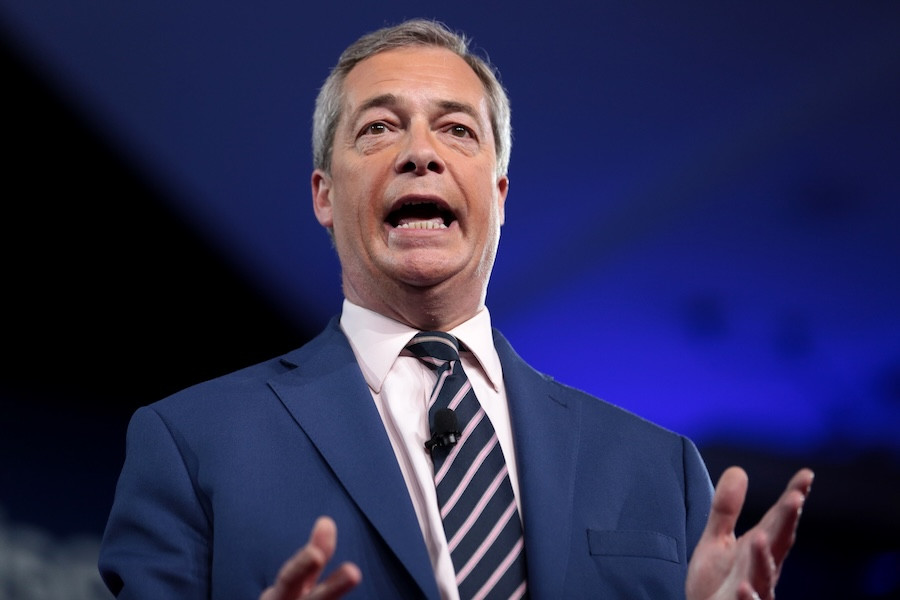
British MP Nigel Farage, leader of the Reform UK party in parliament, claims he has “done no wrongdoing” following reports of undeclared benefits from a cryptocurrency entrepreneur linked to gambling website Tether.bet who was also convicted of fraud in the US.

The Sunday Times issued a piece entitled “Revealed: Nigel Farage secretly funded by convicted criminal,” claiming that Farage – the Reform UK leader – did not declare benefits paid for by George Cottrell, including security, accommodation, staff and drivers, breaching parliamentary rules.

In response to the piece, the BBC reported that Farage has said “I have done no wrongdoing, followed the rules and I am now considering legal action against the Sunday Times.” The politician claims that “the establishment will stop at nothing to hurt Reform,” the pro-Brexit party.
Under the MP code of conduct, new members must declare any benefit related to their political activity over £300 (US$400)1 GBP = 1.3343 USD
2026-07-06Powered by CMG CurrenShift received in the 12 months before their election.
George Cottrell was found guilty of wire fraud in 2017, after undercover US federal agents caught the businessman offering to launder money for them. He served eight months in jail and is pursuing a pardon from the US President. Cottrell was arrested in 2017 while with Farage, as the two were returning to the UK following a US Republican party convention.

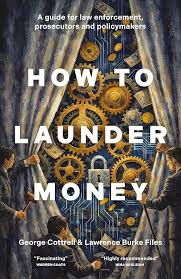
Cottrell has been a long-time backer of Farage, even prior to Brexit and Farage becoming a Member of Parliament. He is also the co-author of the book “How to Launder Money”.
The British politician is already facing a Parliamentary Commission for Standards investigation for accepting (and failing to declare) a £5 million (US$6.7 million)1 GBP = 1.3343 USD
2026-07-06Powered by CMG CurrenShift donation from crypto billionaire Christopher Harborne. Harborne reportedly gave Farage the money weeks before the politician announced he would run as a candidate in the 2024 general election.
If the commissioner finds Farage to have breached the rules, he could face suspension from parliament for over 10 days, which could allow a recall byelection, potentially forcing the politician from his post. The latest incident could further exacerbate tensions against Farage and influence the decision.

Farage has argued that the gift from Harborne did not need to be declared as he received it before he was elected MP and that the gift was not political in nature.
The intersection of crypto and politics has drawn public criticism, with the recent disclosures by US President Donald Trump listing billions in gains from crypto-related businesses while in office, while maintaining crypto-friendly policies.

Dig Deeper
Related stories
 2025/05/19: BetHog: Prospecting on the crypto gambling frontier
 2026/04/08: Paysafe launches crypto payments for US gambling sector
 2025/02/26: British Columbia Lottery Corporation warns residents over online casino scams
 2026/07/17: Crypto.com secures US$400 million investment from Citadel Securities
2025/05/19: BetHog: Prospecting on the crypto gambling frontier
2026/04/08: Paysafe launches crypto payments for US gambling sector
2025/02/26: British Columbia Lottery Corporation warns residents over online casino scams
2026/07/17: Crypto.com secures US$400 million investment from Citadel Securities
The Backstory
Crypto money moves closer to politics and gambling
Nigel Farage’s dispute over undeclared benefits from George Cottrell sits at the intersection of three trends that have been building across gambling, finance and politics: the rise of crypto-linked betting products, the mainstreaming of prediction markets and closer scrutiny of money flowing from digital-asset entrepreneurs into public life.
The immediate issue is a parliamentary standards question. Farage says he followed the rules and did nothing wrong after reporting that Cottrell, a longtime backer and cryptocurrency entrepreneur linked to gambling site Tether.bet, paid for benefits including security, accommodation, staff and drivers. The stakes are higher because Farage already faces scrutiny over a separate £5 million gift from crypto billionaire Christopher Harborne, which he argues was neither political nor required to be declared because it was made before he became an MP.
But the controversy also reflects a broader political problem. Crypto wealth has moved quickly into sectors that are still being defined by regulators, including online gambling, stablecoins and event contracts. That creates a challenge for lawmakers and watchdogs: The money is real, but the business models can sit between financial trading, wagering, payments and political influence.
Event contracts blur the betting line
Prediction markets have become one of the clearest examples of that overlap. Once a niche product, they are now being treated by major gambling and technology companies as a potential growth category. Users trade contracts tied to the outcome of events, including elections, inflation readings and sports results. The format resembles financial derivatives, but in many cases the underlying consumer appeal looks much like betting.
That distinction matters because prediction markets can be offered through federally regulated derivatives venues in the U.S., including platforms registered with the Commodity Futures Trading Commission. That structure could allow companies to reach customers in states where traditional sports betting remains restricted, raising questions about whether prediction contracts are a financial product, a gambling product or both.
The industry’s momentum has been visible in recent corporate moves. Trump Media & Technology Group, the company behind Truth Social, said it would work with Crypto.com to launch Truth Predict, a product that would allow users to trade on elections, economic indicators and sports outcomes. The arrangement, described in Trump Media’s partnership with Crypto.com on prediction markets, would use Crypto.com Derivatives North America, a CFTC-registered exchange, to facilitate the contracts.
The political symbolism is significant. A media company closely associated with President Donald Trump is moving into markets that could include elections, while the wider crypto industry has gained influence under an administration seen as more receptive to digital assets. That makes prediction markets not only a gambling-adjacent growth product but also a potential venue for political engagement and speculation.
Sports operators test a new route to customers
Sports has become the most commercially attractive category for prediction markets. Crypto.com and Underdog have said they will launch sports prediction markets in 16 states, including some where sports betting is not legal. As described in Crypto.com and Underdog’s plan to bring sports contracts to 16 states, the product would allow customers to buy and sell contracts on sports outcomes instead of placing bookmaker-style wagers.
That model could reshape competition in U.S. gambling. If event contracts are treated primarily as federally regulated derivatives, they may offer a pathway around the slower state-by-state legalization process that has defined sports betting since 2018. For operators, that means access to customers who are otherwise unavailable. For state regulators and licensed sportsbooks, it threatens to undercut tax structures, licensing regimes and consumer-protection frameworks built for traditional wagering.
Major gambling companies are watching closely. At a recent analyst conference, DraftKings and Flutter Entertainment, the parent of FanDuel, identified prediction markets as a strategic priority. In analysts’ review of prediction markets as a key topic for gambling operators, both companies were described as focusing on product development, market making and the potential for prediction products to improve customer acquisition. Rush Street Interactive said it had applied for a prediction-market license as a hedge if legalization becomes clearer.
The causality is straightforward: As customer acquisition costs rise and state expansion slows, operators are looking for adjacent products that can scale nationally. Prediction markets provide a possible answer, especially if they can be tied to sports calendars and existing fantasy or betting audiences. Crypto infrastructure gives those products payment rails, trading architecture and a narrative of innovation.
Crypto payments push into regulated gambling
The Farage matter also lands as crypto becomes more embedded in gambling payments. Payment processor Paysafe recently launched Pay with Crypto for U.S. online gaming operators, allowing players to fund accounts using cryptocurrencies and stablecoins where permitted. The product, detailed in Paysafe’s launch of crypto payments for the U.S. gambling sector, converts deposits into U.S. dollars after wallet connection and verification.
That development illustrates how crypto’s role in gambling is shifting. It is no longer only a speculative asset or an offshore casino tool. Regulated operators and payments companies are trying to capture demand from customers who already hold digital assets, while keeping transactions within licensed systems. Paysafe cited a large base of U.S. crypto holders and player interest in using crypto for gambling-related payments.
Regulation remains uneven. Wyoming became the first U.S. state to permit digital, crypto and virtual currencies as a form of payment under a 2021 law. Other states, including Virginia and Colorado, allow crypto conversions as deposits, and DraftKings has planned a crypto-to-cash product in several states. The direction of travel points toward more integration, but only if regulators are satisfied that anti-money-laundering, know-your-customer and responsible-gambling requirements can be met.
That is where political scrutiny can intensify. When digital-asset wealth enters gambling and public life at the same time, questions about transparency become more pressing. Lawmakers may welcome innovation in payments and markets, but they also face pressure to show that political donations, personal benefits and business relationships are being disclosed properly.
Investor losses show the downside risk
Crypto gambling’s risks are not theoretical. U.S. prosecutors charged former Zero Edge Corp. Chief Executive Richard Kim with securities and wire fraud after alleging he gambled away investor money intended for a blockchain-based online casino app. According to the fraud case involving Zero Edge seed funding, Kim raised about $4.3 million and used much of it on personal crypto trading and gambling activity, including through Shuffle.com.
The case, based on a release from the U.S. Attorney’s Office for the Southern District of New York, underscores why crypto gambling ventures face investor and regulatory skepticism. Founders can raise capital on promises of blockchain efficiency, new casino formats or novel payment systems, but the same speed and opacity that make the sector attractive can also make misuse harder to detect in real time.
For public figures, that backdrop matters. Cottrell’s own history includes a 2017 wire fraud conviction in the U.S. after undercover federal agents accused him of offering to launder money. His reported role in supporting Farage therefore carries reputational risk beyond the technical question of parliamentary registration. It connects a political leader to a figure whose business and legal history touches crypto, gambling and financial crime concerns.
The stakes for Farage and the wider market
Farage’s defense rests on compliance: He says he followed the rules and has suggested the criticism is politically motivated. The standards process will determine whether the benefits linked to Cottrell, and the separate Harborne gift, should have been declared and whether any sanction is warranted. A serious finding could expose Farage to suspension and potentially a recall process if thresholds are met.
For the gambling and crypto industries, the episode adds to a wider debate over legitimacy. Companies are trying to move crypto betting, payments and prediction contracts into regulated channels, arguing that consumer demand is better served inside licensed frameworks than outside them. At the same time, political controversies involving crypto money can strengthen calls for tighter disclosure, stricter market rules and clearer boundaries between financial trading and gambling.
The result is a feedback loop. As crypto-linked gambling products become more mainstream, the people financing and promoting them receive more attention. As those figures become involved in politics, regulators and standards bodies face more pressure to examine the source, purpose and disclosure of benefits. Farage’s case is therefore not only about one MP’s register of interests. It is a test of how political systems respond when fast-moving digital-asset wealth meets gambling innovation and public office.
