


Tribal gaming groups seek changes to Clarity Act over prediction markets

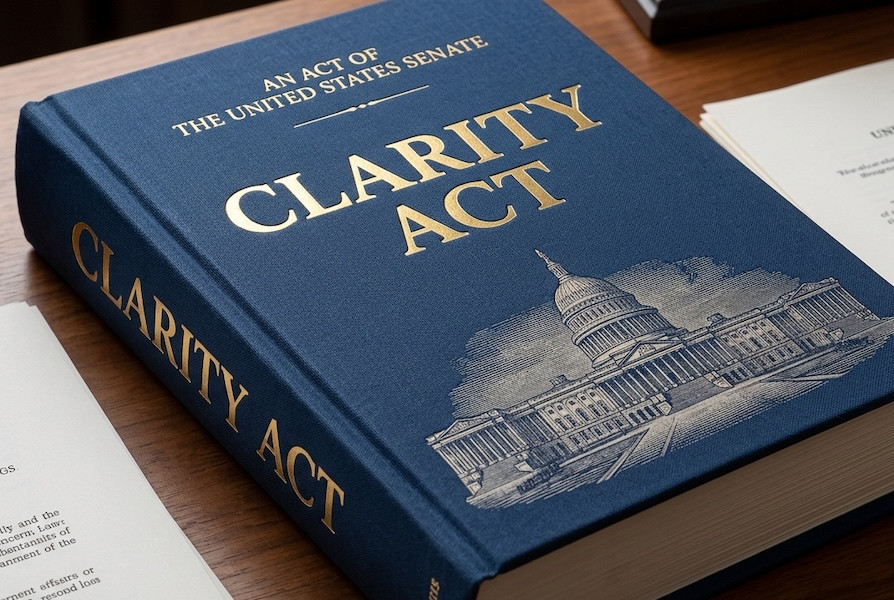
Tribal gaming representatives and US lawmakers are calling for changes to the Digital Asset Market Clarity Act that would prevent prediction market platforms from offering sports-related contracts without following existing state and tribal gambling regulations.
Speaking at a Senate Indian Affairs Committee roundtable, the Vice Chairman of the Indian Gaming Association (IGA), Tehassi Hill, urged lawmakers to include provisions confirming that sports and casino gambling remain regulated by state and tribal governments, reported The Block.

The proposed changes would ensure these markets are not placed under the authority of the Commodity Futures Trading Commission (CFTC), which currently oversees prediction markets.
Senator Tina Smith also proposed adding similar language to the Clarity Act, stating that the Commodity Futures Act should not override the Indian Gaming Regulatory Act or existing tribal-state gaming agreements.
The Clarity Act is a federal bill to regulate digital assets, such as cryptocurrencies, by establishing clearer rules on which agencies oversee different areas of the sector. The bill passed the House of Representatives and was later advanced by the Senate Banking Committee but still requires approval from the full Senate before it can move forward.

The debate surrounding prediction markets and their regulation has intensified as platforms offering contracts on real-world events, such as sporting outcomes, have grown in popularity. Prediction market operators, such as Kalshi and Polymarket, and other companies operating in this space argue that they should be regulated as financial markets by the CFTC.
Meanwhile, other gaming industry representatives believe that sports-related prediction market contracts should function similarly to wagering and should follow existing gambling laws.
CFTC Chair Michael Selig has said that the agency has authority over prediction markets, while several states and tribal gaming groups argue that gambling regulation should remain within their jurisdiction.

The outcome of the debate could influence the structure of the US gambling market, as prediction markets continue to expand in areas traditionally occupied by regulated sportsbooks.
Charlotte Capewell brings her passion for storytelling and expertise in writing, researching, and the gambling industry to every article she writes. Her specialties include the US gambling industry, regulator legislation, igaming, and more.

Dig Deeper
Related stories
 2026/07/15: Indian Gaming Association takes prediction market fight to Washington, D.C.
 2026/06/29: US Democrats try to block CFTC funding supporting prediction market cases
 2026/02/17: Indian Gaming Association says prediction markets pose urgent threat to tribes
 2025/05/31: Prediction markets are gaming’s next big shortcut to 50-state access
2026/07/15: Indian Gaming Association takes prediction market fight to Washington, D.C.
2026/06/29: US Democrats try to block CFTC funding supporting prediction market cases
2026/02/17: Indian Gaming Association says prediction markets pose urgent threat to tribes
2025/05/31: Prediction markets are gaming’s next big shortcut to 50-state access
The Backstory
A fight over who regulates the wager
The push by tribal gaming groups to amend the Digital Asset Market Clarity Act is the latest stage in a broader fight over whether sports-related prediction markets should be treated as federally regulated financial contracts or gambling products subject to state and tribal control. At issue is not only the future of platforms such as Kalshi and Polymarket, but also the authority that has defined U.S. gambling regulation for decades.
Prediction markets allow users to buy and sell contracts tied to real-world outcomes, including elections, court decisions, economic indicators and sporting events. Operators argue those products fall within the financial-market framework overseen by the Commodity Futures Trading Commission. Tribal governments, state regulators and much of the gaming industry say sports-event contracts are functionally wagers and should not be able to bypass gambling laws by being labeled swaps or commodities.
That distinction has become more urgent as Congress considers crypto-market structure legislation. The Clarity Act is designed to divide oversight of digital assets between federal regulators, chiefly the Securities and Exchange Commission and the CFTC. But because prediction market operators are seeking to expand under CFTC supervision, gaming interests see the bill as a vehicle that could either reinforce tribal and state authority or open a national pathway around it.
Tribes move the dispute to Capitol Hill
The Indian Gaming Association has made prediction markets a central federal lobbying priority, warning that sports-event contracts could erode the compact-based system that supports tribal casinos and sports betting. In July, the group convened tribal leaders in Washington for a legislative summit aimed at pressing senators to add protections to the Clarity Act. The association said it wanted language confirming that the bill would not preempt the Indian Gaming Regulatory Act, tribal-state compacts or other gambling laws.
That campaign followed a series of public warnings from tribal leaders. IGA Chairman David Z. Bean described prediction markets as one of the greatest threats tribal gaming has faced in a generation, citing the risk that companies could offer betting-like products nationwide without negotiating with tribes or states. The group’s Washington legislative summit marked a shift from industry concern to coordinated political action.
The stakes are high for tribal governments because gaming revenue funds public services, including health care, education, housing, public safety and language preservation. Tribal leaders have argued that allowing federally supervised sports contracts to operate on tribal lands or in states with exclusivity agreements would weaken the economic basis for those services and undermine government-to-government compacts negotiated over many years.
The 50-state access question
For prediction market companies and gaming operators watching the sector, the appeal is clear: federal oversight could provide a route to nationwide availability without the slow, expensive process of securing licenses in each state. That possibility has drawn comparisons to earlier gambling-adjacent models, including daily fantasy sports and sweepstakes casinos, which expanded rapidly by operating in legal gray areas before regulators caught up.
Industry participants have described prediction markets as potentially the next shortcut to national scale. A recent discussion of prediction markets as a path to 50-state access noted that companies could use CFTC approval to offer betting-like products across the country, including in jurisdictions where sports betting remains illegal or tightly controlled. That prospect has alarmed both commercial sportsbooks and tribal operators that have built businesses under state licensing regimes.
The concern is not limited to market share. State-regulated sportsbooks must comply with rules on responsible gambling, age verification, geolocation, advertising, taxation and integrity monitoring. Critics say prediction market platforms may not have comparable obligations, especially if they are treated primarily as trading venues. Tribal advocates have also pointed to the absence of geofencing as a sovereignty problem, because platforms may be accessible on tribal lands without tribal authorization.
Gaming groups seek a statutory line
The tribal campaign has aligned with a wider industry push to convince Congress to draw a bright line against sports and casino-style event contracts. The American Gaming Association, the Indian Gaming Association, the Association of Gaming Equipment Manufacturers and other groups have urged the Senate to prohibit prediction markets from offering sports-related contracts. Their argument is that the products amount to unregulated sports betting marketed as financial trading.
In a letter seeking a congressional ban on sports-event contracts, industry groups said prediction market platforms had bypassed state and tribal law, weakened consumer protections and undercut a system that supports jobs, tax revenue and community programs. They also argued the CFTC was not built to regulate gambling, citing its lack of experience with responsible gaming, wagering integrity and consumer safeguards specific to betting.
The preferred solution for many gaming interests is an amendment to the Clarity Act stating that nothing in the digital assets framework authorizes sports betting, casino games or similar products through federally regulated event contracts. That language would preserve the CFTC’s role in financial derivatives while excluding products tied to gambling outcomes. Without it, critics say, future operators could cite congressional silence as permission to keep expanding.
Democrats target the CFTC’s legal posture
The dispute has also moved into appropriations politics. Some Senate Democrats have sought to block the CFTC from using federal funds to challenge state and tribal enforcement actions against prediction market operators. Rather than banning specific contracts outright, that strategy would limit the agency’s ability to sue or pressure regulators that apply gambling laws to the sector.
Senators Richard Blumenthal and Jeff Merkley, joined by other Democrats, asked appropriators to restrict CFTC funding for litigation against state regulators. Their effort to limit CFTC funding tied to prediction market cases reflects frustration with the agency’s defense of its jurisdiction at a time when states and tribes say they are trying to protect consumers and existing gambling frameworks.
The approach differs from earlier legislation, including proposals to ban event contracts tied to sports, elections and government actions. By focusing on funding, the senators are trying to stop the CFTC from becoming, in their view, an enabler of platforms seeking to avoid state oversight. Their letter cited disputes involving tribal compacts and state gambling laws, underscoring how the issue has become both a consumer-protection fight and a federalism dispute.
Sovereignty, consumer protection and the next market structure fight
The current debate reflects a collision between two regulatory systems. Financial markets generally favor federal uniformity, with national exchanges and products operating under CFTC rules. Gambling regulation is fragmented by design, with states and tribes deciding what is legal, who may operate and how revenue is taxed or shared. Prediction markets tied to sports sit directly between those models.
That tension explains why tribal leaders have framed the matter as a sovereignty issue rather than a narrow commercial dispute. At a Capitol Hill briefing on prediction markets and tribal gaming, IGA representatives said sports-event contracts could attack the core bargain of the Indian Gaming Regulatory Act by letting outside companies offer wagering products without tribal consent or compact negotiations.
The Clarity Act now gives lawmakers a concrete decision point. If Congress includes language preserving state and tribal gambling authority, prediction markets may face limits on sports and casino-style contracts. If it does not, operators could argue that CFTC supervision provides a lawful national channel for products that closely resemble sports bets. For tribes, states and regulated sportsbooks, the outcome could determine whether the next phase of online wagering grows through gambling law or around it.
The immediate stakes are legislative, but the broader consequence is structural. A federal green light for sports-event contracts could reshape competition, reduce the value of state licenses and test tribal exclusivity agreements. A congressional restriction could slow prediction market expansion and reaffirm the existing gambling compact. Either way, the fight over the Clarity Act is becoming a proxy for who controls the future of digital wagering in the U.S.
