


Supreme Court of India to hear challenges against online gaming laws

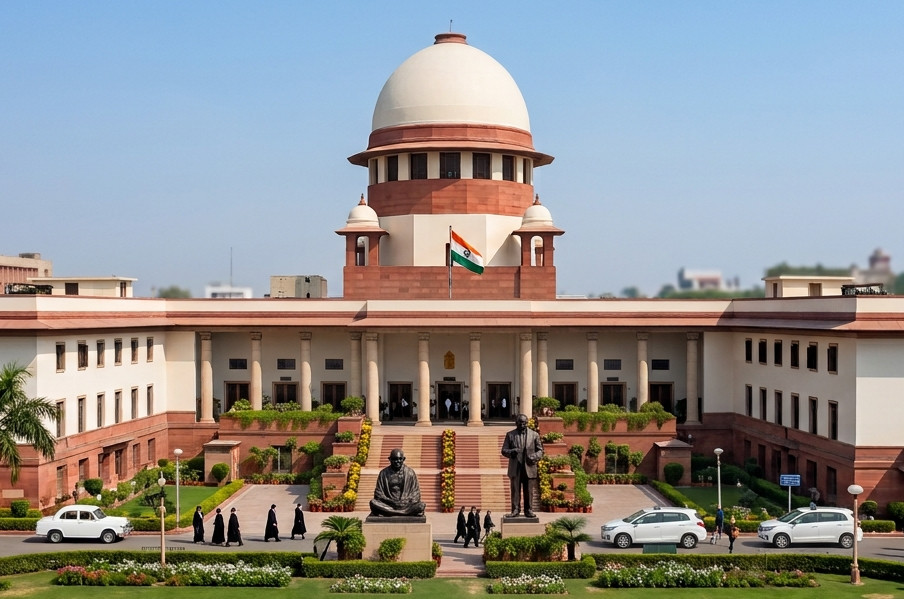
The Supreme Court of India has agreed to begin the final hearing of petitions challenging the Promotion and Regulation of Online Gaming Act, which came into effect on 1 May 2026 and introduced a nationwide ban on online real-money games.
The wider legal challenge, led by Dr. K A Paul, questions whether the act’s prohibition on online real money games is constitutional, according to reports.

The petitioners argue that a blanket nationwide ban covering both games of chance and skill-based games like poker could conflict with protections allowing individuals to conduct lawful business activities.
The court will also consider a public interest litigation from the Centre for Accountability and Systemic Change (CASC), which asks for directions requiring the central government to prevent online gambling platforms that are allegedly presenting their services as social gaming and esports.
Represented by former Uttar Pradesh DGP Vikram Singh and Shourya Tiwari, CASC has asked the court to require government action against betting and gambling apps that it alleges are causing social and economic harm across India.

CASC’s legal representative told the court that authorities have yet to respond to the organization’s petition despite earlier court orders issued in October last year.
The petitioner, lawyer Virag Gupta, also said it had previously submitted details of approximately 2,000 gambling apps that were allegedly offering betting and gambling services in India in breach of the law.
The Supreme Court’s decision could have significant implications for India’s online gaming industry, and it could determine whether the country continues with a strict prohibition approach or moves towards a more defined regulatory framework.
Charlotte Capewell brings her passion for storytelling and expertise in writing, researching, and the gambling industry to every article she writes. Her specialties include the US gambling industry, regulator legislation, igaming, and more.

Dig Deeper
Related stories
 2025/10/24: Indian Supreme Court seeks government input on plea to ban online gambling
 2026/01/20: India Supreme Court yet to hear petitions on the Promotion and Regulation of Online Gaming Act
2025/10/16: Indian Supreme Court to hear public interest case against social games
2026/01/20: India Supreme Court yet to hear petitions on the Promotion and Regulation of Online Gaming Act
2025/10/16: Indian Supreme Court to hear public interest case against social games
 2026/02/23: India’s Supreme Court rules no action for real-money gaming operators ahead of Gameskraft case
2025/10/24: Indian Supreme Court seeks government input on plea to ban online gambling
2026/01/20: India Supreme Court yet to hear petitions on the Promotion and Regulation of Online Gaming Act
2025/10/16: Indian Supreme Court to hear public interest case against social games
2026/02/23: India’s Supreme Court rules no action for real-money gaming operators ahead of Gameskraft case
The Backstory
A sweeping ban reaches the top court
India’s online gaming fight has moved from enforcement agencies and app stores to the Supreme Court, where judges are set to examine whether the country’s nationwide prohibition on online real-money games can survive constitutional scrutiny. The current challenge to the Promotion and Regulation of Online Gaming Act comes after months of rapid policy escalation, industry disruption and competing legal claims over whether skill-based contests should be treated the same as betting and gambling.
The law, which took effect in 2026 after being advanced in 2025, marked a decisive turn away from India’s earlier patchwork approach. Before the central ban, gaming companies often relied on state-level interpretations and court rulings that distinguished games of skill from games of chance. Fantasy sports, poker and rummy operators built large businesses around that distinction. The new national framework narrowed the space for those arguments by barring real-money online games broadly, while leaving room for esports and social games that do not involve stakes.
That shift created the central issue now before the court: whether Parliament can impose a blanket prohibition across categories that operators say have long been treated differently under Indian law. Petitioners challenging the act argue that the ban interferes with the right to conduct lawful business and fails to separate skill-based gaming from gambling. Public interest litigants, by contrast, say illegal betting operators have exploited those distinctions to present wagering products as social games, esports or fantasy contests.
Public interest litigation broadened the dispute
The Supreme Court’s review is not limited to industry challenges. It also includes public interest litigation filed by the Centre for Accountability and Systemic Change, which has pushed for tighter action against gambling platforms allegedly operating behind the branding of social or esports products. The court previously agreed to hear the public interest case against social games, a move that brought consumer protection, tax compliance, data risks and payment controls into the same legal frame as the constitutional challenge.
CASC’s case named several government ministries and the Indian units of Apple and Google, reflecting how enforcement has expanded beyond gambling companies themselves. The petition sought coordinated action by the ministries of electronics and information technology, information and broadcasting, and youth affairs and sports. It also asked authorities to examine whether app stores, payment networks and financial institutions were enabling unregistered gaming applications to reach Indian users.
In a later step, the court asked the central government to respond to the plea seeking a national crackdown. That request signaled that judges wanted the government’s interpretation of the new law and its enforcement obligations before deciding how to handle claims that illegal operators are still active. The case also sought tax recovery and investigations into offshore companies, alleging unpaid liabilities and cross-border evasion tied to gambling platforms serving Indian users.
Enforcement moved faster than litigation
While the courts considered the legal architecture, the government accelerated enforcement. In January, authorities blocked 242 additional illegal igaming websites and related links, bringing the total number of blocked platforms to 7,800 since the national ban took effect, according to the Business Standard. The action underscored the government’s view that the law is not only a regulatory measure but a public protection tool aimed at financial harm, addiction and illegal offshore betting.
The ban also targets the ecosystem around gaming. It prohibits advertisements for real-money igaming and bars banks from working with companies that provide such services. Those provisions matter because payment access and marketing reach were central to the sector’s growth. By cutting off banks, ads and web access, the government has sought to reduce demand and make it harder for operators to maintain Indian revenue streams, even if they are based outside the country.
That enforcement posture strengthens the government’s hand politically, but it also raises the stakes of the Supreme Court case. If the court upholds the ban, India would continue on a prohibition-led path, with regulators focused on blocking sites, restricting payments and separating sanctioned esports from wagering products. If the court narrows or strikes down parts of the law, the government may have to return to a licensing or classification model that distinguishes skill games from gambling more explicitly.
Operators felt the impact immediately
The industry consequences were swift. Mobile Premier League, once among India’s most prominent gaming platforms, moved to cut about 60% of its India workforce after the ban, Reuters reported. The company’s retrenchment, detailed in coverage of Mobile Premier League’s planned staff reductions, showed how heavily major platforms depended on real-money products and domestic revenue. The cuts affected marketing, finance, engineering, operations and legal teams.
Other companies reported similarly sharp business shocks. Dream11 said its revenue dropped by 95% overnight after the ban, while A23 filed an early legal challenge. Those developments helped convert the issue from a policy dispute into a broader test of India’s startup and digital economy environment. Supporters of the law argue that the losses reflect an industry built on risky products that blurred gaming and gambling. Operators counter that legal skill-based formats were swept into a prohibition designed for betting.
The economic argument is likely to remain secondary to constitutional and statutory questions before the court, but it frames the practical stakes. A ruling in favor of the government could push more Indian platforms toward free-to-play games, esports, overseas markets or non-gaming entertainment. A ruling for petitioners could revive business models that depend on entry fees and cash prizes, though likely under tighter tax, advertising and responsible gaming rules.
Gameskraft and tax questions shadow the case
The Supreme Court is also managing related disputes that could shape the sector’s future even beyond the current ban. In February, the court barred coercive action against Fanmade11 Fantasy Sports and 9Stacks Games until it delivers judgment in the Gameskraft matter. That case is expected to clarify the legal and tax treatment of real-money online gaming and fantasy sports, including how skill-based games should be classified and how goods and services tax demands apply.
The Gameskraft litigation predates the full effect of the national gaming ban but remains closely connected to it. Tax treatment, game classification and regulatory status are overlapping questions. If a product is treated as gambling, it faces one set of consequences; if treated as a skill-based service, it may face another. The new law attempts to cut through that debate by banning real-money online games more broadly, but pending tax and classification cases show that older legal distinctions have not disappeared.
The court’s temporary protection for some operators also illustrates the judiciary’s cautious approach. Rather than allowing enforcement to proceed unevenly while major rulings are pending, judges have tried to preserve the status quo in selected cases. That does not predict the outcome, but it reflects concern about irreversible consequences for companies facing penalties, tax demands or forced shutdowns before core legal questions are settled.
The ruling could define India’s model
The Supreme Court’s decision may determine whether India becomes one of the world’s strictest large-market jurisdictions for online real-money gaming or shifts toward a controlled regulatory regime. The government has paired prohibition with support for esports and social gaming, suggesting it wants to preserve parts of the digital gaming economy while eliminating cash-staked products. That distinction will be tested in practice, especially if platforms redesign games to avoid the ban while maintaining competitive or reward-based features.
For regulators, the challenge is enforcement at scale. Thousands of blocked sites show the breadth of the market, but offshore operators, mirror domains, influencers and payment workarounds can undermine bans. For the industry, the challenge is legal certainty. Without a clear ruling on the relationship between skill, chance, stakes and lawful business activity, companies face significant risk in investment, hiring and product design.
The court is now positioned to resolve more than a dispute over one statute. Its ruling could settle how India balances consumer protection, tax enforcement, digital innovation and constitutional business rights in a market that grew faster than regulation. That balance will shape not only gaming companies but also banks, app stores, advertisers, sports endorsers and users who moved online before the legal framework caught up.
