


India’s Supreme Court rules no action for real-money gaming operators ahead of Gameskraft case

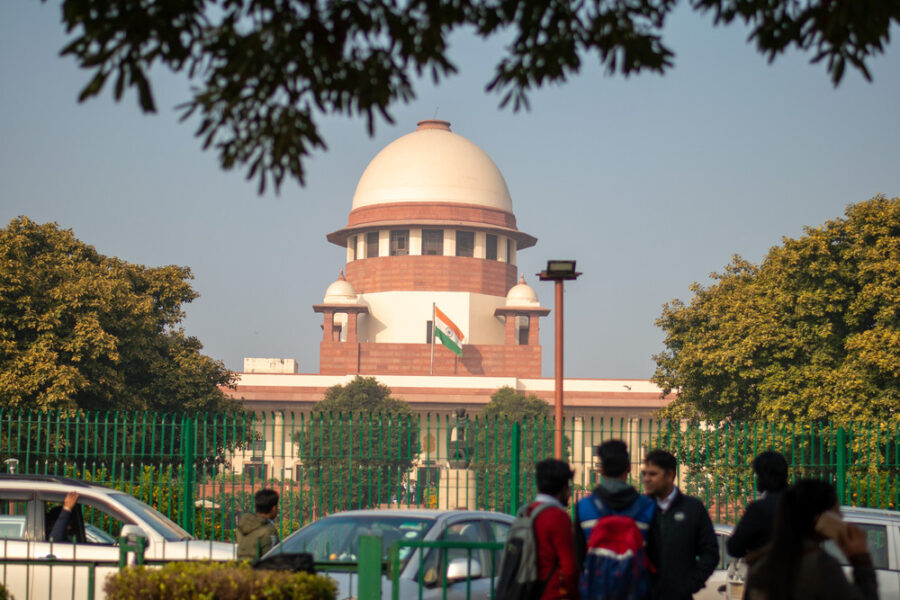
India’s Supreme Court has directed authorities to not take coercive action against real-money gaming operators Fanmade11 Fantasy Sports and 9Stacks Games until it delivers judgment for a separate operator, Gameskraft.
According to StoryBoard 18, the court was presided over by a three-judge bench that included Indian Chief Justice Joymalya Bagchi. The order was passed as the court heard the writ petitions filed by the real-money gaming companies.

According to the court record dated 16 February, the bench ordered, “Let these matters be listed after the pronouncement of judgment in the above-cited cases. Till such time, no coercive action shall be taken against the petitioner(s).”
Additionally, it was noted that a two-judge bench reserved judgment on 12 August 2025, regarding Special Leave Petitions (Civil) Nos. 19366–19369 of 2023 and other connected cases.
The dispute is tied to a case regarding Gameskraft, which is expected to clarify the legal and tax treatment of real-money online gaming and fantasy sports after the introduction of the Promotion and Regulation of Online Gaming Act, 2025, introduced in August.

The dispute concerns the classification of skill-based games and the applicability of goods and services tax demands.
Legal observers said the eventual ruling could determine how igaming platforms are regulated and taxed, with significant financial implications for operators across India.
Abi Bray brings strong researching skills to the forefront of all of her writing, whether it’s the newest slots, industry trends or the ever changing legislation across the U.S, Asia and Australia, she maintains a keen eye for detail and a passion for reporting.

Dig Deeper
Related stories
 2026/05/11: Founders of Indian operator Gameskraft arrested in money-laundering case
2026/06/18: Indian High Court overturns arrests of Gameskraft founders
2026/05/11: Founders of Indian operator Gameskraft arrested in money-laundering case
2026/06/18: Indian High Court overturns arrests of Gameskraft founders
 2026/01/20: India Supreme Court yet to hear petitions on the Promotion and Regulation of Online Gaming Act
 2026/05/28: India Supreme Court rules for 28% levy on igaming firms
2026/05/11: Founders of Indian operator Gameskraft arrested in money-laundering case
2026/06/18: Indian High Court overturns arrests of Gameskraft founders
2026/01/20: India Supreme Court yet to hear petitions on the Promotion and Regulation of Online Gaming Act
2026/05/28: India Supreme Court rules for 28% levy on igaming firms
The Backstory
Why the court hit pause
India’s highest court has effectively frozen enforcement against two real-money gaming startups while it weighs a broader test case that could redefine the sector. The Supreme Court’s order shields Fanmade11 Fantasy Sports and 9Stacks Games from coercive action until it delivers judgment in a separate matter involving Gameskraft. The move reflects a pattern: judges are trying to resolve fundamental questions over what constitutes a game of skill and how to tax it before allowing regulators to proceed. The pause also acknowledges that conflicting state rules, new national legislation and pending constitutional challenges have created a patchwork too risky to enforce without a clarifying ruling.
The legal overhang widened after Parliament passed the Promotion and Regulation of Online Gaming Act, 2025, which bans real-money play but permits social and subscription models. Industry petitions argue the law blurs lines between games of skill and chance and exposes compliant platforms to tax demands designed for gambling. The Gameskraft decision is expected to address both classification and the reach of goods and services tax, giving the court’s interim relief to other operators significance that extends well beyond two petitioners.
A law on paper, a vacuum in practice
The national framework meant to regulate online play has not landed cleanly, deepening uncertainty. The Supreme Court has yet to hear a slate of challenges and public interest pleas tied to the new law, with hearings scheduled but delayed. As filings stack up, companies say enforcement is happening in practice before courts define the contours of the statute. In one account, a major skill-gaming operator detailed revenue losses, layoffs and a pulled growth investment after the act’s passage and before its constitutionality is tested. That backdrop is detailed in our report on how the Supreme Court has yet to hear petitions on the Promotion and Regulation of Online Gaming Act, where firms cite blocked access, shrinking payrolls and stranded capital as evidence of de facto enforcement.
The same filing highlights a second challenge: offshore operators continue to draw traffic despite domestic restrictions, undercutting compliant platforms and tightening the fiscal vise on companies that remain onshore. The court’s temporary shield for Fanmade11 and 9Stacks signals recognition that, absent a definitive ruling, first movers face asymmetrical enforcement while foreign sites keep operating in legal gray zones.
Immediate fallout for market leaders
The business hit from India’s ban on real-money formats is not theoretical. Fantasy sports heavyweight Dream11 said its revenue fell by 95% overnight after the bill passed, forcing a retreat from its highest profile sponsorship. The company told the cricket board it cannot continue as the national team’s title sponsor under the current economics. It still plans to avoid layoffs but concedes the ban cut off the core of its income. For details on how the measure ricocheted through the country’s most valuable fantasy brand, see our coverage of how Dream11 warned of a severe financial hit after India banned real-money gaming.
That episode illustrates why the Gameskraft ruling matters. If the court draws a bright line for skill games or directs a different tax approach for contests where outcomes hinge on user knowledge and strategy, mainstream fantasy and rummy platforms could regain access to their primary business models. If the court upholds a strict interpretation of the new law, operators may need to pivot permanently to ad-supported or subscription features, a far smaller market with weaker unit economics.
Public pressure and policy crosscurrents
While industry petitions seek clarity, public interest litigants are pushing in the opposite direction. One case urges a nationwide crackdown on gambling and betting apps that allegedly masquerade as e-sports and social games. The plea names large tech intermediaries among respondents and asks multiple ministries to coordinate on enforcement, warning of a “national crisis” with financial and health consequences. Read more on the court’s decision to hear a public interest case targeting social games.
A separate petition seeks a total ban on online sports betting apps, citing harms to youth and calling out celebrity endorsements. The bench signaled sympathy with the goals but noted the limits of prohibition by statute. The court has notified the central government and escalated the matter to top law officers. The exchange, covered in our report on how the Supreme Court heard a plea to ban all online sports betting apps, underscores the political and social stakes bearing down on the justices as they parse the new law’s scope.
These crosscurrents help explain why the court is sequencing enforcement with doctrine. By pausing action against some operators while it rules on the core case, the bench is trying to prevent irreversible damage to lawful businesses without foreclosing the state’s interest in consumer protection and tax integrity.
A judiciary recalibrating for digital wagering
The Indian cases unfold alongside a global reassessment of how courts oversee fast-evolving online betting markets. In Michigan, the state’s Supreme Court revived a player’s US$3.1 million claim against a major operator, finding that the advent of legal iGaming can give rise to new rights and remedies under common law. The unanimous ruling sends the dispute back to trial court rather than accepting a contractual “malfunction” clause at face value. For context on how a top U.S. court is adapting doctrine to legalized online play, see our coverage of a Michigan Supreme Court win in a US$3.1 million case against BetMGM.
That decision does not bind Indian courts, but it mirrors a trend: judges are scrutinizing boilerplate terms and legacy frameworks against the realities of always-on digital wagering. As in the U.S. case, India’s bench appears wary of outcomes that either strip consumers of recourse or collapse a skill-versus-chance distinction that lawmakers and tax authorities have long recognized.
What to watch as the ruling nears
Three inflection points loom. First, the Gameskraft judgment will likely set a template for classifying online contests and apportioning taxes across entry fees, platform rake and prize pools. A finding that preserves a protected category for skill-based formats could reopen the door for fantasy sports and rummy at commercial scale. A stricter reading would entrench the ban on real-money play and accelerate shifts to social and subscription offerings.
Second, the Supreme Court’s docket on the Promotion and Regulation of Online Gaming Act will determine whether portions of the law survive constitutional scrutiny and how they interact with state prohibitions. The timing matters. As detailed in our report that the court has yet to hear multiple petitions tied to the act, operators say prolonged delays are tantamount to enforcement without guidance.
Third, public interest cases could shape the enforcement climate regardless of how the core skill-versus-chance issue is resolved. If the court directs coordinated crackdowns on offshore sites, payment rails and celebrity endorsements, industry economics will change even for compliant platforms, as outlined in our story on the move to tighten oversight of social and e-sports games.
The temporary protection for Fanmade11 and 9Stacks buys the court time to draw those lines. For operators, investors and sponsors, the message is clear: hold fire until the ruling, then expect rapid repricing of risk whichever way the judgment falls.
