


India Supreme Court yet to hear petitions on the Promotion and Regulation of Online Gaming Act

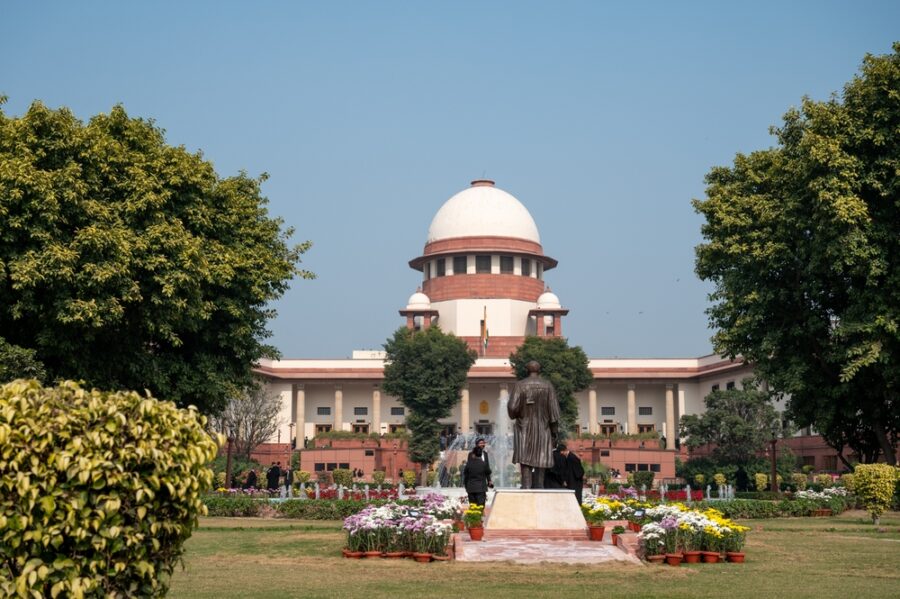
India’s Promotion and Regulation of Online Gaming Act has yet to be formally published, leaving online skill-gaming companies in regulatory uncertainty.
According to Storyboard18, a batch of petitions is waiting to be heard by India’s Supreme Court on January 21, 2026, before a three-judge bench, led by Chief Justice Surya Kant.

Public litigation, filed by activist Dr. KA Paul, is also expected to be heard, seeking action against websites offering igaming and against celebrities’ endorsements of the sites.
Additionally, Paul claims that online betting operators are impacting millions of Indians, especially young people, which he claims go against the “right to life” in Article 21 of the Constitution.
Action has also been filed by online betting operators, describing economic disruption caused by the Promotion and Regulation of Online Gaming Act, with skill-gaming operator Head Digital Works arguing that, due to delays in the hearing, the law has been enforced de facto.

Losses it has faced since the act was passed include a three-month loss of income despite operating costs totaling INR100 million (US$1.1 million)1 INR = 0.0110 USD
2026-01-20Powered by CMG CurrenShift, a reduction in the workforce from 606 to 178, and the loss of an INR7.6 billion (US$83.4 million)1 INR = 0.0110 USD
2026-01-20Powered by CMG CurrenShift investment from private equity firm Clairvest due to economic uncertainty.
Recent data has also shown that, despite blocking over 7,800 sites, offshore igaming sites continue to attract significant traffic from India each month.
Abi Bray brings strong researching skills to the forefront of all of her writing, whether it’s the newest slots, industry trends or the ever changing legislation across the U.S, Asia and Australia, she maintains a keen eye for detail and a passion for reporting.

Dig Deeper
Related stories
 2025/05/26: The Supreme Court of India hears plea to ban all online sports betting apps
 2025/10/16: Indian Supreme Court to hear public interest case against social games
2025/12/12: Indian Supreme Court delays online gaming challenge until January
2025/10/16: Indian Supreme Court to hear public interest case against social games
2025/12/12: Indian Supreme Court delays online gaming challenge until January
 2026/02/23: India’s Supreme Court rules no action for real-money gaming operators ahead of Gameskraft case
2025/05/26: The Supreme Court of India hears plea to ban all online sports betting apps
2025/10/16: Indian Supreme Court to hear public interest case against social games
2025/12/12: Indian Supreme Court delays online gaming challenge until January
2026/02/23: India’s Supreme Court rules no action for real-money gaming operators ahead of Gameskraft case
The Backstory
Why this fight matters now
India’s online gaming industry is navigating a limbo that blends legal uncertainty with commercial shock. The Promotion and Regulation of Online Gaming Act 2025 has set the tone, but the country’s highest court has yet to settle core questions about who can regulate, what should be permitted and how payments should flow. The Supreme Court has pushed the constitutional challenge to a three-judge bench on Jan. 21, 2026, despite pleas from operators for an earlier hearing. In the interim, the market is reacting as if the law were already in effect, with banks and intermediaries tightening access, revenue sliding and jobs disappearing. That de facto enforcement climate was underscored when the court scheduled a consolidated hearing for January over industry objections, as reported in a recap of the delay to January proceedings in coverage of the Supreme Court’s timetable.
The stakes extend beyond corporate balance sheets. Policymakers face pressure to clamp down on offshore betting sites and curb social harms tied to addiction, fraud and underage play. Public interest litigants argue that lax enforcement allows gambling to masquerade as e-sports or skill-based social games. Operators counter that legitimate skill gaming is being swept into a punitive net and that the patchwork response across payments, app stores and state rules is destabilizing an industry that employs thousands. The January hearing is poised to test constitutional boundaries between Parliament and states, while signaling whether regulation or prohibition becomes the default for online real-money play.
From early pleas to a January showdown
The Supreme Court’s procedural decisions shaped today’s standoff. In August, publication of the new law triggered market caution. By fall, industry lawyers sought an expedited hearing, warning that delays would prove ruinous. The court declined to fast-track the matter, noting that constitutional issues typically require a larger bench and consolidation of related petitions. That set the stage for a single hearing date next year, explained in detail in reporting on the January listing.
Parallel litigation broadened the agenda. A public interest case filed Oct. 13 urged a nationwide crackdown on gambling platforms operating as social games, naming Apple and Google among respondents and pressing ministries to coordinate enforcement under the new act and state laws. The court agreed to hear the plea and later asked the central government to weigh in on the law’s provisions and enforcement approach, including payment blocks for unregistered apps. Those steps are described in coverage of the court’s acceptance of the social games case and the subsequent request for government input.
Another petition, led by politician and activist Dr. Kilari Anand Paul, pushed for a blanket ban on online sports betting. A bench that included Justice Surya Kant heard arguments linking betting to suicides, celebrity endorsements and youth harm. The court signaled sympathy for the concerns but cautioned that a legal ban alone may not stop risky behavior, then notified the central government and referred the plea to top law officers. That hearing was recapped in reporting on the bid to ban online sports betting apps.
Operators’ whiplash: costs up, revenue at zero
While judges lined up a January review, companies said the uncertainty is already inflicting damage. Head Digital Works, operator of A23, told the court that the act’s publication prompted banks, payment gateways and intermediaries to pull back, starving platforms of transactions. The firm said revenue had fallen to zero, costs climbed and the workforce shrank from 606 to 178. Those claims are detailed in coverage of the delayed hearing and de facto enforcement. The broader industry has warned that lost investment, layoffs and compressed marketing budgets are likely if payments channels remain constrained for months.
The early chilling effect is also tied to compliance risk cascading through the ecosystem. Payment providers are guarded when new rules carry potential penalties. App stores face their own exposure if categories later deemed illegal remain listed. State-level bans and differing definitions of games of skill further complicate what is allowed. Industry groups argue that without clear carve-outs for skill gaming and a predictable licensing path, financial partners will stay on the sidelines. The Supreme Court’s January hearing could address division of powers and scope, but operational relief may not be immediate if the court reserves judgment or fractures issues across jurisdictions.
Public health, payments and platform liability
Public interest litigants have pressed the court and the government for sweeping measures across the value chain. The Centre for Accountability and Systemic Change urged a nationwide prohibition on gambling disguised as social or e-sports games, a coordinated review by multiple ministries and payment blocks through the Reserve Bank of India and the National Payments Corporation of India’s Unified Payments Interface for unregistered platforms. It also sought tax recovery, probes of offshore operators and accountability for major app stores. Those demands and the court’s procedural moves are outlined in coverage of the social games litigation and the request for the government’s interpretation of the act.
Separately, Dr. Paul’s petition spotlights mental health, suicides and celebrity endorsements, including allegations against high-profile athletes. The bench’s remarks hinted at a policy dilemma: laws can signal norms and impose penalties, but behavior often lags. That framing suggests any eventual settlement may blend regulation and targeted prohibitions with payment controls, age checks, ad restrictions and liability for promoters. The question for January is whether the court will endorse a unified federal framework, leave room for state experimentation or push the executive to tighten enforcement under existing powers while lawmakers revisit definitions.
A global cautionary tale from Chile
India’s debate is unfolding as other jurisdictions harden positions. In Chile, the Supreme Court’s Third Constitutional Chamber ruled that all online gambling is illegal unless expressly authorized, ordering internet providers to block access to offending sites. The decision, detailed in coverage of Chile’s Supreme Court clarification, followed legislative efforts to regulate the sector and a broader crackdown that had already barred sports betting sponsorships in top football leagues. The ruling leaves state lotteries, racetracks and licensed casinos as the only legal avenues, while regulators estimate more than 900 platforms operate illegally, generating about $150 million a year.
For India, Chile’s move shows how courts can reset the market while lawmakers catch up. A bright-line prohibition is clearer to enforce but risks pushing activity offshore, where tax collection and consumer safeguards are weaker. A licensing regime demands capacity and coordination but can channel demand to compliant operators under strict rules on payments, advertising and responsible gaming. With petitions piling up and stakeholders ranging from banks to app stores, India’s January hearing will be a fulcrum. It will not end the fight, but it will define who writes the next chapter and how costs and protections are distributed across a fast-growing, deeply contested digital marketplace.
