


India blocks 242 more illegal igaming websites

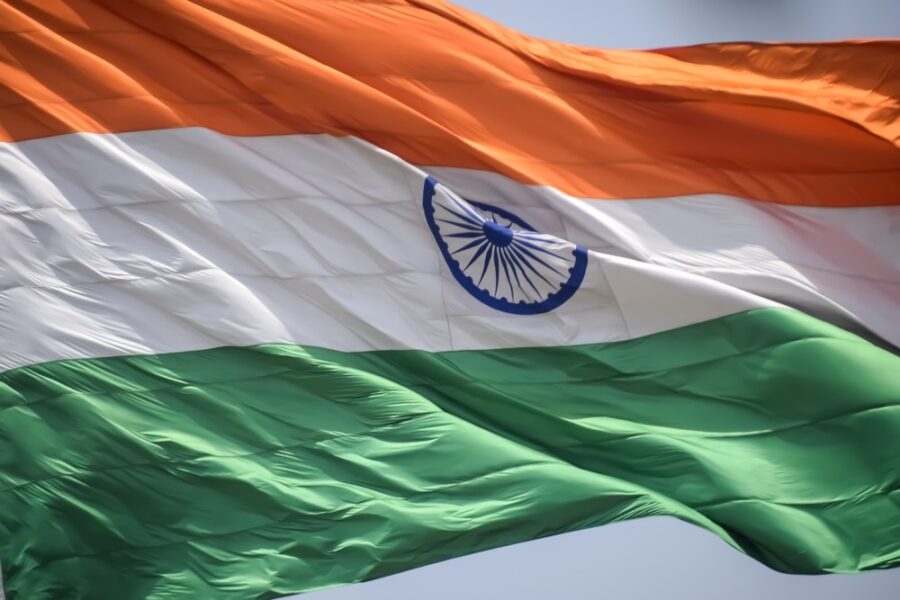
India’s government blocked 242 illegal igaming websites and related links on 16 January, taking the total number of blocked platforms to 7,800 since a national ban took effect in August, according to the Business Standard.
The action targeted sites offering real-money igaming, as enforcement continued under the Promotion and Regulation of Online Gaming Bill 2025.

“We have stepped up our enforcement efforts, especially after the passage of the Online Gaming Act,” a government official told the Business Standard. “Today’s action reflects the government’s commitment to protect users and to curb the financial and social harm caused by illegal online betting and gambling platforms.”
The law banned real-money igaming and advertisements for it across India. It also imposes penalties of up to three years in jail and a fine of up to INR10 million (US$110,010)1 INR = 0.0110 USD
2026-01-19Powered by CMG CurrenShift for anyone offering real-money igaming.
The legislation also barred banks from working with companies that provide real-money igaming services, widening the clampdown beyond operators to payment channels.

The law also proposed establishing an authority to promote esports and other social games by issuing guidelines and standards for their organization and conduct. It also discussed establishing training academies, research centers, and other institutions to advance esports.
The Indian Supreme Court delayed the challenge to the Promotion and Regulation of Online Gaming Act 2025 to the end of January, with a three-judge bench expected to hear objections despite calls from the gambling industry for an earlier hearing.
Abi Bray brings strong researching skills to the forefront of all of her writing, whether it’s the newest slots, industry trends or the ever changing legislation across the U.S, Asia and Australia, she maintains a keen eye for detail and a passion for reporting.

Verticals:
Sectors:
Dig Deeper
Related stories
 2026/01/19: Indian authorities file charges against Pakistani gambling platform
 2025/12/01: India seeks help from six countries on its igaming crackdown
 2026/02/20: Indian Enforcement Directorate seizes INR5.9 billion in assets from Winzo
 2025/02/19: Advertising Standards Council of India signed a memorandum of understanding with gambling trade bodies
2026/01/19: Indian authorities file charges against Pakistani gambling platform
2025/12/01: India seeks help from six countries on its igaming crackdown
2026/02/20: Indian Enforcement Directorate seizes INR5.9 billion in assets from Winzo
2025/02/19: Advertising Standards Council of India signed a memorandum of understanding with gambling trade bodies
The Backstory
Enforcement wave accelerates
India’s latest blocking action fits a broader regional push to shut down unlicensed online betting and casino sites. Regulators from New Delhi to Canberra and Jakarta have stepped up orders to disable access, sever payment channels and pressure offshore operators to exit. The approach mixes website blocking, financial surveillance and public warnings to consumers about the risks of wagering with unregulated services.
In India, authorities have been layering new blocks and compliance moves onto a national ban on real-money igaming and its advertising. A separate enforcement track has targeted offshore operators and their payment footprints, as agencies coordinate on takedowns and account freezes. The escalation mirrors steps taken in Australia, where the media watchdog has used its blocking authority to steadily narrow the funnel of illegal sites, and in Indonesia, where a sweeping campaign has removed content at industrial scale.
The pattern is clear: governments are using site blocks as a visible first line while pushing deeper into the financial plumbing that allows unlicensed gambling to reach local users. That twin-track strategy is reshaping the risk calculus for operators, affiliates and payment intermediaries.
India tightens controls and tests the courts
The Indian government’s hard line on real-money igaming is rooted in a legal shift that bans such services and their promotion nationwide and extends penalties to those offering them. Enforcement has focused not only on operators and affiliates but also on the banking and payments networks that process wagers and withdrawals. That strategy is reinforced by separate actions against offshore platforms coordinated by tax and technology agencies.
In one such effort, the Directorate General of Goods and Service Tax Intelligence, working with the Ministry of Electronics and Information Technology, said it had blocked hundreds of links to offshore money gaming platforms and frozen bank accounts tied to investigations. As of early 2025, authorities had cut access to 357 platform links and blocked around 2,400 accounts while freezing roughly ₹1.26 billion, according to ministerial disclosures reported by Lok Sabha and summarized here: India blocks 357 offshore igaming platforms.
The government has framed these measures as consumer protection, financial integrity and social harm prevention. It also carved out space to promote esports and non-money social games through standards and training bodies, signaling a desire to separate competitive gaming from gambling products. Legal challenges to the broader framework are pending at the Supreme Court, which paused hearings until late January, keeping the contours of enforcement intact for now.
For a sense of the government’s posture and totals cited by officials, see the Business Standard’s account of India’s blocking campaign: government blocks hundreds more illegal betting and gaming websites.
Australia’s steady squeeze on unlicensed sites
Australia offers a case study in cumulative pressure. The Australian Communications and Media Authority has spent years using powers under the Interactive Gambling Act 2001 to identify illegal services, warn consumers and instruct internet providers to block access. The cadence is regular, the targets range from casino-style sites to affiliates, and the message to players stresses the absence of responsible gambling protections and the risk of losing funds.
Recent moves include orders to block eight platforms that appeared to breach local law, from JokaRoom to Wild Pokies, along with a consumer advisory pointing bettors to official registers and complaint channels. That action followed earlier rounds targeting brands such as Best Aussie Pokies and the WinSpirit suite of domains. Read more on the February wave: ACMA blocks eight illegal gambling websites in Australia, and on subsequent directives: ACMA blocks five more illegal gambling websites.
The accumulation is significant. Since the blocking program began in late 2019, ACMA says more than 1,200 gambling and affiliate sites have been restricted, and roughly 220 illegal operators have exited the Australian market under regulatory pressure. Another enforcement snapshot from April underscored that progression, as the regulator moved against four additional sites and reiterated the risks of unlicensed play: Australian gambling regulator blocks four illegal gambling sites.
Indonesia’s mass takedowns reshape the landscape
Indonesia has pursued one of the most expansive takedown campaigns in the region, targeting not only standalone websites but also gambling content on major platforms and file-sharing networks. The Communications and Digital Affairs Ministry reported removing more than 2 million items over a roughly two-week blitz, reflecting a strategy aimed at overwhelming the digital footprint of illegal operators.
Officials said the crackdown went hand in hand with banking actions, as authorities flagged tens of thousands of accounts for blocks and deepened cooperation with the financial intelligence unit. The government framed online gambling as a cross-border organized crime challenge and cited a sharp drop in transaction volumes compared with 2024 as evidence that pressure on access and payments is working. For details on scale and outcomes, see: Indonesia blocks over 2 million gambling websites.
Following the money becomes the fulcrum
The through line across these jurisdictions is a pivot from whack-a-mole domain blocking to sustained disruption of payment channels. India has barred banks from working with real-money igaming providers and is freezing accounts connected to investigations. Indonesia is sweeping up banking links in tandem with platform takedowns. Australia, while focused on access restrictions, has complemented blocking with steady consumer guidance that directs bettors toward licensed services and away from offshore operators lacking safeguards.
That playbook raises the cost of operating in gray or black markets. Affiliates lose traffic as blocks pile up, operators face higher churn and payment friction, and banks and processors are pressed to tighten screening. The result is a market increasingly bifurcated between regulated, domestic-facing wagering and marginalized illegal operators who must rely on evasive tactics that are harder to scale.
What’s next as scrutiny widens
With India’s framework still before the Supreme Court and regulators elsewhere showing little appetite to loosen controls, the near-term trajectory points to more coordinated enforcement and continued use of blocking orders as a deterrent. Operators that attempt to route around restrictions via mirror sites are likely to encounter faster takedowns, while payment partners face heightened liability and reputational risk if they facilitate unlicensed activity.
For consumers, regulators are reinforcing a simple message: protections, dispute resolution and responsible gambling tools exist only in the licensed ecosystem. For governments, the stakes are both economic and social, tied to tax collection, AML oversight and harm minimization. The latest blocks in India sit squarely in that context, part of a broader effort across Asia-Pacific to narrow the space for illegal online gambling and steer demand into regulated channels.
