


Spribe announces Michael Bisping as latest Aviator brand ambassador

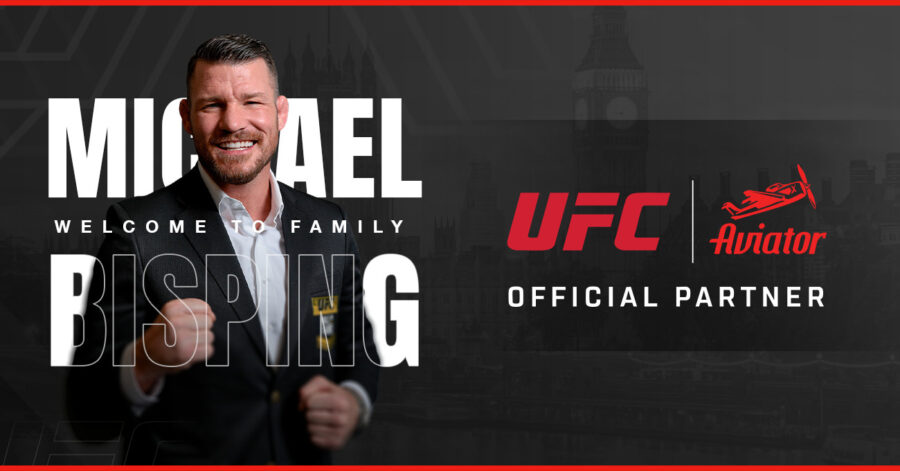
Igaming studio Spribe has partnered with UFC Hall of Famer and former middleweight champion Michael Bisping to be its latest brand ambassador for its crash game Aviator.
Under the one-year partnership, Bisping will promote the crash game to his fanbase through a series of campaigns designed to showcase Aviator’s gameplay.

According to Spribe, the game racks in 72 million active players a month.
The deal forms part of a broader multi-year marketing partnership between Spribe and the UFC. Aviator branding appears inside the Octagon during Fight Night and pay-per-view events. Spribe has partnered with other UFC stars, including fighter Michael “Venom” Page, in October.
“Michael Bisping is one of the most legendary UFC fighters and a true icon of the sport with a large and loyal international fan base,” Giorgi Tsutskiridze, Chief Commercial Officer at Spribe, said in a news release. “We are hyped to be working with Michael to promote Aviator to his fans, and for them to take flight in an experience that’s almost as thrilling as stepping into the Octagon and going toe to toe with another fighter.”

Bisping added, “I’ve always been about taking on the next big challenge, and Aviator is exactly that. It’s fast-paced, high-intensity and requires the kind of nerves of steel I used to rely on every time the Octagon door closed. Spribe is a brand that thinks big and moves fast, which is why this partnership is such a great fit. I’m looking forward to introducing my fans to the game and showing them why Aviator is currently the number one crash game in the world. It’s going to be a wild ride.”

Dig Deeper
Related stories
 2025/10/16: Spribe appoints UFC fighter Michael ‘Venom’ Page as brand ambassador
 2025/09/02: Spribe announces UFC lightweight fighter as Aviator ambassador
 2025/03/05: Spribe signs UFC star Tom Aspinall as Aviator brand ambassador
 2025/11/05: Spribe makes Alexandre ‘Cannibal’ Pantoja a brand ambassador in Brazil
2025/10/16: Spribe appoints UFC fighter Michael ‘Venom’ Page as brand ambassador
2025/09/02: Spribe announces UFC lightweight fighter as Aviator ambassador
2025/03/05: Spribe signs UFC star Tom Aspinall as Aviator brand ambassador
2025/11/05: Spribe makes Alexandre ‘Cannibal’ Pantoja a brand ambassador in Brazil
The Backstory
Why this ambassador move matters
Spribe’s latest tie-up underscores a playbook that has helped push its flagship crash title Aviator from niche product to global staple across online casinos and social feeds. The company has spent the past year converting elite athletes into always-on media channels, betting that high-adrenaline sports align with a game sold on short bursts of risk and reward. Each step has added distribution and credibility while widening Aviator’s funnel from UFC loyalists to cricket diehards in India. The result is a growing base measured in the tens of millions and a brand that shows up everywhere from the Octagon canvas to player-led social campaigns.
The UFC canvas as a growth engine
Spribe’s momentum accelerated after it locked a multi-year, multi-million-dollar marketing partnership with the UFC that put Aviator branding inside the Octagon during Fight Night and pay-per-view events. The company quickly layered athlete-led campaigns on top of that exposure. When it named welterweight and middleweight contender Michael “Venom” Page as an Aviator ambassador, Spribe said the partnership helped drive growth from 10 million to 60 million monthly players, pointing to the UFC’s global footprint and Page’s reach with combat-sports fans. Read more on the tie-up with the UFC and Page’s ambassadorship.
Heavyweight champion Tom Aspinall’s addition signaled Spribe would keep stacking recognizable names in UFC’s most visible divisions. The company, already present on 4,500 casinos at the time, said Aviator had 42 million monthly active users and positioned the Aspinall deal as part of a broader roster that included champions and contenders across weight classes. The move reinforced the UFC alignment and ensured Aviator messaging could ride the event cycle through promotional weeks and fight nights. Details on the heavyweight push are here: Aspinall joins Aviator’s ambassador team.
Cracking India’s cricket code
Spribe also pursued India, where cricket eclipses most other sports and celebrity endorsements reach multi-generational audiences. The company tapped former India star Suresh Raina to bring Aviator to a massive cricket fan base, again framing the game’s appeal in high-intensity terms familiar to players and spectators. At the time, Spribe cited 42 million monthly active players and more than 5,500 casino integrations, underscoring that India was not a test market but a core growth vector. See how Spribe positioned the partnership with Suresh Raina.
The company then added Yuzvendra Chahal, one of India’s most popular limited-overs bowlers, to extend reach across younger and digital-first cricket audiences. Chahal’s role as a global ambassador kept the India message prominent while opening doors to his followers beyond the subcontinent. Spribe cited more than 50 million players globally, signaling continued growth as cricket signings came online. Read about Chahal’s ambassadorship.
To deepen market penetration, Spribe turned to Harbhajan Singh, a World Cup winner whose profile spans television, commentary and franchise cricket. That deal aimed squarely at visibility in a country where betting content often travels via short video and social platforms. With Singh, Spribe highlighted scale metrics tailored to operator partners as much as fans: more than 50 million monthly players, 400,000 bets a minute and over 5,500 partners. The figures, disclosed with Harbhajan Singh’s appointment, reinforced Aviator’s throughput and engagement story to both advertisers and casinos.
Audience scale, by the numbers
Across these announcements, Spribe’s user counts vary by release, but the arc is consistent. Page’s signing tied the UFC partnership to a jump from 10 million to 60 million monthly players, suggesting the Octagon’s global broadcast inventory translates to measurable acquisition. Parallel updates around Raina and Aspinall set the figure at 42 million monthly actives, reflecting differing disclosure windows or measurement baselines by region or partner set. Chahal’s announcement marked 50 million players and the India-focused Singh update cited more than 50 million monthly players with granular stats on betting velocity. The throughline is a steady climb as the company syndicates Aviator through thousands of operators and amplifies it with athlete-led reach.
Equally important is distribution. Spribe has pointed to more than 5,500 partners in some India-focused campaigns and thousands of casinos elsewhere, anchoring Aviator as a default lobby presence for many operators. That footprint creates a flywheel: new ambassadors draw fresh audiences, casino placement converts them, and high-intensity gameplay encourages repeat sessions that, in turn, justify more spend on brand and sports partnerships.
The marketing play: high stakes, short bursts
Spribe’s ambassador messaging leans into parity between sports and gameplay: split-second decisions, high stakes and the adrenaline of a fast finish. The tactic works across combat sports and cricket, where moments of risk and reward define the spectacle. By aligning with fighters like Michael “Venom” Page and Tom Aspinall, Spribe taps into event-driven attention peaks. With Suresh Raina, Yuzvendra Chahal and Harbhajan Singh, it accesses a massive, year-round audience that skews mobile and social. The combined effect is to normalize crash games for mainstream sports fans and present Aviator as the genre’s default pick.
This approach also hedges regional and regulatory risk. If one market tightens ad rules or pushes back on influencer-led promotions, Spribe still has diversified channels and celebrity portfolios across sports and geographies. The UFC’s global tour, plus cricket’s reach in India and the diaspora, lowers concentration risk and supports continuous campaign cadence.
What’s at stake next
The question now is not whether athlete partnerships work for Aviator but how far Spribe can scale the model before saturation or regulatory friction raises costs. The disclosed metrics on players and bets per minute point to a product that converts attention into volume at a rapid clip. Sustaining that pace will depend on deeper localization, responsible gaming guardrails and keeping the roster fresh without diluting the brand’s combat-and-cricket identity.
Watch for additional crossovers that marry mainstream sports with real-time gameplay mechanics, broader integrations with operators that feature Aviator during live events and measured expansion into new sports communities where the “high-risk, high-reward” narrative resonates. The company has shown it can translate broadcast exposure and athlete influence into user growth. The next phase will test whether it can keep that momentum while navigating evolving rules on advertising and endorsements in its most important markets.
