


South Dakota lawmakers reject mobile sports betting bill

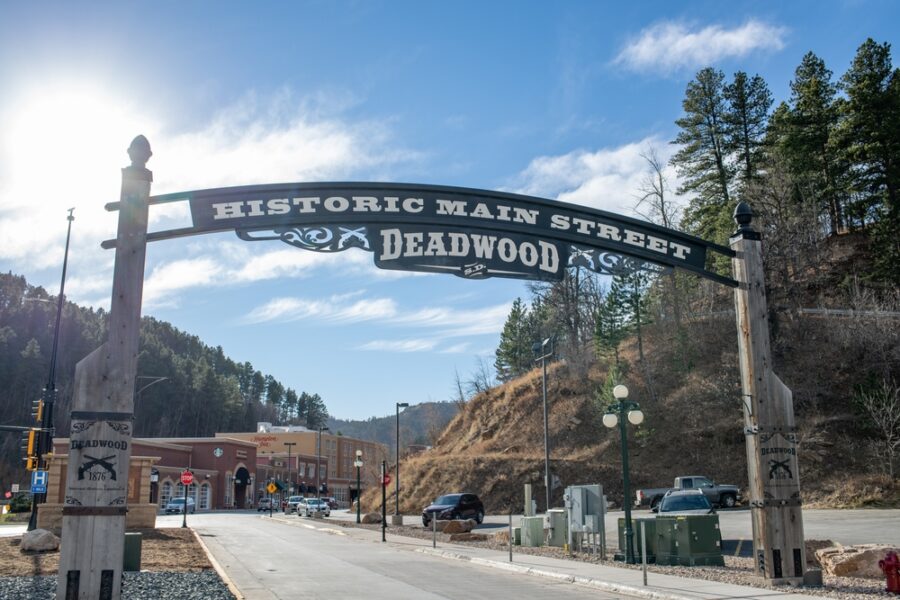
A South Dakota House committee has rejected a proposal that would have asked voters to legalize mobile sports betting.
Senate Joint Resolution 504 was introduced to the Senate by Rep. Greg Jamison in January, and if approved by both chambers, it would have appeared on the general election ballot in November.

Although the Senate passed the bill 23-10 last month, the House Committee of State Affairs voted 11-2 to defeat the resolution.
South Dakota voters amended the state constitution in 2020 to allow sports betting only in the city of Deadwood and at tribal casinos. Mobile sports wagering remains illegal in the state, though it is permitted in neighboring Wyoming and Iowa.
According to News From The States, Jamison argued that mobile sports wagering is already taking place in South Dakota, either illegally or just across state lines, and said that legalization would allow the state to regulate the activity and to direct tax revenue to property tax relief.

Opponents, however, raised concerns about the social costs of gambling expansion.
Michael Pauley of the South Dakota Catholic Conference warned that gambling addiction can coincide with depression and substance abuse, potentially increasing demand for state-funded social services.
Pauley said, “We give you some property tax relief paid for by gambling addicts, but the promise is illusory. In the long run, the gambling addiction is going to cost society more money than we gain.”

Dig Deeper
Related stories

The Backstory
Why the push stalled now
South Dakota’s latest bid to put mobile sports wagering before voters ran into an old problem: House resistance to expanding gambling beyond Deadwood. After clearing the Senate on a 23-10 vote, the measure arrived in the House with momentum and a statewide legalization framework. But committee members signaled discomfort with putting the question on the November ballot, citing worries about addiction, enforcement and whether projected tax gains would justify the broader reach of online wagering. That skepticism was decisive. It also echoes the narrow lane South Dakotans carved out in 2020, when voters amended the constitution to allow sports betting only in Deadwood and at tribal casinos. Lawmakers have repeatedly treated that carve-out as a ceiling rather than a starting line, even as proponents argue the status quo pushes betting over state lines or into unregulated markets. The defeat underscores how hard it is to move an issue that straddles moral, fiscal and jurisdictional lines in a state that prizes limited government and local control.
What the Senate tried to change
The plan that advanced out of the upper chamber offered a restricted path to online betting rather than an open market. As outlined when the Senate approved a constitutional amendment to allow mobile and electronic betting statewide, wagers would have been routed through licensed Deadwood casinos. Platforms would be required to partner with those properties and keep servers in the city, effectively anchoring digital activity to the brick-and-mortar hub voters already endorsed. Sponsors framed the structure as a consumer protection and revenue recapture strategy, arguing that South Dakotans are already using offshore apps or traveling to neighboring states. The proposal also earmarked 90% of mobile betting tax revenue for property tax relief, a nod to a perennial political priority. Opponents countered that the framework still represented a material expansion of gambling access and questioned whether the fiscal upside would offset social costs. That divide set the stage for the House committee’s rejection.
Deadwood’s unique role and a statewide dilemma
Deadwood has been the gravitational center of South Dakota gaming policy for decades, and the Senate plan leaned into that history. Tethering servers and partnerships to Deadwood would have given local operators gatekeeper status in any mobile rollout, ensuring regulatory familiarity and a clear audit trail. It also aimed to address fears of a free-for-all by narrowing who could participate and where systems would be housed. But the same design raised questions in the House about market concentration and the visibility of harms once gambling is available in every pocket. Opponents worried that smartphones would erase the practical guardrails created by a trip to a casino floor. Proponents insisted the choice was between accountable, geofenced apps or a shadow market that already exists. In the end, a majority on the panel favored the more conservative reading of the 2020 mandate, keeping mobile off the ballot rather than inviting a statewide debate that could upend the Deadwood-centric model.
Signals from around the region
South Dakota is not debating in a vacuum. Legislatures across the Upper Midwest and South are testing how fast to move as sports betting apps proliferate. In Bismarck, the House recently spiked an effort to send online wagering to a statewide vote, with lawmakers warning about easy access and impacts on charitable games. The measure to expand to mobile was defeated overwhelmingly, as detailed in North Dakota online sports betting bill defeated in House. To the east, Wisconsin leaders have revived a narrower discussion that would let tribal casinos extend wagering to phones by changing the definition of a bet, though timing in the Senate is uncertain. That debate has regained traction, according to Wisconsin mobile sports betting vote regains momentum among lawmakers. Farther south, Mississippi is considering a broader economic package that pairs mobile legalization with casino tax cuts. A key House proposal lays out a 22% mobile tax, offsets for brick-and-mortar venues and funding for a strained pension system, as reported in Mississippi lawmaker proposes casino tax cuts via mobile sports betting bill. And in Columbia, a narrower bill would legalize only online pari-mutuel horse wagering, not casino-style games, reflecting a piecemeal path explored in South Carolina lawmakers discuss online horse racing betting bill. The crosscurrents show states splitting over pace and scope even as consumers find workarounds.
The tax pitch meets social risk calculus
Backers of mobile betting in South Dakota framed the policy as consumer protection and fiscal pragmatism. By channeling wagers through licensed operators and dedicating most tax receipts to property tax relief, they tried to convert an off-the-books activity into a regulated revenue stream. That argument mirrors approaches elsewhere. In Mississippi, lawmakers are exploring whether a higher mobile tax paired with lower casino rates can stabilize an industry while delivering funds to a public pension shortfall. In Wisconsin, supporters say tribes need online tools to compete with offshore sites already available on residents’ phones. But opponents in Pierre, like counterparts in Bismarck, weighed the hidden costs more heavily. Easier access raises fears of addiction, debt and downstream demands on social services. Some lawmakers also doubt whether early revenue estimates will hold up after enforcement, compliance and prevention costs, particularly in a small state. The House committee’s vote suggests that until proponents can demonstrate a net fiscal and social benefit with tighter safeguards, ballot access will remain elusive.
What to watch after the committee’s no
The committee setback likely forces proponents to reassess both policy design and political strategy. Expect a renewed push to strengthen consumer protections, from tighter age and identity checks to mandatory deposit limits and dedicated funding for treatment, if backers try again next session. The Deadwood tether will stay central, but future drafts may broaden revenue-sharing to address concerns from nonparticipating operators or tribes and sharpen the case for property tax relief with clearer, independent projections. Regionally, developments in Madison and Jackson could influence South Dakota’s calculus. If Wisconsin’s tribal model advances or Mississippi’s blended tax approach lands, lawmakers in Pierre will have fresh templates to consider. Until then, the status quo holds: retail-only sports betting confined to Deadwood and tribal venues, with mobile options just across state borders or offshore. The political fight turns on whether keeping gambling physically distant remains a workable guardrail in a mobile world, or a policy that cedes consumer protection and tax revenue to others.
