


South Dakota moves forward with online betting measure

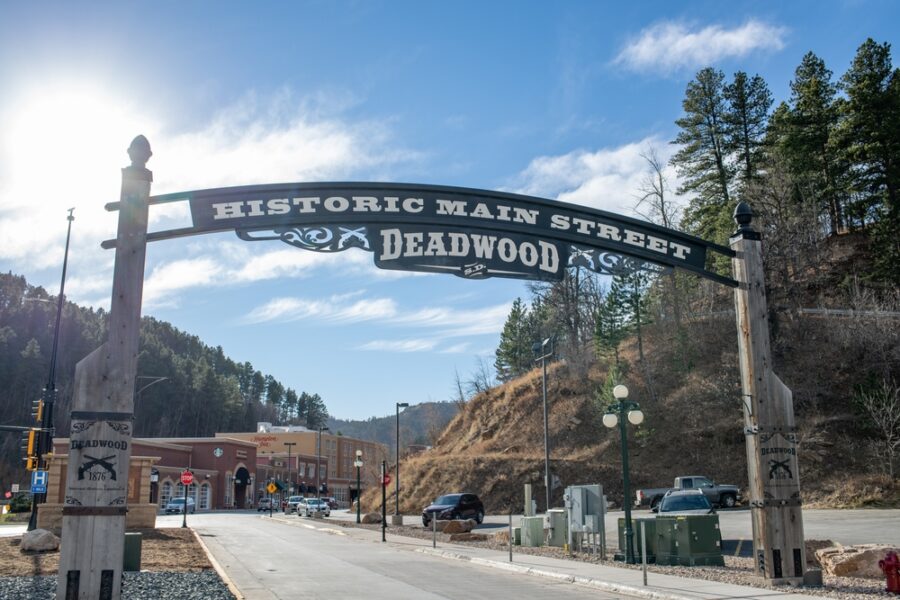
The South Dakota Senate has approved a constitutional amendment that would allow mobile and electronic sports betting statewide, sending it to the House for further consideration.
Lawmakers passed Senate Joint Resolution 504 on a 23-10 vote. If it is approved by the legislature, the measure will go before voters at the next general election.

Under the proposal, mobile wagers would be permitted if routed through a casino licensed in Deadwood, where sports betting is already legal under the state constitution. The resolution also requires betting platforms to partner with Deadwood casinos and to maintain servers inside the city limits.
The measure redirects 90% of mobile sports betting tax revenue to property tax relief.
The bill was sponsored by Senator Casey Crabtree, who said that residents are already wagering through offshore apps or by traveling to neighboring states.

He said legalization would keep revenue in South Dakota while adding consumer protections, while Senator Amber Hulse said that regulation could establish guardrails and accountability absent in unregulated markets.
Opponents of the bill argued that it would expand gambling and increase the risk of addiction and financial harm, with one senator, John Carley, describing it as “an expanding gambling bill,” while others questioned whether projected revenues would significantly reduce property taxes.
Sports betting was legalized in South Dakota in 2021 but is restricted to nine commercial retail venues in Deadwood and tribal locations at Sisseton and Watertown.

South Dakota isn’t the only state considering the legalization of mobile sports betting this year. Last week, lawmakers in Mississippi advanced their own measure, sending it to the Senate.
Charlotte Capewell brings her passion for storytelling and expertise in writing, researching, and the gambling industry to every article she writes. Her specialties include the US gambling industry, regulator legislation, igaming, and more.

Dig Deeper
Related stories


The Backstory
Why the push is gaining steam
South Dakota’s latest move to take sports wagering statewide by phone did not emerge in a vacuum. The state already allows in-person sports betting in Deadwood and at two tribal venues, but the carveout is narrow. The new proposal, Senate Joint Resolution 504, would let residents place mobile wagers so long as bets are routed through servers in Deadwood and platforms partner with casinos there. Supporters argue that most activity is already happening on offshore apps or across state lines. The plan attempts to pull that play into a regulated channel and earmark the bulk of new tax receipts for property tax relief.
The decision to require servers and partnerships in Deadwood reflects a common compromise: preserve legacy stakeholders while capturing a digital market. It also aims to centralize compliance and auditing. The statewide vote requirement underscores how gambling expansion remains politically sensitive. Backers frame the measure as consumer protection and tax policy. Opponents call it an expansion that invites addiction risk and overpromises on revenue relief. The bones of this fight are not unique to South Dakota, but the stakes for a small market that leans on tourism and property tax stability are specific and immediate.
A split screen across the Dakotas
Neighboring North Dakota just delivered a counterexample. Lawmakers there rejected a referendum measure that would have asked voters to approve online sports betting in 2026. The House voted it down 70-24, citing concerns about student exposure, problem gambling and potential harm to charitable gaming. As reported in coverage of the North Dakota House defeat, backers had pitched the plan as a way to corral a growing illicit market while dedicating revenue to K-12 schools. The defeat means any legalization effort will likely slip to at least 2028.
The contrast matters for South Dakota. Cross-border wagering leakage is a persistent argument in favor of mobile legalization. When one state delays, the other faces a choice: wait for a coordinated regional approach or move first to capture tax and tourism spillovers. North Dakota’s pause hands South Dakota a messaging edge on channeling spending at home, but it also heightens scrutiny on responsible gambling standards and youth safeguards that swayed North Dakota lawmakers.
Enforcement where legalization lags
Jurisdictions that restrict online gambling often face persistent gray-market pressure. In Canada, provincial lottery corporations are testing a more aggressive response. Manitoba’s lottery authority, acting with peers through the Canadian Lottery Coalition, sought a court injunction aimed at blocking Bodog from doing business or advertising in the province. The case, detailed in reporting on Manitoba’s injunction bid against Bodog, argues the offshore operator misleads consumers by portraying itself as lawful and safe. A hearing is set for May 26.
That fight underscores two threads relevant to South Dakota’s debate. First, enforcement is laborious and slow when consumer appetite has shifted online. Second, governments are increasingly emphasizing that regulated platforms send profits back to fund health care and education, a refrain that resonates with voters weighing the trade-offs of expansion. South Dakota’s proposal to route servers through Deadwood and require local partnerships mirrors a regulatory instinct to keep economic benefits and oversight in state.
Tribal dynamics shape the largest prize
California, home to the biggest potential U.S. sports wagering market, offers a cautionary tale about political architecture. A new pitch from the Sports Betting Alliance — which includes major operators — would centralize sports betting under a single statewide tribal enterprise with a limited number of sportsbook partners. Tribal leaders have been cool to outside-driven blueprints since a bruising ballot fight in 2022. As outlined in analysis of the alliance’s tribal plan, early reaction from influential Indian Gaming Association voices suggests the idea is “DOA.”
For South Dakota, where Deadwood casinos and tribal venues are already part of the framework, California’s standoff highlights a core reality: distribution of control and revenue is often the decisive factor, not consumer demand alone. Any statewide mobile system that runs through existing licensees, sets server locations and governs market entry by contract tends to advance more smoothly than models that appear to dilute legacy stakeholders’ leverage.
Youth gambling concerns move to the foreground
Public health worries, especially around minors, are now central to legislative debates from the Plains to Latin America. In Argentina, a wave of proposals seeks tougher identity checks and curbs on advertising to combat a fast-rising youth betting trend. One lawmaker, Diego Garciarena, has pressed for biometric verification and tighter ad rules as part of a broader package consolidated in a prevention committee. The momentum and obstacles are captured in reporting on Argentina’s prevention push.
Local data has amplified the urgency. A study by the Buenos Aires Ombudsman’s Office found that one in four students ages 12 to 19 had gambled online at least once, according to the Ombudsman’s October 2024 report. Lawmakers in the city also advanced a bill aimed at online gambling addiction without support from some major parties, per the Buenos Aires Herald’s account of the local vote. The through line for South Dakota: voter sentiment may hinge as much on confidence in age verification, marketing rules and funding for treatment as on revenue projections. Building explicit guardrails into any mobile rollout will matter at the ballot box.
Tax math, fiscal gaps and the next turn
Tax design remains the wild card. Brazil’s government just pulled a provisional fiscal measure that had included a hike in the tax on online betting before it was pared back in negotiations. The retreat, described in coverage of Brazil’s failed tax measure, leaves a hole the finance ministry still needs to fill and keeps the gambling sector exposed to future revenue grabs. With sports betting participation climbing there, the debate is not whether to tax but how much and when.
South Dakota’s plan to steer 90% of mobile betting tax revenue to property tax relief is designed to sell the package to voters. But experiences abroad show rate setting can change under fiscal stress, and reliance on a young revenue stream can invite volatility. The political calculus now turns on whether voters accept the premise that legalization, routed through Deadwood with mandated partnerships and servers, will convert gray-market play into a safer, taxable flow without worsening addiction risks. The ballot test will be as much about trust in governance as it is about the spread.
