


Playtech partners with Fanatics Casino for US rollout

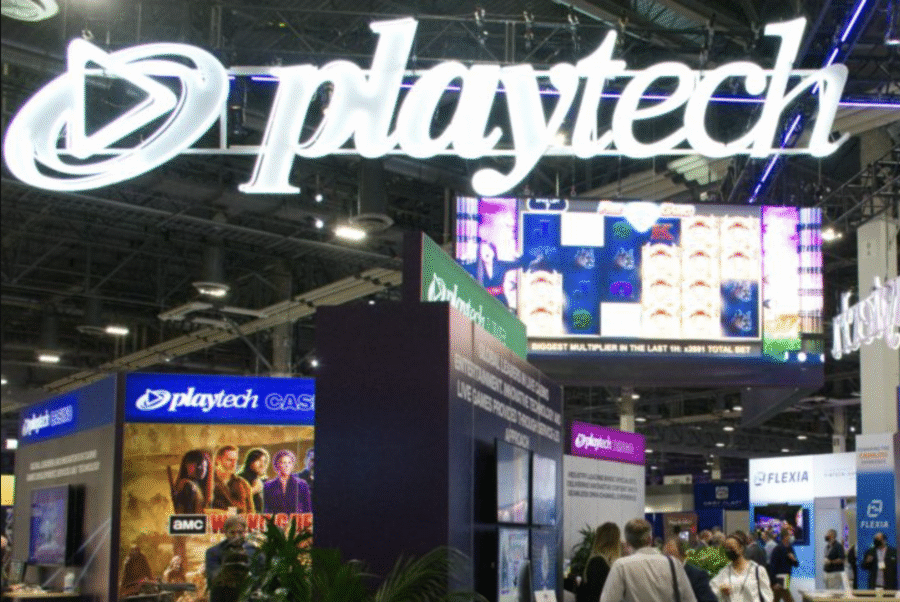
Playtech has partnered with Fanatics Casino to bring its slots and table games to US players, with the rollout beginning in Michigan and West Virginia.
The agreement will make Playtech’s gaming content, including its slots and RNG table games, available through the Fanatics Casino app, with the software developer’s games expected to launch in Pennsylvania and New Jersey in the coming weeks.
Players across the four states will gain access to titles like Fire Blaze, Collect Em, Oink Oink Oink , and The Racaroon.
Fanatics Betting and Gaming Senior Content Manager Kieron Shaw said, “The launch of Playtech’s content on Fanatics Casino marks the culmination of a journey that began more than two years ago. We’re thrilled to welcome Playtech as a partner. Their depth of experience, proven portfolio, and commitment to innovation will play a significant role in our next phase of growth.”
Playtech USA General Manager Jonathan Doubilet added, “We’re proud to partner with Fanatics Casino as they strengthen their presence across the US. Our wide-ranging content continues to perform strongly with American players and we’re confident our collaboration will deliver innovative, high‑impact gaming experiences that will elevate the gaming experience even further.”

This comes after Playtech received its Online Gaming Service Provider license to supply gaming content in Connecticut.
Charlotte Capewell brings her passion for storytelling and expertise in writing, researching, and the gambling industry to every article she writes. Her specialties include the US gambling industry, regulator legislation, igaming, and more.

Dig Deeper
Related stories


The Backstory
Why this deal lands now
Fanatics Casino has spent the past several months stocking its shelves with new games across core states, laying the groundwork for bigger platform tie-ups. The latest expansion builds on that march. In New Jersey, Pennsylvania, Michigan and West Virginia, the operator has already tapped a string of suppliers to broaden its slots and table mix, an approach that smooths state-by-state rollout and primes the app for faster content drops as regulatory approvals come through.
The strategy has been visible in a cadence of announcements. A notable push arrived when Bragg Gaming said its exclusive titles from Atomic Slot Lab, Wild Streak Gaming and Indigo Magic would go live via remote gaming server technology in three states, with more third-party content scheduled later in the year. That arrangement, outlined in Bragg Gaming partners with Fanatics Casino to launch in three states, emphasized the operator’s plan to use a mix of in-house and aggregated content and highlighted the cross-sell potential between sports betting and igaming that Fanatics is banking on.
Parallel integrations with specialty studios further underscore the operator’s tempo. RLX Gaming’s portfolio, including Temple Tumble and The Great Pigsby, expanded Fanatics Casino’s footprint in New Jersey and Pennsylvania, as detailed in RLX Gaming expands US presence with Fanatics Casino in Pennsylvania and New Jersey. Around the same time, S Gaming’s Triple 7 Jackpot added another distinct reel style to Fanatics’ lobby in multiple jurisdictions, according to S Gaming partners with Fanatics Casino to expand US presence. Each deal broadened the catalog while acclimating Fanatics’ player base to a wider range of mechanics and volatility profiles.
A content-first expansion map
The operator’s recent focus has not been on splashy national launches but on layered content rollouts calibrated to each market’s regulatory arc and player preferences. In West Virginia, for instance, Fanatics leaned into a deeper bench of online slots from Wazdan, bringing 15 titles live and spotlighting games such as Magic Spins and Sizzling Eggs for that audience. The move, described in Wazdan expands presence in West Virginia with Fanatics Casino, showed a targeted approach to curation in a smaller but active igaming state.
In the more mature markets of New Jersey and Pennsylvania, the operator has layered on breadth and frequency. RLX’s aggregation network broadened distribution of partner studio games beyond its flagship titles, while S Gaming’s U.S. debut via another operator and subsequent Fanatics integration signaled a pipeline of emerging content that could differentiate the lobby over time. That pacing is consistent with Fanatics’ message that partnerships help “enhance the player experience” by adding variety without sacrificing gameplay quality.
The underlying logic is straightforward: populate the app with enough proven and novel formats to improve acquisition economics and retention, then rotate in event-driven or branded launches to spark bursts of engagement. The cadence also keeps the operator in near-constant “new” mode across jurisdictions, a useful marketing lever as it competes for attention without overspending on national campaigns.
Brand power to cut through the noise
Fanatics Casino has also leaned on licensed entertainment brands to create appointment-style gaming moments. In March, White Hat Studios introduced an exclusive WWE slot, WrestleMania: Road to Gold, across Fanatics’ live states. The title, previewed in WWE teams up with White Hat Studios to launch slot with Fanatics Casino, features a progression system tied to tentpole events like Royal Rumble and Money in the Bank and launched ahead of WrestleMania 42 on April 18-19 in Las Vegas. With 20 WWE performers and broadcast commentary layered into the gameplay, the integration showed how recognizable IP can create spikes in session starts and time on device when synchronized with the broader sports and entertainment calendar.
For a brand that straddles merchandise, sports fandom and betting, these IP-led drops carry outsized value. They help convert casual sports fans who recognize the brand into casino players, amplify marketing across channels already used by Fanatics, and give the product team hooks for in-app promotion and cross-sell. They also provide a benchmark for measuring the lift from marquee content versus evergreen titles, informing how the operator allocates space in the lobby and timing of future releases.
Aggregation as a competitive lever
The technical spine behind Fanatics’ catalog buildout has been aggregation, both through direct studio integrations and via partners with remote gaming server stacks. Bragg’s setup, described in its three-state launch announcement, provides pipes for in-house and third-party content and shortens time to market for new games. RLX’s aggregation network extends that advantage by bringing partner studio titles under a unified integration, enriching the mix without repeated heavy lifts.
This approach matters in a fragmented U.S. regulatory environment. Each state adds compliance overhead and testing queues, which can slow rollouts and dull marketing momentum. By staging multiple integrations in parallel and stacking content pipelines, Fanatics can refresh its lobby more frequently while reducing reliance on any single supplier. It also gives product managers optionality to tune the mix—leaning into classic three-reel styles like S Gaming’s Triple 7 Jackpot in one state, then spotlighting feature-rich video slots from RLX or Wazdan in another.
The breadth also supports Fanatics’ long-term cross-sell thesis. Bragg’s leadership emphasized the synergy between sports betting and igaming in its Fanatics partnership announcement, pointing to a content cadence that keeps sportsbook customers engaged in the casino during lulls in the sports calendar. In practice, that means timely launches around major events and a lobby that can flex from quick-hit play to deeper bonus-laden sessions.
What this signals for the next phase
The momentum behind third-party content deals suggests Fanatics will continue to prioritize distribution scale, licensed IP and diversified mechanics as it seeks share in the four live states and eyes additional approvals. Recent steps show the operator is comfortable sequencing rollouts—securing a beachhead in one state, validating performance, then extending into adjacent markets. That was evident as RLX moved from New Jersey to Pennsylvania, Wazdan deepened in West Virginia and S Gaming’s debut broadened across multiple jurisdictions.
The stakes are clear. With established rivals already competing on app polish, promotions and brand recognition, Fanatics needs a catalog that delivers frequent freshness and recognizable draws without overwhelming casual users. The recent WWE slot launch demonstrated the impact of timed, high-profile content, while the aggregation streams from Bragg and RLX offer a steady drumbeat of new titles to support retention.
Expect more of the same: targeted state expansions, branded event tie-ins and a growing roster of studio partners feeding a single, faster content pipeline. The result is a platform positioned to test, learn and scale—one that treats content not as a static library but as a product engine designed to convert sports fans into casino regulars and keep them playing.
