


S Gaming partners with Fanatics Casino to expand US presence

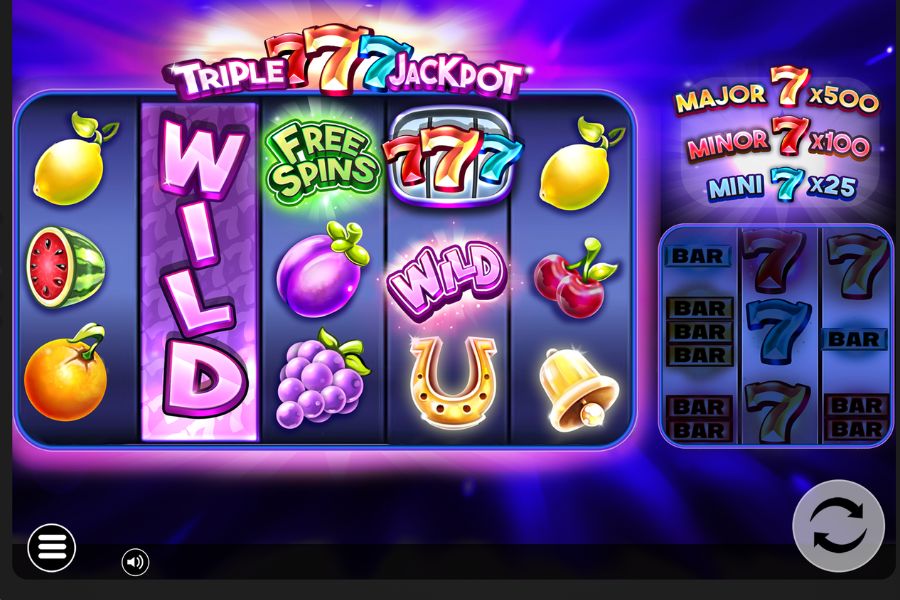
Online slot developer S Gaming has expanded its US presence through a partnership with Fanatics Casino.
S Gaming’s Triple 7 Jackpot slot will launch on Fanatic’s platform in regulated igaming states, including New Jersey, Pennsylvania, and Michigan.

S Gaming Chief Executive Officer and Co-Founder Charles Mott said, “Fanatics Casino needs no introduction and is one of the power player brands in the regulated US market.
“We couldn’t be happier to see Triple 7 Jackpot land in its casino lobby and for players in states such as New Jersey, Pennsylvania, West Virginia, and Michigan to take it for a spin for the first time.”
The deal represents S Gaming’s second partnership in the US, following its launch with BetMGM last month.
Fanatics Casino Senior Manager Kieron Shaw added, “We are looking to build our portfolio of games to better enhance the player experience, and that’s why we continue to strike partnerships with pioneering studios like S Gaming.
“S Gaming brings something a little different to our portfolio thanks to its ethos around fun, while still delivering plenty of thrills and big win potential.”

Dig Deeper
Related stories
 2026/03/13: RLX Gaming expands US presence with Fanatics Casino in Pennsylvania and New Jersey
 2025/05/02: Wazdan announces triple US launch with Fanatics Casino
 2026/02/17: Wazdan expands presence in West Virginia with Fanatics Casino
 2025/05/05: Fanatics Casino launches in four US states with $2 million sweepstakes competition
2026/03/13: RLX Gaming expands US presence with Fanatics Casino in Pennsylvania and New Jersey
2025/05/02: Wazdan announces triple US launch with Fanatics Casino
2026/02/17: Wazdan expands presence in West Virginia with Fanatics Casino
2025/05/05: Fanatics Casino launches in four US states with $2 million sweepstakes competition
The Backstory
Why this deal matters now
S Gaming’s move to place Triple 7 Jackpot on Fanatics Casino is landing at a pivotal moment for both companies and the broader U.S. igaming market. For S Gaming, the tie-up deepens a quickening push into top regulated states after an initial U.S. launch. For Fanatics, it extends an aggressive content-led strategy aimed at turning its fast-growing casino app into a destination in New Jersey, Pennsylvania, Michigan, and West Virginia.
The timing reflects a broader land grab as operators and suppliers race to scale in the few states where online casinos are legal. Fanatics has been stitching together a multi-pronged rollout that blends in-house table games with branded promotions and a steady cadence of third-party titles. Smaller but nimble studios like S Gaming see a window to stand out with casual-forward mechanics that appeal to sportsbook crossovers and slots veterans alike.
Fanatics’ fast-build casino strategy
Fanatics Casino went live this spring with an attention-grabbing push, including a $2 million sweepstakes campaign spanning four states. The operator framed the launch as the start of a broader effort to capture share across the largest regulated markets, leaning on Fanatics’ national sports audience and cross-sell from its sportsbook footprint. The rollout included a web version for West Virginia and promised desktop access in other states, signaling a focus on reach and convenience from day one.
Fanatics seeded its casino catalog with established suppliers such as Light & Wonder, IGT PlayDigital, Evolution and White Hat Studios, while highlighting proprietary tables like Fanatics Fire Roulette and Fanatics Blackjack. The merchandising-style approach is clear: give players a familiar lobby anchored by known brands and table staples, then layer in a rotating slate of new slot content to keep engagement high and acquisition costs defensible.
Content pipeline already taking shape
Since launch, Fanatics has moved fast to diversify its pipeline. It struck a deal with Wazdan for a simultaneous three-state debut, adding 58 games in New Jersey and initial batches in Michigan and Pennsylvania with more queued up. The breadth of that portfolio offers high-variance titles and bonus mechanics designed to spike session time, a useful complement to Fanatics’ own tables and mainstream slots.
Fanatics also turned to Bragg Gaming to fortify its exclusive and third-party distribution. Through Bragg’s remote gaming server, the operator gained access to Atomic Slot Lab, Wild Streak Gaming and Indigo Magic, plus a pipeline of outside studios like King Show Games and Bluberi, as part of a three-state platform deal. The arrangement gives Fanatics a steady flow of fresh releases without shouldering full development risk, while offering Bragg a showcase in the three largest igaming states.
Against that backdrop, S Gaming’s arrival gives Fanatics another differentiator: a studio that leans into “sustainable entertainment” and casual mechanics rather than pure volatility. That positioning can matter in states where cross-sell from sports remains a key acquisition lever. The goal is to convert casual sportsbook users into regular casino customers with approachable math models, then graduate them into deeper portfolios that include Wazdan’s or Bragg’s higher-intensity experiences.
S Gaming’s U.S. beachhead with BetMGM
S Gaming’s Fanatics deal follows its first U.S. move with BetMGM, a heavyweight in online casinos. Last month the studio secured distribution in New Jersey, Pennsylvania, West Virginia and Michigan, placing titles like Barnyard Bash Chicken Chase, Triple 7 Jackpot and Cat and Mouse Collect on BetMGM’s platform as part of a market-entry partnership. For a smaller studio, getting shelf space on BetMGM validates performance and helps establish a benchmark for game KPIs in regulated states.
BetMGM has been vocal about expanding its third-party catalog as part of a 2026 content strategy, including a Canada-facing pact with Gaming Corps. By onboarding S Gaming, BetMGM signaled an appetite for titles designed around approachable mechanics and “fun-first” engagement. That can translate into measurable improvements in retention and net gaming revenue if the games deliver consistent time-on-device without high churn from aggressive volatility curves.
The Fanatics placement now gives S Gaming a second high-traffic lobby and another data stream on U.S. player behavior. With two major operators carrying its games, the studio can iterate content faster for state-specific preferences and seasonality. It also increases negotiating leverage for future rollouts as more operators look to balance their lobbies with a mix of blockbuster brands and upstart studios that punch above their weight in engagement metrics.
Rivals are racing to localize content
The competitive set is not standing still. RubyPlay, for example, is using operator partnerships to fine-tune its mix for local tastes. The studio recently inked a deal with Hard Rock Bet Casino in New Jersey to bring in titles like Diamond Explosion Patriots and Immortal Ways Diamonds SE, with a staged rollout of 10 more games to follow, as detailed in its Hard Rock Bet partnership announcement. RubyPlay’s approach underscores a broader theme in U.S. igaming: state-by-state content curation is becoming a must as studios chase resonance with regional audiences.
For Fanatics and S Gaming, that trend raises the bar. Casual-first slots must still clear the engagement hurdle against a flood of new launches and big-name IP. But it also creates space for differentiated mechanics that appeal to bettors transitioning into casino play. Operators want portfolios that can acquire, retain and monetize across a spectrum of player segments. Studios that can document uplift in session length and return frequency, especially in the first 30 days of a user’s lifecycle, will keep winning premier lobby placement.
The stakes in a constrained map
With legal online casinos concentrated in a handful of states, distribution strategy is everything. Fanatics is pursuing breadth across devices and depth across content categories to maximize cross-sell and lifetime value. S Gaming is using anchor partnerships to build credibility, generate performance data and scale faster than organic operator-by-operator pitches would allow.
If Triple 7 Jackpot and follow-on S Gaming titles convert well on Fanatics, expect accelerated releases and possible exclusivity windows that lock in differentiation. If performance stalls, the crowded release calendar and data-driven merchandising will be unforgiving. Either way, the next few quarters will test whether casual-centric design can carve durable share alongside higher-variance catalogs now flooding New Jersey, Pennsylvania, Michigan and West Virginia. For both companies, the upside is clear: in a limited number of legal states, even modest gains in daily active users and average revenue per user can move the needle on market share and valuation narratives.
