


Paraguay records 2026 gaming revenue peak of PYG19.6 billion

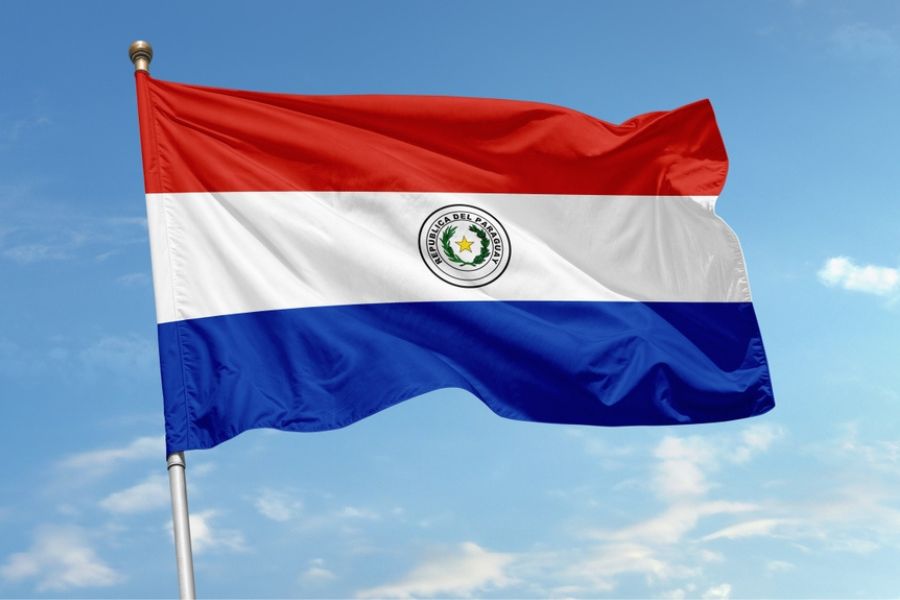
Paraguay’s National Directorate of Tax Revenue has revealed that the country’s gaming regulator, Conajzar, recorded PYG19.6 billion (US$3.2 million)1 PYG = 0.0002 USD
2026-06-09Powered by CMG CurrenShift in gaming revenue for May, the highest figure so far in 2026.
Revenue rose 4.8% year-on-year from PYG18.7 billion (US$3.0 million)1 PYG = 0.0002 USD
2026-06-09Powered by CMG CurrenShift in May 2025. Likewise, revenue collected in the first five months of 2026 reached PYG94.2 billion (US$15.3 million)1 PYG = 0.0002 USD
2026-06-09Powered by CMG CurrenShift, up 13.7% from PYG82.9 billion (US$13.4 million)1 PYG = 0.0002 USD
2026-06-09Powered by CMG CurrenShift generated between January and May of 2025.

Gaming revenue this year looks set to eclipse that of 2025’s total of PYG215.9 billion (US$35.0 million)1 PYG = 0.0002 USD
2026-06-09Powered by CMG CurrenShift, which was up 22.9% from 2024. Throughout 2026, revenue hasn’t fallen below PYG18 billion (US$2.9 million)1 PYG = 0.0002 USD
2026-06-09Powered by CMG CurrenShift, with year-on-year growth each month.
Conajzar President Carlos Liseras said in an interview with La Nacion in January that monthly collections at the start of his time at the commission ranged between PYG11 billion (US$1.8 million)1 PYG = 0.0002 USD
2026-06-09Powered by CMG CurrenShift and PYG12 billion (US$1.9 million)1 PYG = 0.0002 USD
2026-06-09Powered by CMG CurrenShift, meaning current monthly revenue levels are close to double those amounts.
Revenue collected by Conajzar is diverted to several departments under Law 1016 of 1997, including the Directorate of Charity and Social Aid, the Ministry of Sports, the National Directorate of Tax Revenues, the National Treasury, among others.

The 2025 financial year was the first full year in which Conajzar operated under the National Directorate of Tax Revenues, following its transfer from the Ministry of Economy and Finance under Law 7438 of 2025, announced by President Santiago Pena at the start of the year.
That coincided with the end of the previous gambling monopoly, allowing private companies to operate in a competitive market.
In April, video bingo and slot provider Zitro Digital partnered with igaming operator Solbet to launch in Paraguay.
Charlotte Capewell brings her passion for storytelling and expertise in writing, researching, and the gambling industry to every article she writes. Her specialties include the US gambling industry, regulator legislation, igaming, and more.

Dig Deeper
Related stories
 2026/02/24: Indian politician accused of laundering INR23 billion through illegal online gambling operations
 2025/12/01: India seeks help from six countries on its igaming crackdown
 2025/03/25: India cracks down on illegal online gambling ahead of IPL season
2026/06/18: Indian High Court overturns arrests of Gameskraft founders
2025/03/25: India cracks down on illegal online gambling ahead of IPL season
2026/06/18: Indian High Court overturns arrests of Gameskraft founders
2026/02/24: Indian politician accused of laundering INR23 billion through illegal online gambling operations
2025/12/01: India seeks help from six countries on its igaming crackdown
2025/03/25: India cracks down on illegal online gambling ahead of IPL season
2026/06/18: Indian High Court overturns arrests of Gameskraft founders
The Backstory
Regulatory shift set the stage
Paraguay’s latest gaming revenue figures build on a regulatory reset that began before the current year’s strong collections. The transfer of Conajzar, the country’s gambling regulator, to the National Directorate of Tax Revenue under Law 7438 of 2025 changed the administrative center of gravity for the sector and placed gambling collections more directly within the tax authority’s orbit.
That move mattered because Paraguay’s gaming revenue is not just a measure of operator performance. Under Law 1016 of 1997, Conajzar collections are allocated across public bodies including the Directorate of Charity and Social Aid, the Ministry of Sports, the National Directorate of Tax Revenues and the National Treasury. Higher monthly collections therefore carry budgetary stakes beyond the gambling sector itself.
The 2025 financial year was the first full year in which Conajzar operated under the tax authority after its transfer from the Ministry of Economy and Finance. It also coincided with the end of the previous gambling monopoly, opening the way for private companies to compete in a broader market. The result was a more commercially active framework and, based on the latest numbers, a higher revenue baseline for the state.
From monopoly to competition
The end of the monopoly model marked a turning point for Paraguay’s gambling market. By allowing private companies to operate in a competitive setting, regulators created conditions for operators, suppliers and digital platforms to invest more aggressively. That competitive shift is central to understanding why Conajzar’s monthly collections have moved well above the PYG11 billion to PYG12 billion levels cited by President Carlos Liseras as typical when he began his tenure.
Monthly gaming revenue has not fallen below PYG18 billion in 2026, according to the latest figures, suggesting the market has moved into a new operating range. May’s PYG19.6 billion total was the highest monthly figure so far this year and followed year-over-year gains in every month. Through the first five months of 2026, collections reached PYG94.2 billion, up 13.7% from the comparable 2025 period.
That trajectory follows a strong 2025, when full-year gaming revenue reached PYG215.9 billion, a 22.9% increase from 2024. If the current pace continues, Paraguay is positioned to exceed last year’s total. The effect is cumulative: a more open market attracts new content and operator investment, which can expand player activity, which in turn raises collections available to public institutions.
Supplier deals reflect the opening
Commercial activity has begun to reflect the more competitive environment. In April, video bingo and slot provider Zitro Digital entered Paraguay through a partnership with Solbet, bringing a portfolio of online titles to the operator’s local platform. The Zitro Digital partnership with Solbet in Paraguay was notable because it tied international content supply to a market in which regulatory and revenue conditions were already improving.
For suppliers, Paraguay offers a smaller but increasingly relevant regulated foothold in Latin America. Zitro’s portfolio includes online versions of products with land-based recognition, a model that can help operators convert established brand familiarity into digital engagement. For operators such as Solbet, broader content libraries are a way to compete for players after the monopoly era.
The deal also illustrates a broader regional pattern: suppliers are targeting regulated Latin American markets while balancing opportunity against rising political scrutiny. Brazil, for example, has seen proposals aimed at restricting online casino activity on addiction concerns. Paraguay’s challenge is to capture the benefits of competition and modernization while maintaining oversight strong enough to prevent the social and enforcement problems that have become prominent elsewhere.
Digital growth is reshaping benchmarks
Paraguay’s revenue growth sits within a wider global shift toward online gaming and digital distribution. In the Philippines, online gaming has moved from a growth segment to a central source of regulator income. PAGCOR reported that e-gaming accounted for more than half of first-quarter revenue in 2025, with e-games and e-bingo generating Php14.32 billion. The regulator linked broader gains to fiscal discipline and said state contributions also rose sharply.
The Philippine market later showed both the upside and the limits of digital expansion. Third-quarter online casino gross gaming revenue rose 17.4% to Php41.95 billion, even as the broader gaming industry was essentially flat. But PAGCOR also said activity slowed after e-wallets were delinked from gambling platforms at the regulator’s request. The Philippine online gaming revenue surge therefore came with a clear caveat: safeguards can temper short-term activity but may support a more durable market.
That balance is relevant for Paraguay as its collections rise. Faster growth can increase public revenue and attract investment, but regulators may face pressure to strengthen payment controls, advertising rules and player protections as participation expands. Markets that grow quickly without such safeguards risk creating openings for unlicensed operators and public backlash.
Other regulated markets show the scale
More mature regulated markets show how quickly online gambling can become a major revenue engine once licensing, payments and product supply align. In Ontario, iGaming Ontario reported a record CA$9.6 billion handle in March, with casino accounting for 87% of handle and 82% of non-adjusted gross gaming revenue. The record Ontario handle came less than three years after the province launched its regulated market in April 2022.
The U.S. market points in the same direction at greater scale. The American Gaming Association said U.S. online gaming revenue reached US$21.54 billion in 2024, up 24.6% from 2023. Online gaming increased its share of total U.S. gaming revenue to 30%, while land-based casino revenue grew only modestly. Legal online casino states all posted record igaming revenue, and sports betting remained overwhelmingly digital.
Paraguay is not comparable in size to Ontario or the U.S., and its public reporting focuses on regulator collections rather than the broader handle and gross gaming revenue metrics common in larger markets. Still, those examples frame the stakes. Once a jurisdiction opens competition and attracts digital suppliers, revenue can accelerate quickly. The policy question becomes how much of that growth is captured by the state and how effectively regulators keep the market legal, transparent and socially sustainable.
Revenue momentum raises policy stakes
The latest Conajzar figures suggest Paraguay’s reforms are translating into stronger fiscal outcomes. A May peak of PYG19.6 billion and five-month collections of PYG94.2 billion indicate that the post-monopoly framework has produced more than a one-time uplift. The consistency of monthly growth in 2026 points to a structural change in the market’s revenue capacity.
That momentum also raises expectations for regulators. Public agencies that receive gaming funds will have an interest in maintaining growth, while operators and suppliers will seek a stable licensing environment. At the same time, international comparisons show that digital growth can bring scrutiny over payments, illegal sites and responsible gambling protections.
For Paraguay, the next phase is likely to be defined less by whether gaming revenue can grow and more by how that growth is managed. If Conajzar can maintain higher collections while supporting competition and tightening oversight, the sector could become a more reliable contributor to public finances. If enforcement lags behind commercial expansion, the same growth that now strengthens state revenue could generate political and regulatory pressure.
