


Oklahoma Senate rejects sports betting bill

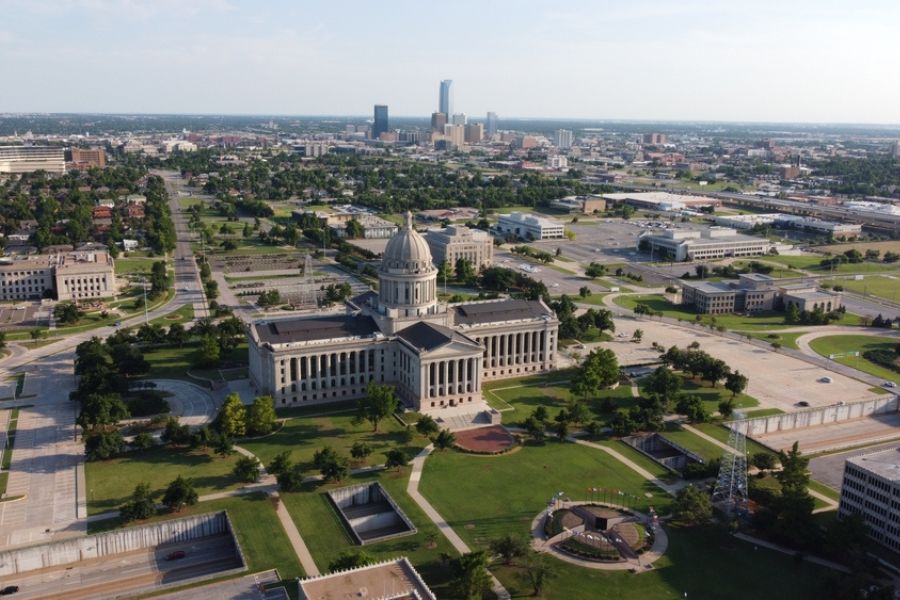
The Oklahoma Senate has rejected a bill that would have legalized sports betting in the state, with the measure falling four votes short of passage.
The proposal, HB 1047, was introduced by Sen. Bill Coleman. It would have allowed Native American tribes to offer retail and mobile sports betting on tribal lands, with an 8% share of gambling revenue going to the state.

It also included provisions for mobile operators to partner with tribes to offer online betting outside tribal lands.
The proposal would have worked through amended existing tribal gaming compacts, under which tribes pay exclusivity fees to operate certain gaming activities. In the 2025 fiscal year, the state collected over US$221 million in such fees, according to the Oklahoma Gaming Compliance Unit.
Coleman said the measure could have generated between US$15 million and US$18 million per year in additional state revenue. A portion of that money would have been designated to a fund to promote the state’s NBA team, the Oklahoma City Thunder.

Opposition to the bill focused on concerns about gambling-related harm. Several senators cited potential impacts on low-income households, young adults, and families.
This includes Sen. Dusty Deevers, who said it would expand gambling activity in the state, and Sen. Brian Guthrie, who raised concerns about addiction and the financial risks of gambling.

Dig Deeper
Related stories
 2026/01/19: Oklahoma lawmakers to renew sports betting conversation in next legislative session
 2025/04/28: Oklahoma sports betting bills advance
 2025/04/01: FanDuel and DraftKings made peace with California tribes over sports betting expansion
 2025/03/26: Oklahoma Senate progresses online sports betting bill
2026/01/19: Oklahoma lawmakers to renew sports betting conversation in next legislative session
2025/04/28: Oklahoma sports betting bills advance
2025/04/01: FanDuel and DraftKings made peace with California tribes over sports betting expansion
2025/03/26: Oklahoma Senate progresses online sports betting bill
The Backstory
How the latest defeat fits into years of maneuvering
Oklahoma’s rejection of sports betting did not materialize in a vacuum. It reflects years of fits and starts, narrow procedural wins and late-session collapses shaped by unresolved questions over tribal compacts, mobile wagering and the role of professional sports. Lawmakers and stakeholders have edged closer to agreement on some fronts, then pulled back as policy details and political leverage shifted. The result is a recurring cycle: a burst of momentum, followed by an impasse that sends the issue into the next session with promises to regroup.
This session’s outcome follows a pattern that has emerged since the Supreme Court opened the door to state-by-state legalization in 2018. In Oklahoma, the crux has been how to align sports betting with existing tribal gaming compacts while addressing mobile wagering statewide, a sensitive layer that touches sovereignty, market structure and consumer protection. Each attempt has tested those boundaries, informing — and constraining — the next.
A razor-thin win that set the stage
Early in the cycle, backers captured a fleeting breakthrough in the Senate with a measure tailored to thread political and commercial needles. In March, senators advanced a mobile-first framework that would authorize tribal operators to take bets in person and on tribal land, while granting a single nontribal license to the state’s NBA franchise for online betting beyond those boundaries. That package, which advanced on a Senate vote that passed by the slimmest margin, was calibrated to satisfy a governor wary of a monopoly and signal a controlled rollout to hesitant lawmakers.
The narrow tally underlined both opportunity and fragility. Proponents heralded the vote as proof there was a workable lane: keep primary control with tribes, carve out a limited avenue for the Oklahoma City Thunder to participate and promise tight guardrails on mobile wagering. But that compromise also broadened the coalition that needed to hold — tribes aligning on mobile rules, legislative leaders syncing calendars and the governor signaling support. Subsequent sessions exposed how hard it was to keep that balance intact.
Momentum in the House, roadblocks in the Senate
On the House side, sports betting proposals regularly cleared with ease. The lower chamber repeatedly sent measures to the Senate, reflecting bipartisan appetite to capture a regulated market already operating in the shadows. Yet bills repeatedly met procedural bottlenecks and calendar crunches across the rotunda. Earlier efforts ultimately failed to reach a vote before a Thursday deadline, even as Senate committees moved them further than in prior years.
This session’s reprise followed the same arc. Two companion bills moved through committee with comfortable margins, signaling real traction. But they stalled before the May 8 deadline, as negotiators wrestled with the scope and oversight of mobile wagering. Sponsors emphasized they were “closer than ever,” but deferred final action to give tribes more time to land on unified standards. That delay compounded the risk of late-session attrition, when competing priorities and election-year sensitivities crowd the calendar.
Fault lines: tribes, governor and mobile rules
The recurring choke point has been how to expand wagering without fracturing the compact-based system that underpins Oklahoma gaming. Supporters tried to anchor sports betting within the model tribal gaming compact, preserving Class III authority and exclusivity fees while adding a state revenue share. But mobile wagering beyond tribal lands introduced hard questions: who holds licenses, how geofencing and payments are handled and how revenue splits across jurisdictions.
Those details matter because they implicate sovereignty and market design. Tribal operators want clarity and certainty within compact structures. Legislative sponsors sought a framework that could withstand legal scrutiny and garner enough votes. The governor’s stance — resisting any approach that looked like a closed tribal monopoly — nudged negotiators toward hybrid constructs, such as the NBA carve-out. Even that, however, risked alienating some tribal stakeholders, and added complexity at a moment when clean, comprehensible rules might have been the more durable political sell.
Between sessions, lawmakers worked to narrow differences and craft backstops. After last year’s stall, Senate leaders convened an interim study to explore regulatory paths and test whether a statewide vote could serve as a release valve if a gubernatorial veto loomed. Sponsors outlined a contingency approach — a “trigger” referendum if compromise failed — and signaled incremental progress on mobile standards. That outlook framed expectations heading into the new session, as lawmakers prepared to renew the debate with an emphasis on consensus.
Still, familiar concerns resurfaced in floor debate: the risk of problem gambling among young adults, potential harm to low-income families and questions about whether a new market would expand gambling or simply regulate existing activity. Those arguments have proven sticky, especially among senators who prefer to see more concrete mitigations — funding for treatment, advertising limits or deposit caps — embedded in the bill text, not left to rulemaking.
Deadlines, dealmaking and a narrowing window
Oklahoma’s legislative rhythm has also worked against proponents. Tight deadlines magnify the cost of small disagreements, and once a bill slips past a key date, the line of must-pass measures only gets longer. Each setback fuels urgency to act early in the next session, but that urgency often outpaces consensus. The late-breaking Senate rejection underscores how a handful of votes, or a few unsettled provisions, can flip a pathway to passage into a failed bid with little time left to recalibrate.
The electoral calendar is a wild card. Backers argue the state is losing revenue to neighboring jurisdictions and offshore books, while detractors caution against rushing into a market that could require costly enforcement and consumer protections. Sponsors have floated earmarks to make the politics more palatable — including a role for the Thunder under a carefully structured license and dedicated funds for public priorities — but the coalition remains fragile without a settled mobile plan endorsed by tribal leaders and the governor.
National crosscurrents reshape the perimeter
The federal backdrop is shifting, too. In Washington, a bipartisan push seeks to draw a bright line between state-regulated sports betting and event-contract trading overseen by the Commodity Futures Trading Commission. A proposal from Sens. Adam Schiff and John Curtis would bar CFTC registrants from listing sports and casino-style contracts, a move aimed at preventing prediction platforms from offering de facto sports bets nationwide. That bill, detailed in our coverage of efforts to restrict prediction markets, underscores broader concerns about consumer protections, state authority and tribal sovereignty that echo through Oklahoma’s fight.
The crosscurrents matter. If prediction markets keep encroaching on sports outcomes, states and tribes may see further erosion of their regulatory and revenue prerogatives, raising the stakes for a coherent, enforceable in-state framework. Conversely, a federal clampdown could remove a source of competitive pressure, giving Oklahoma more room to shape a compact-aligned model without chasing gray-market innovations.
For now, the Senate’s no vote resets the clock again. The contours of a compromise are visible — compact-based control, well-defined mobile rules and a carefully bounded role for the state’s NBA team — but the coalition to pass it has yet to lock in. The next session will test whether stakeholders can convert years of incremental progress into a durable law or whether Oklahoma’s sports betting effort will remain a case study in how close doesn’t count at the Capitol.
