


Oklahoma lawmakers to renew sports betting conversation in next legislative session

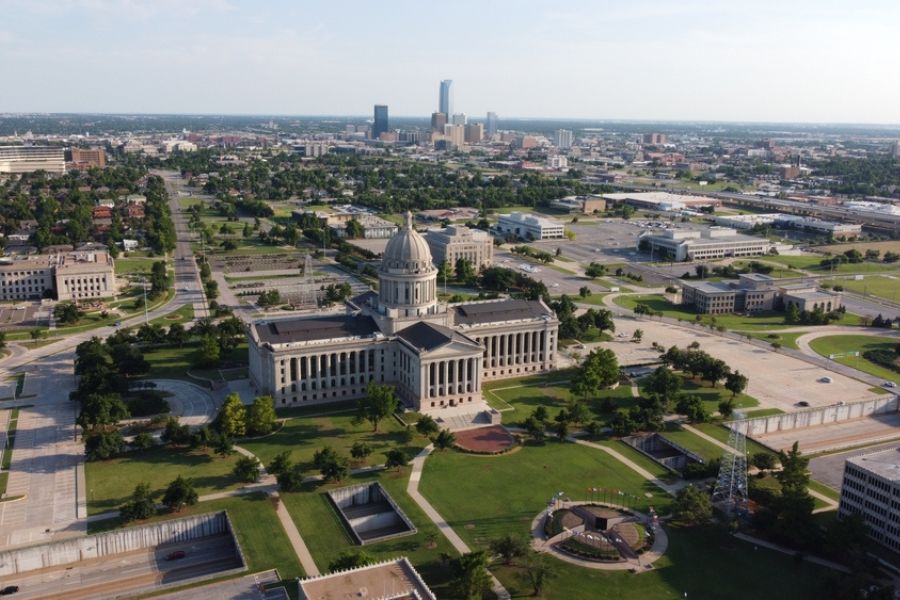
Oklahoma lawmakers are gearing up to renew the debate over legalizing sports betting when the next legislative session begins, as advocates push to finalize measures that stalled last year.
State Senator Bill Coleman has been pushing for the legalization. Last fall, Coleman hosted an interim study that brought legislators, tribal representatives, and industry stakeholders together to explore possible regulatory frameworks for allowing wagers in the state. Coleman and other lawmakers filed several bills during the previous session aimed at establishing a legal sports wagering system, but none was resolved before the session ended.

Speaking to FOX 25, Coleman discussed one of the main proposals, authored by State Representative Ken Luttrell, which has passed the House, but remains sitting in the Senate.
Coleman also alluded that the state’s federal tribes were close to reaching an agreement on mobile sports betting, while adding that there also was a companion bill.
“That’s called a trigger bill. That trigger bill should hit pass and the sports betting bill get passed and the governor veto and we could not override the veto of the sports betting bill, the trigger bill then comes into play and automatically creates a state question to be heard sometime within a year,” he said.

While this process continues, one of the state’s tribes, the Muscogee Nation, recently launched a gaming app allowing users within reservation boundaries to play bingo-style games. However, officials emphasize it has no relation to sports betting.
Charlotte Capewell brings her passion for storytelling and expertise in writing, researching, and the gambling industry to every article she writes. Her specialties include the US gambling industry, regulator legislation, igaming, and more.

Dig Deeper
Related stories
The Backstory
Why the debate is back now
Oklahoma lawmakers are poised to reopen a yearslong fight over legal sports betting, propelled by public statements from key sponsors and a desire to avoid another missed session. Sen. Bill Coleman has said the Senate will revisit proposals that cleared the House but stalled in the upper chamber, including a framework to authorize tribal mobile wagering and a “trigger” mechanism to send the question to voters if a veto or stalemate blocks enactment. In remarks highlighted by local television, Coleman suggested tribal leaders are nearing consensus on mobile rules, a sticking point last year, and framed a companion measure as a backstop to ensure the issue reaches the ballot if needed. His comments track with a renewed push to finalize language with tribal governments and industry stakeholders before the next gavel falls. For context on Coleman’s recent remarks, see his interview summary via FOX 25’s report on the sports betting conversation continuing into the next Oklahoma legislative session.
The legislative architecture at the center of the debate is familiar. House Bill 1047 set up a model compact pathway for tribes to offer online sports betting under their Class III gaming authority, while House Bill 1101 was crafted as a fallback to ask voters directly if lawmakers could not deliver a negotiated solution. Both measures advanced last spring yet never reached final passage.
As lawmakers return, they face the same core tension: how to align statewide regulation with tribal exclusivity, avoid overregulating sovereign operations and set guardrails for mobile betting in a market that is already active through offshore sites and local bookmaking.
What stalled at the Capitol last session
Two bills that had cleared key committees and landed on the Senate floor died at the deadline in early May, the third consecutive session that legalization has slipped away. The failure was procedural as much as political; sponsors said they were asked to stand down while tribes worked toward consensus on mobile wagering rules. A recap of the collapse and the sponsors’ rationale is here: Oklahoma sports betting bills stall before legislative deadline.
HB 1047, the primary vehicle, would have allowed tribes to add internet sports betting to their compacted offerings, preserving their exclusive rights while modernizing products available to consumers. HB 1101, the safeguard, would have referred the question to voters if the main bill faltered. The measures’ status and text are available on the Legislature’s site: HB 1047 and HB 1101.
Rep. Ken Luttrell and Sen. Coleman have framed the pause as strategic. In interviews last spring, Luttrell said tribal leaders sought time to align on mobile guardrails without undermining sovereignty. That calculus has not changed. Expect mobile limits, geofencing on tribal lands, data integrity provisions and marketing restrictions to dominate negotiations.
Compacts, mobile betting and the tribal equation
The stakes are tied to Oklahoma’s compact system, which grants tribes exclusive gaming rights in exchange for fees. Any move to add mobile sports betting must reconcile statewide access with the compact framework and avoid exposing the state to claims of breach. Tribal leaders have warned that abrupt changes to exclusivity could carry monetary consequences.
Advocates have floated a model compact amendment to authorize mobile wagering and assign platform operations to tribes, potentially with third-party vendors. The approach mirrors how many states with tribal gaming have handled sports betting, though Oklahoma’s legal and political history makes the route sensitive. The practical challenge is coverage: whether statewide mobile betting can be offered under tribal umbrellas, how revenue sharing would operate and what role, if any, the state would take in licensing and enforcement beyond compact oversight.
Complicating the optics, at least one tribe has rolled out a gaming app offering bingo-style games within reservation boundaries, underscoring how quickly digital gaming can expand under existing authorities. It is not sports betting, but it is a reminder that mobile formats are already taking root and that gaps in policy will be filled by the market, legal or otherwise.
Counting the cost of delay
Lawmakers have heard the revenue pitch for several sessions. At a Senate panel this year, industry and team representatives argued that the status quo funnels money to illegal operators and neighboring states. One trade group official estimated that sports betting is already happening in Oklahoma on unregulated platforms and with local bookies, noting a typical state tax rate around 16 percent in legal markets. The testimony and broader economic context are summarized here: Legislative gridlock on sports betting is costing Oklahoma millions.
Tribes paid the state more than $221 million in exclusivity fees last fiscal year, according to testimony. Leaders of the Oklahoma Indian Gaming Association cautioned that missteps could jeopardize those payments and lead to litigation. That tension—unlocking new revenue while protecting a proven compact system—remains the center of gravity for the coming session.
Proponents also point to consumer protection. Legalization would bring age verification, self-exclusion tools and mandatory responsible gaming funding. The counterargument, frequently heard in committee, is that any expansion increases the risk of addiction and social harm, and that tax receipts may not offset those costs.
What other states signal
Oklahoma is not moving in a vacuum. In Minnesota, a Senate finance committee led by a long-standing opponent of sports betting convened a pre-session hearing focused on addiction risks and market design. Critics stressed the hazards of online betting and called for aggressive taxation and funding for treatment, while supporters argued that regulation would displace illegal markets and protect consumers. A detailed account of that debate is here: Minnesota sports betting faces renewed opposition ahead of legislative session.
Rhode Island, meanwhile, is pressing forward on competitive access and enforcement. The Senate fast-tracked two bills—one to end an effective monopoly and open the market to large national operators, and another to increase penalties for facilitating underage gambling. The legislative push is outlined in Rhode Island lawmakers prepare to vote on gambling bills, with bill texts posted by the state: S 748, S 623 and a related House measure H 5643.
The throughline for Oklahoma is twofold: the longer a state waits, the more entrenched illegal channels become, and the more leverage shifts to operators that can move quickly when rules are set. Conversely, the more aggressive the expansion, the more scrutiny it draws from public health advocates and lawmakers wary of unintended consequences.
The broader market context
Beyond statehouses, the sports betting ecosystem continues to consolidate around data rights, integrity services and targeted advertising. The National Football League extended its exclusive data deal with Genius Sports through 2030, expanding into global digital advertising and deepening integrations that power in-play wagers and fan engagement tools. The pact, which includes additional equity warrants for the NFL, removes uncertainty over a cornerstone data relationship for operators and suppliers. Details are here: NFL, Genius renew association through 2030.
For Oklahoma, that backdrop matters. Reliable league data and mature vendor relationships reduce technical barriers if and when tribes launch sportsbooks. It also underscores why mobile frameworks have become the focal point—bettors expect live, data-driven products that require robust integrity and compliance standards. Any compact amendments will need to contemplate data sources, platform certification and enforcement to align with national norms.
The next session will test whether Oklahoma can thread the needle between compact fidelity and a modern market. The path is clearer than in past years: a compact-based authorization in HB 1047, a voter safeguard in HB 1101, tribal negotiations focused on mobile and a growing body of external models. The question is no longer whether the state can legalize sports betting. It is whether lawmakers will align the legal framework with tribal sovereignty quickly enough to capture revenue, curb illegal play and set rules before the market moves on without them.
