


North Carolina sports betting wagers top US$691 million in September

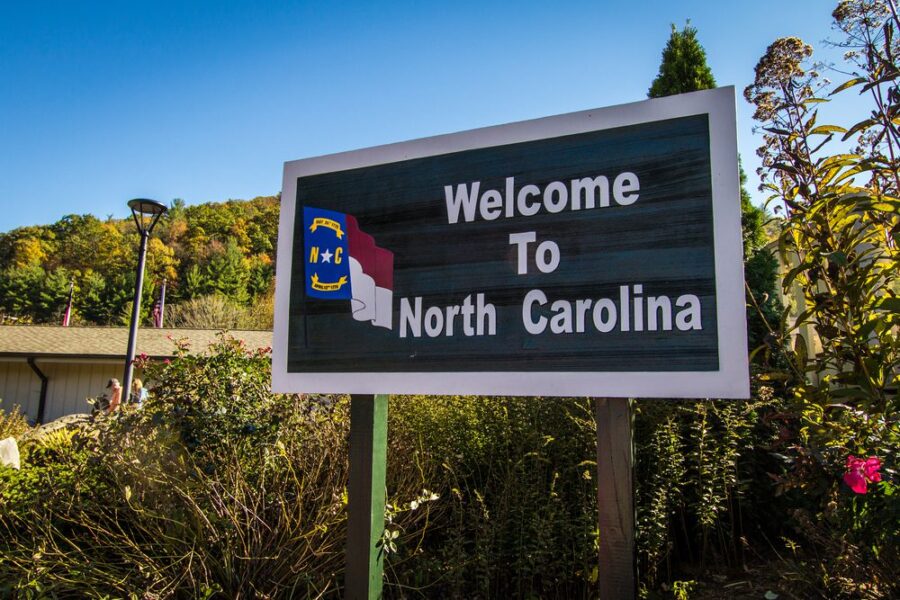
Sports bettors in North Carolina placed over US$691 million in paid sports wagers in September, marking the state’s fourth-highest monthly total since legal sports betting launched in March 2024.
According to figures released by the state’s gambling authority, the North Carolina State Lottery Commission, September was also the 13th consecutive month in which paid wagers surpassed US$500 million.

Only three months have recorded higher totals than September 2026 – March 2026 (US$705 million), October 2025 (US$784 million), and November 2025 (US$792 million).
Betting activity typically increases in October and November as the NFL season progresses, while March sees higher volume due to the NCAA college basketball tournament.
If this pattern continues, North Carolina could exceed US$800 million in paid wagers in a single month for the first time and approach US$1 billion in total wagering, according to WRAL.

The state also generated approximately US$15 million in sportsbook tax during September. This brings operator contributions to over US$40 million since North Carolina raised its sports betting tax from 18% to 23% in July this year.
Across the third quarter of 2026, paid sports wagering revenue in North Carolina exceeded US$1.7 billion, rising to around US$1.8 billion when promotional wagers are included.
Since legalized sports betting began in the state, North Carolina has collected over US$349 million in sports betting tax revenue.

Bettors have placed over US$17.4 billion in paid wagers, while total wagering, which includes promotional and free bets, has surpassed US$18.2 billion. Sportsbooks have also paid out over US$16.2 billion in winnings.

Dig Deeper
Related stories
 2026/06/22: North Carolina increases tax rate on sports betting from 18% to 23%
 2026/10/01: North Carolina sports betting handle passes US$500 million for 12th consecutive month
 2025/03/12: North Carolina State Lottery Commission releases report to mark one year of online sports betting
2025/04/15: North Carolina proposes doubling online sports betting tax
2026/06/22: North Carolina increases tax rate on sports betting from 18% to 23%
2026/10/01: North Carolina sports betting handle passes US$500 million for 12th consecutive month
2025/03/12: North Carolina State Lottery Commission releases report to mark one year of online sports betting
2025/04/15: North Carolina proposes doubling online sports betting tax
The Backstory
September’s surge fits an established seasonal pattern
North Carolina’s latest sports betting figures show a market that has moved quickly from launch phase to one of the more consistent online wagering jurisdictions in the U.S. September’s paid wagers of more than $691 million were the state’s fourth-highest monthly total since legal betting began in March 2024 and extended a run of 13 straight months above $500 million.
The result was not an isolated spike. It followed August paid wagers of $520.5 million, when North Carolina recorded its 12th consecutive month above $500 million in handle. That August performance came before the full return of the NFL and college football calendars, which typically push activity higher in the fall. September, with football underway, showed how quickly betting volume can accelerate once major U.S. sports seasons overlap.
The state’s previous high points also reflect that calendar effect. October and November 2025 produced the largest totals to date, while March 2026 was boosted by the NCAA men’s and women’s basketball tournaments. The same pattern now sets up a potentially larger fourth quarter, with football, basketball and hockey all active. If bettors follow prior behavior, North Carolina could test monthly thresholds that were not seriously contemplated when the market opened in 2024.
A young market scaled faster than expected
North Carolina’s online sports betting market launched on March 11, 2024, giving residents access to licensed mobile sportsbooks after years of legislative debate. Within its first year, the market generated more than $6.6 billion in wagers and $713.8 million in revenue, according to the North Carolina State Lottery Commission’s one-year report on online sports betting.
That early performance established North Carolina as more than a midtier state market. The commission said bettors won more than $5.9 billion during the first 12 months, while operators paid $128 million in taxes under the original 18% rate. Tax proceeds were directed to collegiate and youth sports, the General Fund and problem gambling services, including $2 million a year for the North Carolina Problem Gambling Program.
The number of licensed operators helped drive that early scale. The commission regulated brands including FanDuel, DraftKings, BetMGM, Caesars Sportsbook, Bet365, ESPN Bet, Fanatics and Underdog. The breadth of operators gave consumers broad access to promotional offers and competing products, which helped build volume quickly. Promotional wagering has remained a smaller share of total activity than paid wagers but still contributed hundreds of millions of dollars to total betting volume since launch.
The January 2025 figures underscored how volatile revenue can be even when handle remains stable. Bettors wagered $646.9 million that month, while gross wagering revenue rose to $74.5 million, more than double the prior month. As reported in the state’s January revenue surge, payouts to bettors declined from December, producing a larger taxable base for operators. That dynamic remains central to North Carolina’s fiscal upside: handle signals activity, but hold and revenue determine tax receipts.
Tax policy shifted after lawmakers saw the returns
North Carolina’s decision to raise the sports betting tax rate from 18% to 23% in July was a direct response to the market’s early financial performance. Operators had already generated significant revenue and the state had collected nearly $300 million in taxes under the initial structure before lawmakers settled on a higher rate.
The debate was not modest. Senate Republicans first floated a far larger increase, proposing to double the operator tax to 36%. That plan would have placed North Carolina alongside Pennsylvania and not far below New York, New Hampshire and Rhode Island, which collect 51% of operator revenue. The proposal was tied in part to broader funding goals for college athletics, including money for University of North Carolina system schools. The early proposal to double the online sports betting tax signaled that lawmakers viewed wagering as a durable source of public revenue, not simply a newly legalized entertainment sector.
The final compromise was less aggressive but still meaningful. By moving to 23%, North Carolina rose above New Jersey, Massachusetts and Ohio, all prominent betting states with lower rates. The higher levy was expected to generate an additional $37 million in tax revenue during the fiscal year. Lawmakers described the move as an effort to align North Carolina with other states while avoiding changes that could destabilize a market they viewed as functioning well.
Operators and industry advocates opposed the increase, warning that higher taxes would ultimately affect customers through reduced promotions, weaker odds or less investment. The Sports Betting Alliance and major sportsbook brands urged residents to push back. Still, the state’s rapid revenue growth gave lawmakers leverage. Once a young market was producing hundreds of millions in annual handle and tens of millions in monthly revenue, the political argument for a higher tax rate became easier to make.
Higher taxes are already changing the revenue picture
The September results show the immediate fiscal effect of the higher tax rate. The state generated about $15 million in sportsbook tax during the month, bringing operator contributions to more than $40 million since the increase took effect in July. That puts North Carolina on pace to collect substantially more than it would have under the original 18% rate if betting volume holds through the football season.
The August report provided the first clear view of the post-increase market, with $520.5 million in wagers and total tax collections surpassing $300 million since launch. September then added a larger handle month and a stronger tax contribution. Together, the figures show why lawmakers were willing to revisit the rate barely two years after legalization.
The state’s cumulative figures are now significant. Since launch, bettors have placed more than $17.4 billion in paid wagers and more than $18.2 billion when promotional and free bets are included. Sportsbooks have paid out more than $16.2 billion in winnings. The gap between wagers and payouts, after adjustments, forms the operator revenue base that the state taxes.
That structure gives North Carolina exposure to both opportunity and volatility. Strong months can produce large tax receipts, especially under the 23% rate. But if bettors perform better against sportsbooks or operators reduce promotional spending, taxable revenue can shift even when headline handle remains high. September’s results nevertheless suggest the market has enough depth to support the higher rate without an immediate drop in consumer activity.
College sports, public funds and operator strategy are now linked
Sports betting in North Carolina has become closely tied to college athletics and public budgeting. From the start, tax revenue was earmarked in part for amateur sports and collegiate programs. The later tax debate strengthened that connection, with lawmakers discussing how betting revenue could support athletic departments across the University of North Carolina system.
That linkage matters because North Carolina is a college sports state with deep basketball and football fan bases. Major events involving North Carolina, Duke, North Carolina State, Wake Forest and other programs can influence wagering activity, especially around March Madness and rivalry games. The state’s strongest month in March 2026 illustrates the draw of college basketball, while the fall surge reflects football’s central role in U.S. sports betting.
For operators, North Carolina is attractive because it offers population scale, strong sports culture and mobile access. But the tax increase reduces margins and may force decisions about promotions, marketing and customer acquisition. Underdog’s departure from the market in December 2025 showed that not every operator may find the economics sustainable, particularly as larger brands dominate share and tax costs rise.
For the state, the stakes are different. Each month above $500 million reinforces sports betting as a recurring revenue source. That money supports public programs, athletic funding and the General Fund, while regulators continue to oversee responsible gambling obligations. The challenge is maintaining a balance between extracting more revenue and preserving a competitive legal market strong enough to keep bettors away from offshore or unregulated alternatives.
The next test is whether growth can keep outpacing pressure
September’s performance positions North Carolina for a potentially record-setting stretch. October and November have historically been the state’s strongest betting months, and the current trajectory suggests a first month above $800 million in paid wagers is within reach. Total wagering, including promotional bets, could move closer to $1 billion if sports calendars and bettor engagement align.
But the next phase will test more than volume. It will show whether North Carolina’s higher tax structure can coexist with sustained operator investment and consumer participation. Lawmakers have already demonstrated a willingness to revisit tax policy as revenue grows. Operators, meanwhile, will be watching whether the 23% rate becomes a stable endpoint or a step toward future increases.
The broader lesson from North Carolina’s first 2½ years is that legalization can scale quickly when mobile access, major brands and a sports-heavy population converge. The state moved from launch to multibillion-dollar annual handle in short order, then quickly converted that growth into a higher tax burden. September’s figures are the latest evidence that demand remains strong. The question now is how much of that demand can be converted into public revenue without weakening the market that created it.