


North Carolina sports betting handle passes US$500 million for 12th consecutive month

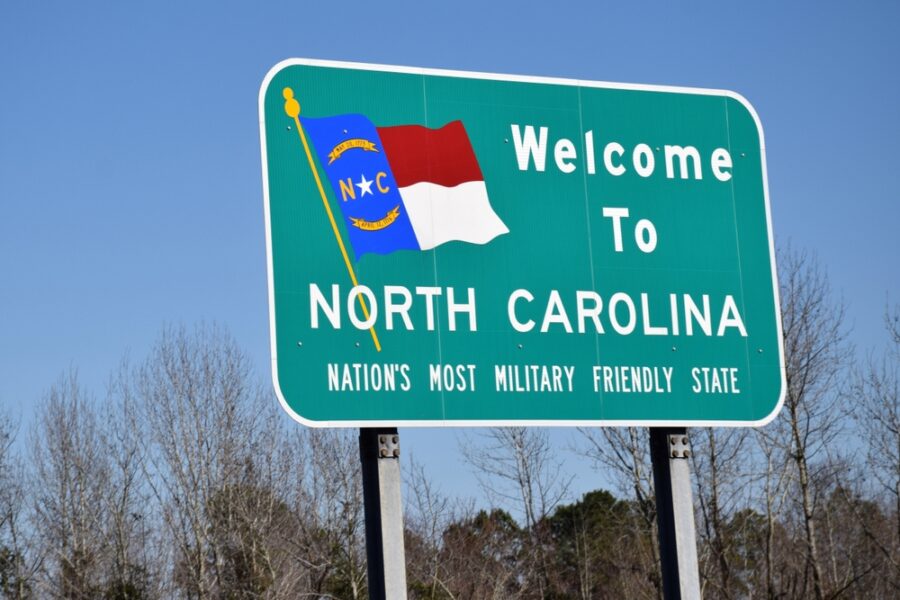
North Carolina’s sports betting handle exceeded US$500 million in August for the 12th month in a row. The state has now collected over US$300 million in sports betting tax revenue since its regulated market launched in March 2024.
Sports bettors in North Carolina placed US$520.5 million in wagers throughout August this year, up nearly 9% yearly and over 40% more than August 2024, according to figures from the North Carolina State Lottery Commission.

Since the launch of its legal online sports betting market, bettors in the state have wagered US$15.7 billion through paid bets, with promotional wagers adding another US$780 million.
North Carolina sportsbook operators have returned US$14.7 billion to bettors in winnings, while tax payments to the state are estimated at around US$308 million.
Bettors wagered US$7.2 billion in 2025, while 2026’s total has exceeded US$4.8 billion by the end of August. The last four months of the year usually account for significant betting activity, with baseball, basketball, football and hockey seasons overlapping.

These figures come after the state increased the tax rate on sportsbook gross wagering revenue by 5 percentage points in July, rising from 18% to 23%. The higher rate was confirmed by Senator Jim Burgin and agreed to by North Carolina lawmakers after months of debate over the level of taxation.
This places the state above other prominent US sports betting markets, including New Jersey, Massachusetts and Ohio, which tax sportsbook revenue at 19.75%, 20% and 20%, respectively.
Still, North Carolina’s tax rate remains below the 51% tax imposed on sportsbook revenue in New York, New Hampshire and Rhode Island.

Dig Deeper
Related stories
 2026/06/22: North Carolina increases tax rate on sports betting from 18% to 23%
 2025/04/15: North Carolina proposes doubling online sports betting tax
 2025/03/12: North Carolina State Lottery Commission releases report to mark one year of online sports betting
 2025/02/11: North Carolina sports betting revenue up over 100% month-on-month
2026/06/22: North Carolina increases tax rate on sports betting from 18% to 23%
2025/04/15: North Carolina proposes doubling online sports betting tax
2025/03/12: North Carolina State Lottery Commission releases report to mark one year of online sports betting
2025/02/11: North Carolina sports betting revenue up over 100% month-on-month
The Backstory
Rapid growth put tax policy back on the table
North Carolina’s 12th straight month above US$500 million in sports betting handle underscores how quickly the state’s online market has moved from launch phase to a durable source of public revenue. The latest figures show a market that has continued to expand even after lawmakers raised the tax rate on sportsbook gross wagering revenue from 18% to 23% in July, a change designed to capture more value from a sector that has outperformed early expectations.
The current numbers sit on top of a fast-building base. North Carolina launched legal online sports betting in March 2024, and the North Carolina State Lottery Commission has since become the central regulator for licensed operators, monthly reporting and tax collection. By the market’s first anniversary, bettors had placed more than US$6.6 billion in wagers, operators had generated US$713.8 million in revenue and the state had collected US$128 million in taxes, according to the commission’s first-year report on online sports betting.
That early performance helped turn a new gambling vertical into a budget issue. The market was large enough to fund state priorities, including collegiate and youth sports, the General Fund and US$2 million a year for the North Carolina Problem Gambling Program. It also gave lawmakers evidence that sports wagering could withstand a larger fiscal burden, setting the stage for months of debate over whether the original 18% rate was too low.
From launch success to a larger state take
North Carolina’s tax increase was not sudden. It followed a sequence of monthly reports showing strong handle, rising revenue and steady payments into state coffers. In January, gross wagering revenue reached US$74.5 million, more than doubling from the prior month, while handle rose to US$646.9 million. Operators paid US$13.4 million in state taxes for that month alone, pushing total tax payments above US$118 million since launch, as detailed in the January revenue report.
Those figures mattered because they arrived before the market had completed a full year and before state budget writers settled on a long-term posture toward online wagering. Sports betting markets often show seasonal spikes around football, basketball and major events, but North Carolina’s results suggested activity was not confined to launch promotions or a one-time surge. The sustained handle gave lawmakers more confidence that the tax base was real.
The state’s roster of licensed operators also showed the scale of the opportunity. DraftKings, FanDuel, Bet365, ESPN Bet, Caesars Sportsbook, BetMGM, Fanatics Sportsbook and Underdog Sportsbook were regulated by the lottery commission in the first year. Their competition helped build consumer adoption, but it also sharpened the policy question: how much of operator revenue should flow to the state without weakening the legal market?
A 36% proposal tested the industry’s limits
The first major escalation came when Senate Republicans proposed doubling the tax rate from 18% to 36%. That would have aligned North Carolina with Pennsylvania and placed it near the top tier of U.S. sports betting tax regimes, below the 51% rates used in New York, New Hampshire and Rhode Island. The proposal was tied to broader budget priorities, including tens of millions of dollars for athletic departments and a plan to expand sports betting revenue distributions across the University of North Carolina system.
Under that proposal, the University of North Carolina and North Carolina State would have received about US$11.5 million each, while smaller UNC system schools would have received tiered funding ranging from US$500,000 to US$1.5 million. Senate leader Phil Berger framed the plan as a way to extend the benefits of the wagering program to more campuses, according to coverage of the Senate’s proposed 36% rate.
The proposal reflected a broader trend in U.S. sports betting policy. States that initially approved competitive tax rates have often revisited those structures after seeing strong handle and operator revenue. North Carolina’s 18% rate had been higher than some early adopters but below the more aggressive models in New York and Pennsylvania. Once the market began generating more than US$100 million in taxes within its first year, lawmakers had a clear incentive to reconsider where the state should sit on that spectrum.
Operators warned of weaker odds and illegal-market risk
Sportsbooks responded by arguing that a sharp tax increase would ultimately affect consumers. The Sports Betting Alliance, whose members include major operators such as DraftKings, FanDuel and BetMGM, urged bettors to contact lawmakers and oppose the proposal. The group warned that higher taxes could lead to poorer odds, fewer promotional offers and greater use of offshore or illegal betting platforms. That pushback became a central part of the industry response to North Carolina’s proposed tax rise.
The operators’ argument was straightforward: if the state takes a larger share of sportsbook revenue, companies will look to preserve margins by reducing customer incentives or adjusting pricing. In a competitive legal market, promotions and favorable odds are tools used to attract and retain bettors. If those tools are reduced, operators contend, some consumers may migrate to unregulated sites that do not pay taxes or follow responsible gambling rules.
Lawmakers faced a competing calculation. The legal market had generated significant revenue quickly, and the state had already dedicated proceeds to visible public uses. North Carolina also had the benefit of watching other states test higher rates. New York’s 51% model has produced substantial tax revenue, though operators have frequently criticized its economics. Pennsylvania’s 36% rate has remained one of the highest among large markets. Illinois has moved toward a higher, progressive structure. Those examples gave supporters of a higher North Carolina rate a ready comparison.
The compromise landed at 23%
The final result was a more moderate increase. Lawmakers settled on 23%, five percentage points above the original rate and well below the Senate’s 36% proposal. The agreement was confirmed as budget negotiations advanced before the July 1 fiscal year deadline, ending months of debate over how aggressively to tax a market that had already become one of the state’s notable new revenue sources. The decision is explained in the report on North Carolina’s move to a 23% sports betting tax rate.
The 23% rate put North Carolina above New Jersey’s 19.75% rate and the 20% rates used in Massachusetts and Ohio, but it kept the state far below New York, New Hampshire and Rhode Island. It also avoided the sharper industry reaction likely to follow a 36% or 50% rate. Sen. Jim Burgin had supported a much higher levy, while House leaders signaled caution about changing a program they viewed as broadly successful.
The compromise also clarified the state’s policy stance. North Carolina chose to increase its take after seeing strong market performance, but it stopped short of joining the most punitive tax group. That middle position could help preserve operator participation while adding projected revenue for the state. The higher rate was expected to generate an additional US$37 million in the fiscal year, based on prior revenue levels.
Seasonality now raises the stakes
The latest handle data carries added significance because it arrives before the heaviest part of the sports calendar. The final four months of the year typically bring overlapping betting on football, baseball, basketball and hockey. If North Carolina maintains monthly handle above US$500 million through that period, the state’s decision to raise the tax rate will deliver a larger fiscal effect than it would have during the market’s first year.
That is why the August figures matter beyond a single month. They indicate that demand has held even after the tax change, at least in the early stage. Operators have continued to take large volumes of wagers, bettors have remained active and the state’s cumulative tax haul has now moved beyond US$300 million. The next test will be whether higher taxation changes the market’s competitive behavior through reduced promotions, altered pricing or shifts in operator investment.
For policymakers, North Carolina has become a case study in how quickly sports betting can move from legalization to revenue optimization. The state first built a competitive market, then measured its performance, then raised the rate once the tax base was established. The risk is that pushing too far could weaken the legal channel. The opportunity is that a stable market can fund public programs while keeping bettors inside a regulated system. August’s results suggest that, for now, North Carolina still has both growth and leverage.
