


NBA’s Victor Wembanyama rules out sports betting brand partnerships

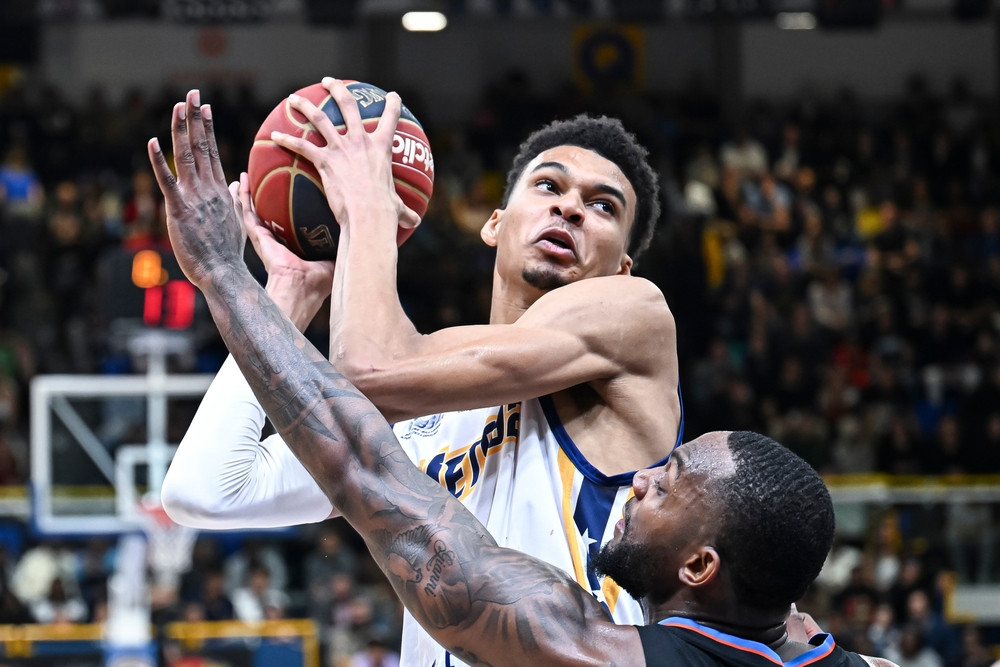
San Antonio Spurs player Victor Wembanyama has ruled out becoming a brand ambassador for a sports betting company, saying he does not wish to promote gambling.
When the 22-year-old NBA player was asked whether he would ever consider representing a sports betting brand, he replied, “Absolutely not.”

According to USA Today, he said, “I would never do that. Honestly, I think it’s very sad to see some players promote it, in my opinion. Everybody does whatever they want, but without me.”
Wembanyama said his approach to commercial partnerships has changed, with money no longer the main factor when deciding which brands to work with.
He added, “Now I want to promote things that have a good impact, have a good influence with who I can share messages and values. The one thing that’s very important for me: our biggest strength is not our millions and millions (of dollars), our biggest strength is by inspiring. And we can inspire in a good or bad way. I want to inspire in a good way; that’s the strongest thing I can do.”

The NBA has expanded its relationship with the gaming industry in recent years, partnering with daily fantasy sports operator PrizePicks in April this year.
Several high-profile players have also entered into commercial agreements with betting and prediction market companies.
LeBron James previously had an endorsement deal with sports betting operator DraftKings before partnering with prediction platform Polymarket in September this year, a deal that is reportedly worth US$15 million a year.

The wider US sports betting market has also continued to grow, with the American Gaming Association reporting that sports betting generated a record US$16.96 billion in revenue in 2025, a 22.8% rise from 2024.

Dig Deeper
Related stories
 2026/06/30: Former NBA stars Malik Beasley and Ed Davis indicted in illegal betting scandal
 2025/04/24: Caesars Entertainment launches new slot game for NBA playoffs
 2026/04/15: Philippine sportsbook ArenaPlus becomes exclusive partner of the NBA
 2025/06/11: Former F1 Team Principal Claire Williams announced as iGB Live keynote
2026/06/30: Former NBA stars Malik Beasley and Ed Davis indicted in illegal betting scandal
2025/04/24: Caesars Entertainment launches new slot game for NBA playoffs
2026/04/15: Philippine sportsbook ArenaPlus becomes exclusive partner of the NBA
2025/06/11: Former F1 Team Principal Claire Williams announced as iGB Live keynote
The Backstory
A rising star draws a line
Victor Wembanyama’s rejection of sports betting endorsements lands at a sensitive moment for the NBA, its players and the gambling industry. The San Antonio Spurs center is not merely another young athlete passing on a sponsorship category. He is one of the league’s most marketable players, a global figure early in his career and a potential face of the NBA for the next decade.
His stance puts a clear counterweight against the commercial momentum that has carried legal sports betting deeper into basketball broadcasts, digital products and athlete marketing. Wembanyama said he does not want to promote gambling and framed the decision around influence rather than income. That is a notable position in a sports economy where betting companies, prediction markets and gaming operators increasingly view athletes and leagues as essential channels to reach fans.
The broader market backdrop explains why his comments matter. Sports betting revenue in the U.S. reached a record $16.96 billion in 2025, up 22.8% from 2024, according to the American Gaming Association. That growth has increased the value of official league partnerships, odds integrations and endorsement deals. It has also raised questions about how much betting promotion fans should encounter around live sports, especially in leagues that rely on younger audiences and player-driven media.
The NBA’s expanding betting footprint
The NBA has spent recent years building a commercial framework around gambling rather than keeping it at arm’s length. The league has worked with sportsbooks, fantasy operators and gaming companies as legal sports wagering spread across U.S. states and overseas markets. In April, it partnered with daily fantasy sports operator PrizePicks, reflecting the league’s willingness to embrace betting-adjacent products that sit close to fan engagement and player performance.
Those efforts extend beyond traditional sportsbooks. Caesars Entertainment used its league relationship to launch an NBA-branded online slot game during the playoffs, bringing basketball imagery into casino-style gaming in New Jersey, Michigan, Pennsylvania and Ontario. The product showed how the NBA brand can move beyond wagers on games and into digital casino content built around the league’s postseason intensity.
The league also has pushed into international betting markets. In the Philippines, where basketball has an especially strong following, PAGCOR-licensed ArenaPlus became the NBA’s first official betting partner in the country. The agreement included NBA branding on ArenaPlus platforms, local marketing campaigns, free-to-play prediction games, responsible gambling messaging and sports integrity initiatives.
These deals illustrate the balance the NBA is trying to strike. Betting partnerships can deepen engagement, generate sponsorship revenue and meet fans where they already consume games. But every additional touchpoint also increases scrutiny over whether the league can separate entertainment, wagering and competition integrity in ways that preserve public trust.
Media deals made odds harder to miss
The integration of betting into broadcasts has further blurred the boundaries for viewers. FanDuel’s agreement with Amazon made the operator the odds provider and betting partner for NBA and WNBA coverage on Prime Video. The arrangement gives viewers access to bet tracking and odds features, while FanDuel provides betting content throughout NBA programming on the streaming platform.
Such partnerships reflect a structural change in sports media. Betting information is no longer confined to sportsbook apps or pregame shows. It is becoming part of the live viewing experience, particularly as streaming platforms seek interactive features that keep fans engaged for longer periods. Amazon and FanDuel described the partnership as a way to enhance the fan experience and create more meaningful brand connections.
For leagues and broadcasters, the appeal is clear. Betting data can make otherwise routine regular-season games feel more consequential. Player props, live odds and predictive content give audiences more reasons to watch entire games rather than highlights. For operators, media integration turns premium sports rights into customer acquisition opportunities.
But the same mechanics can heighten discomfort among players. Athletes are increasingly aware that their performance is being dissected not just for wins, losses and fantasy points but for betting outcomes tied to rebounds, assists, minutes and scoring thresholds. Wembanyama’s comments are therefore not isolated from the business environment around him. They respond to a marketplace in which gambling promotion is becoming routine across the basketball ecosystem.
Integrity cases sharpen the debate
The NBA’s betting relationships have expanded as federal investigators have pursued cases alleging misconduct tied to basketball wagers. That tension has made integrity the central risk in the league’s gambling era. Betting can drive engagement, but scandals can damage confidence in the product the league is selling.
The indictment of former NBA players Malik Beasley and Ed Davis underscored the vulnerability of player-specific wagers. Prosecutors alleged that Beasley altered his on-court statistics in at least four Milwaukee Bucks games during the 2023-24 season, helping co-conspirators profit from prop bets. Davis was accused of acting as an intermediary. The case, detailed in an illegal betting scandal involving former NBA players Malik Beasley and Ed Davis, included charges of wire fraud conspiracy, bribery in sporting contests, honest services wire fraud conspiracy and money laundering conspiracy.
The allegations went directly to one of the most sensitive areas in modern sports wagering: bets on individual performance. Prop bets can create incentives that differ from team outcomes. A player does not need to affect the final score to influence whether a wager on points, rebounds or assists wins. That makes monitoring more complicated and places leagues under pressure to detect abnormal betting patterns quickly.
The indictment also alleged that fraudulent wagers were placed through mobile apps and retail sportsbooks, including operators identified as co-official sports betting partners of the NBA since about 2021. The defendants are presumed innocent unless proven guilty, but the optics are difficult for a league that is simultaneously promoting regulated wagering as safe, transparent and integrity-focused.
Against that backdrop, Wembanyama’s refusal to attach his name to betting brands carries reputational weight. It signals that some players may see gambling partnerships not just as commercial choices but as statements about the kind of influence they want to exercise over fans.
Athletes reconsider the endorsement calculus
Player marketing has always involved trade-offs. Shoe companies, beverage brands and technology firms have long used star athletes to sell products and identities. Betting endorsements are different because they intersect with the games themselves and with concerns about addiction, financial harm and competitive integrity.
LeBron James’ previous DraftKings endorsement and reported $15 million-a-year partnership with prediction platform Polymarket show the scale of opportunity available to elite athletes. For established stars, these deals can provide significant income and access to fast-growing consumer platforms. For operators, athletes offer cultural legitimacy and direct access to loyal fan bases.
Wembanyama’s response suggests a different calculation. He emphasized values, influence and the responsibility that comes with inspiring fans. That language matters because the commercial power of a player like Wembanyama rests not only on visibility but on credibility. If he sees gambling promotion as inconsistent with the image he wants to project, the lost endorsement income becomes secondary to long-term brand positioning.
His stance may not slow the NBA’s business strategy on its own. League-level agreements, broadcast integrations and international betting partnerships will continue to be driven by revenue, fan behavior and regulatory conditions. Still, athlete participation is a separate layer. If more prominent players decline betting deals, operators may find that access to league marks and media inventory does not automatically translate into access to the most trusted faces of the sport.
The result is a more complicated phase for basketball and betting. The NBA is building gambling into its commercial architecture while enforcement cases test public confidence and players weigh personal responsibility against lucrative sponsorships. Wembanyama’s decision does not reject the reality of legal wagering. It highlights the unresolved question at the center of the industry’s growth: how much of the game’s culture should betting be allowed to occupy?
