


LeBron James’ Polymarket deal reportedly worth $15 million a year

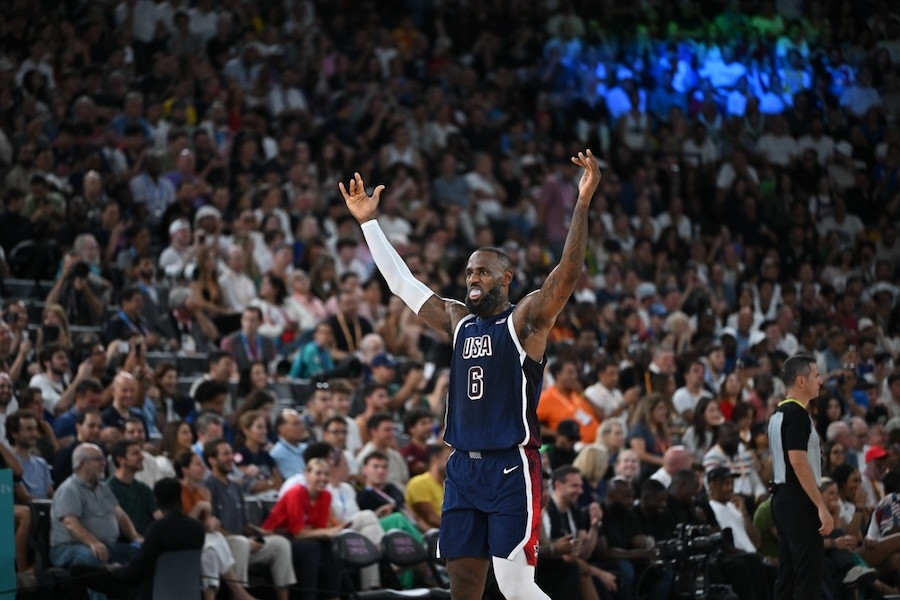
LeBron James is set to earn significantly more from his endorsement arrangement with prediction market operator Polymarket than from his playing contract with the Philadelphia 76ers, according to Front Office Sports, which cited sources close to the deal.
The report values James’ annual endorsement fee from Polymarket at $15 million, more than three times his 76ers salary this coming NBA season. James signed a two-year, $8 million contract with Philadelphia in July, putting his 2026–27 salary at just under $4 million.

James is not an equity investor in Polymarket, according to the report, but a paid endorser focused on promoting the platform’s football markets. He appeared in a Polymarket commercial alongside Derek Jeter and Eli Manning, both reportedly on smaller terms, as part of a wider marketing push from prediction market operators around the start of the NFL season.
Rival Kalshi has run its own campaign fronted by Marshawn Lynch, while Novig made headlines of its own last week with a commercial featuring actress Sydney Sweeney, which drew criticism from Olympic athletes over its sexualised marketing of women’s sport.
Polymarket and Kalshi are both official NHL partners, and Polymarket holds an exclusive prediction market deal with MLB. Neither the NBA nor NFL has struck a league-wide agreement yet, though sources say the NBA is closing in on terms.

Polymarket’s marketing spend follows a reported $1 billion funding round, led by 1789 Capital, that would value the platform at $21 billion, according to Bloomberg.

Dig Deeper
Related stories


The Backstory
A celebrity deal lands in a regulatory gray zone
LeBron James’ reported $15 million-a-year agreement with Polymarket marks a new stage in the convergence of sports, gambling-adjacent products and athlete marketing. The figure, reported by Front Office Sports, would put the endorsement well above James’ Philadelphia 76ers salary for the coming season and signals how aggressively prediction market operators are trying to buy mainstream credibility before the legal boundaries around sports-event contracts are settled.
The arrangement follows James’ move from a traditional sportsbook sponsor to a prediction market platform. In early September, he disclosed a new Polymarket partnership on social media after his DraftKings endorsement expired, posting a video framed around a fictional Polymarket headquarters. The campaign was described as focused on football rather than basketball, a distinction that matters because NBA rules restrict players from promoting wagers tied to the league’s own games. The NBA does not specifically ban players from endorsing prediction markets, creating a narrow lane for athlete promotions so long as they avoid NBA contracts.
That lane is becoming more commercially important. As James’ Polymarket partnership after DraftKings showed, prediction markets are positioning themselves as sports media, fan engagement tools and financial exchanges at once. That ambiguity is part of their appeal to investors and sports properties, but it is also the source of mounting resistance from gambling regulators who argue many sports contracts function like bets regardless of their legal label.
Prediction markets push deeper into sports
Polymarket’s James campaign did not emerge in isolation. Prediction market operators have been spending heavily on athlete and league relationships, particularly around football and other major U.S. sports seasons. Polymarket has struck agreements with MLB, the NHL, MLS, Serie A and LaLiga, while rival Kalshi has moved into high-profile advertising of its own. The result is a marketing race that resembles the early years of U.S. sports betting legalization, when sportsbooks used celebrity endorsers and league partnerships to normalize mobile wagering.
The distinction is that prediction market companies generally operate under a commodities framework rather than state gambling licenses. That has set up a conflict with state regulators in markets including Michigan and Kentucky, where officials have challenged the idea that sports-event contracts can bypass gambling statutes simply because they are listed as federally regulated financial products. For platforms, federal treatment offers potential national scale without negotiating state-by-state betting rules. For states, it threatens tax revenue, consumer protections and licensing authority built since the Supreme Court opened the door to legal sports betting in 2018.
Polymarket’s ambitions also extend beyond single event outcomes. The company has filed with the Commodity Futures Trading Commission to list sports-event contract parlays, a structure closely resembling popular sportsbook parlay bets. Under the proposal, users could combine multiple event predictions into one position that pays only if every leg succeeds. The company’s filing, outlined in Polymarket’s plan for sports-event contract parlays, used the mechanics of a self-certified contract, meaning the product could launch without prior CFTC approval unless the agency intervenes.
Why James’ endorsement matters
James is not simply another retired athlete lending his name to a sportsbook commercial. He is an active NBA player, one of the most recognizable athletes in the world and a business figure whose endorsements can shape broader consumer perception. A reported $15 million annual fee suggests Polymarket sees his credibility as a strategic asset, particularly as prediction markets seek users who may not distinguish between a regulated sportsbook, a fantasy platform and an event-contract exchange.
The deal’s reported focus on football is likely designed to reduce direct conflict with NBA rules. But the optics remain sensitive because the NBA, like other leagues, has spent years tightening controls around betting integrity while also profiting from sportsbook partnerships. League rules may permit certain prediction market endorsements, but the public distinction between promoting football contracts and promoting sports speculation more broadly can be hard to maintain.
That tension is amplified by reports that the NBA is closing in on its own prediction market arrangement. If a league-wide deal materializes, it would further legitimize the sector while raising questions about how leagues separate integrity enforcement from commercial opportunity. Polymarket and Kalshi already have NHL relationships, and Polymarket has an exclusive prediction market deal with MLB. The absence of NBA and NFL league-wide agreements has left athlete-led campaigns as a bridge into those fan bases.
Integrity cases sharpen the stakes
The timing is difficult for basketball. The NBA has been dealing with a series of gambling-related investigations focused on prop bets and alleged misuse of inside information. Those cases have highlighted the vulnerability of markets tied to individual player statistics, especially where a single athlete’s minutes, rebounds or shooting volume can affect a bet’s outcome.
Former NBA players Malik Beasley and Ed Davis were recently indicted in an alleged illegal betting scheme tied to the 2023-24 season. Prosecutors alleged Beasley manipulated on-court statistics while with the Milwaukee Bucks so associates could profit from prop bets, with Davis accused of acting as an intermediary. The case, detailed in the Beasley and Davis illegal betting indictment, included allegations that fraudulent wagers were placed through mobile apps and retail sportsbooks connected to NBA betting partners.
Terry Rozier’s case has added another layer. Rozier, now with the Miami Heat, was placed on leave after federal gambling-related charges tied to alleged disclosure of nonpublic information from a 2023 Charlotte Hornets game. An arbitrator later ruled he was entitled to his full $26.6 million salary while the case proceeds, reinforcing contractual protections and the presumption of innocence. Still, Rozier’s salary ruling amid the sports betting case underscored how legal, labor and integrity systems are being tested at once.
The investor bet behind the marketing
Polymarket’s reported endorsement spending is backed by a broader capital story. Bloomberg has reported the company is pursuing a $1 billion funding round led by 1789 Capital that could value it at $21 billion. That kind of valuation implies investors believe prediction markets can become a mainstream consumer category, not a niche trading product for politics and finance enthusiasts.
Celebrity campaigns are a way to accelerate that transition. James, Derek Jeter and Eli Manning give Polymarket a sports-media face at a time when it is competing with Kalshi, Novig and traditional sportsbooks for attention. But the same campaigns also invite scrutiny. If the products look and feel like sports betting, state regulators may intensify challenges. If they are treated as financial instruments, federal regulators may face pressure to impose clearer limits on contracts tied to athletic performance.
The stakes extend beyond one endorsement fee. For leagues, the question is how much exposure to prediction markets they can accept without undermining integrity messaging. For athletes, the question is whether lucrative endorsement deals create reputational risk in a climate of federal betting probes. For platforms, the prize is national scale and cultural legitimacy. James’ reported Polymarket payday shows the sector is willing to pay heavily for both before regulators decide how far it can go.
