


Sydney Sweeney sports prediction ad sparks athlete backlash

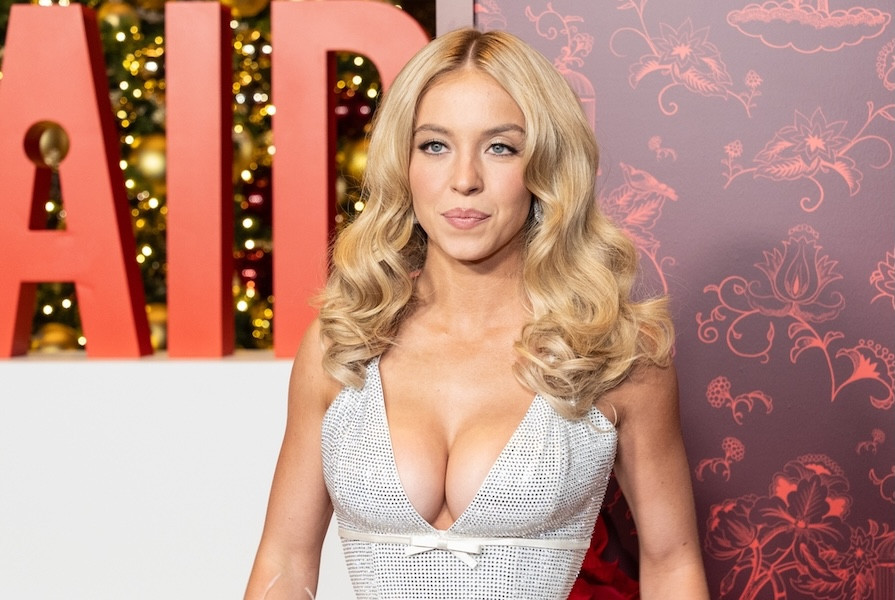
Olympic athletes have criticized a sports prediction market campaign featuring actor Sydney Sweeney, accusing the makers of sexualizing women’s sport.
Sweeney’s campaign with the prediction market platform Novig aired last week and featured the actress in various states of undress as she pretended to participate in multiple sports. The advert has prompted criticism from athletes who argued that women’s sporting achievements should not be used as a backdrop for sexualized marketing.

According to The Guardian, Olympic swimmer Ariarne Titmus questioned why sexualizing women’s sport remained a marketing tactic. Four-time Olympic gold medalist Titmus said the advert was disrespectful to women who had dedicated their lives to competing and developing their sporting abilities.
Other athletes used social media to highlight their own training and careers in response to the campaign. Olympic swimmer Lani Pallister and sprinter Bree Rizzo posted highlights from their careers and the Australian Institute of Sport also shared content featuring athletes from sports such as archery, gymnastics, boxing and softball.
Speaking on Instagram, world champion boxer Skye Nicolson said the criticism was about the treatment of women in sport rather than their appearance. “There’s a big difference between looking ‘sexy’ because you do sport compared to use sex to sell ‘sport’. There is nothing wrong with looking good and doing sport and there’s nothing wrong with embracing your femininity while also being a badass athlete,” she wrote.

Some social media users argued that criticism should be directed at Novig, not Sweeney, although Novig confirmed in a statement that the actor is also a strategic partner and equity holder in the company.
The campaign also comes against a backdrop of ongoing legal action against prediction market companies, with multiple state regulators arguing that they are evading the rules that apply to traditional sportsbook operators.
Novig, which ventured into prediction markets earlier this year, has already had its fair share of legal issues, filing a lawsuit last month against Wisconsin regulators after the state tried to enforce regulations on its sports-event contracts, likening it to illegal gambling.
Charlotte Capewell brings her passion for storytelling and expertise in writing, researching, and the gambling industry to every article she writes. Her specialties include the US gambling industry, regulator legislation, igaming, and more.

Dig Deeper
Related stories



The Backstory
Prediction markets move from niche finance to sports culture
The backlash to Novig’s Sydney Sweeney campaign landed at the intersection of two fast-moving trends: the commercialization of women’s sport and the rapid expansion of sports prediction markets. What might once have been treated as a celebrity-led betting ad has drawn sharper scrutiny because Novig is not only trying to sell a sports product. It is also trying to define how a newer category of sports wagering presents itself to mainstream consumers.
Novig has positioned itself as part sportsbook, part financial exchange. Its pitch is built around peer-to-peer trading, commission-free pricing and a market structure that resembles an order book more than a traditional bookmaker. That framing matters because prediction market operators are seeking legitimacy at the same time regulators are asking whether sports-event contracts are simply betting products under another name.
The company’s public profile has risen quickly. In its push to move beyond a start-up betting platform, Novig recently raised US$75 million in a Series B funding round led by Pantera Capital, bringing total funding to more than US$105 million. The company said its trading volume had increased 10-fold in 2025, with annualized volume topping US$4 billion. It also said it had applied to become a licensed Designated Contract Market with the Commodity Futures Trading Commission, a move intended to support nationwide sports prediction products.
Women’s sport has become a wagering growth market
The criticism from Olympic athletes was amplified by the broader context: women’s sport is no longer a marginal product for broadcasters, sponsors or sportsbooks. Audiences and betting interest have grown around women’s soccer, basketball, tennis and Olympic competition, creating new commercial opportunities and raising questions about how those athletes are represented.
Sports betting suppliers have followed that demand. Abelson Sports, for example, expanded its coverage by agreeing to supply full goalscorer pricing for the National Women’s Soccer League, citing rising interest in women’s soccer on U.S. sportsbooks. The move came after strong wagering figures for the 2023 Women’s World Cup, including data showing heavy betting on U.S. Women’s National Team matches. The NWSL has also secured a US$240 million media rights deal with CBS Sports, ESPN and Amazon Prime Video, reinforcing its status as a commercial property with national reach.
That growth is part of why athletes pushed back against the Novig ad. Their argument was not that sports brands cannot use celebrities or glamour. It was that marketing built around women’s bodies, rather than women’s performance, risks reducing a growing sports category to an old advertising trope just as leagues and athletes are trying to build value around skill, competition and audience loyalty.
The tension is especially acute for betting and prediction platforms because they depend on sport as inventory. More games, more player props and more women’s competitions create more markets to trade. But if the marketing around those markets alienates athletes or fans, the platforms risk undermining the same sports ecosystem they are trying to monetize.
Novig’s pivot increased its regulatory exposure
Novig’s legal and commercial risks predate the Sweeney campaign. Founded in 2021 and launched publicly in September 2024, the company has already moved through several models as it tries to scale across the U.S. It began as a licensed sportsbook in Colorado before shifting toward sweepstakes-style and prediction-market structures that promised broader reach but invited new scrutiny.
That strategy brought complications. Novig withdrew from New Jersey after Gov. Phil Murphy signed Assembly Bill 5447, which bans most sweepstakes contests from operating in the state. Novig’s dual-currency system, which involved Novig Coins and redeemable Novig Cash, fit within the category targeted by the legislation. The exit followed similar restrictions elsewhere and made New Jersey the fourth state Novig had left since its 42-state launch.
The company also faced a cease-and-desist order in Arizona for allegedly operating without a license. Connecticut and Montana have passed similar restrictions, while California and New York have considered related legislation. The result is a patchwork environment in which product design, marketing claims and jurisdictional strategy are inseparable from legal risk.
That backdrop raises the stakes for any national advertising campaign. A provocative ad can generate attention, but it also draws more eyes to a company already testing boundaries between gaming, finance and consumer promotion. For a start-up seeking trust from regulators, investors, sports partners and customers, brand visibility is useful only if it does not deepen questions about judgment.
Deal speculation showed demand for sports trading platforms
Novig’s rise has unfolded as larger prediction-market names look for ways to capture sports demand. Kalshi and Polymarket, two of the most closely watched companies in the space, were reported to have shown interest in acquiring Novig, though no formal deal was confirmed and Novig was described as not for sale. The reported interest reflected a broader scramble to gain liquidity, customers and sports-market expertise during football season.
The speculation also showed why Novig’s positioning has value. Unlike broader event-market platforms that gained attention through politics and global events, Novig’s identity has been rooted in sports. That focus makes it attractive in a category where operators are trying to reach fans who already understand odds, props and game outcomes, even if the legal wrapper is described as a contract rather than a wager.
But the same category has attracted enforcement attention. Kalshi has been fighting state regulators that argue its sports contracts resemble unlicensed betting. Polymarket was blocked from operating in the U.S. in 2022 before later receiving clearance to return. Novig’s own path has included state exits, litigation and an effort to secure federal market status through the CFTC.
The industry’s core conflict is unresolved: prediction-market operators argue they are offering regulated financial contracts, while state gaming authorities say sports outcomes have long been gambling products subject to licensing, consumer safeguards and tax rules. Until that divide is settled, every expansion effort carries legal uncertainty.
Marketing choices now carry industrywide consequences
The Sweeney campaign became controversial because it combined cultural sensitivity with regulatory vulnerability. Sports betting advertising is already under pressure in many markets over saturation, responsible gambling standards and youth appeal. Prediction-market companies are entering that environment while asking regulators and consumers to see them as something distinct from sportsbooks.
That makes tone important. If a platform wants to be treated as a serious financial marketplace for sports outcomes, its advertising may be judged against that claim. A campaign seen as trivializing women’s athletic achievement can weaken efforts to present the product as sophisticated, disciplined and different from conventional betting.
The controversy also arrives as the gaming industry is paying more attention to women’s leadership and representation. Global Gaming Women and CDC Gaming, through Inside Asian Gaming’s coverage, recently highlighted 10 Women Rising in Gaming, a recognition program focused on women building careers across casinos, suppliers and gaming operations. That kind of industry effort sits uneasily beside advertising that athletes say relies on sexualized depictions rather than competitive credibility.
For Novig, the immediate question is whether the criticism fades as a social media episode or becomes part of a broader narrative about how the company manages risk. Its investors are backing a push into a contested national market. Its regulators are examining whether its products fit within financial or gambling law. Its potential users are being asked to trust a model that differs from traditional sportsbooks. Against that backdrop, the ad controversy is not just about creative direction. It is another test of whether sports prediction markets can scale without importing the reputational problems that have long followed gambling advertising.
