


Novig files lawsuit against Wisconsin over sports-related events contracts

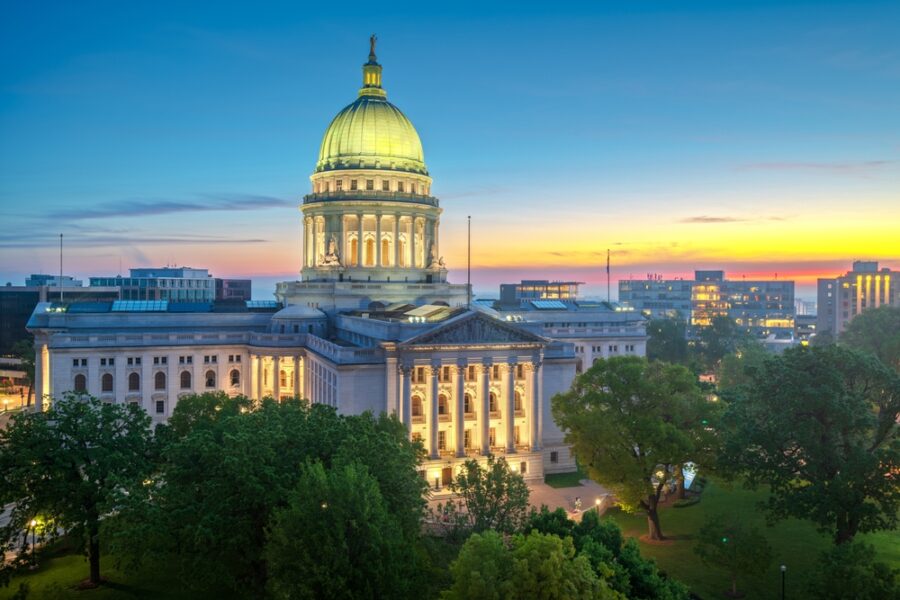
Sports prediction market operator Novig has filed a federal lawsuit against Wisconsin Attorney General Josh Kaul and state gaming administrator John Dillett in an effort to prevent enforcement action over its sports-related events contracts.
Following the platform’s recent launch in Wisconsin, Novig’s exchange subsidiary, Ludlow Exchange LLC, filed a 45-page complaint on Friday in the US District Court for the Western District of Wisconsin.

Novig said that it expects to face enforcement action, pointing to the state’s previous lawsuits against other prediction market platforms, according to The Block.
The operator argues that its products are financial contracts governed by the Commodity Exchange Act, placing them under the authority of the Commodity Futures Trading Commission (CFTC).
The state takes the opposing position, claiming that contracts based on sporting outcomes are effectively wagers and should therefore fall under state gambling regulations.

Wisconsin legalized online sports betting back in April this year, becoming the 33rd US state to do so, with online wagering facilitated through the state’s 11 tribes.
This lawsuit comes amid wider legal disputes between Wisconsin and prediction market operators. In April 2026, the state sued prediction market platforms Kalshi, Polymarket, Robinhood, Crypto.com, and Coinbase, alleging their sports contracts breach Wisconsin’s ban on commercial gambling.
The CFTC has also separately challenged the state’s approach with its own lawsuit against Wisconsin officials, but a federal judge declined to grant the commission a preliminary injunction in July.

Novig received its Designated Contract Market (DCM) approval from the CFTC in June this year and has pursued legal action against officials in five US states, including New York, New Mexico, Massachusetts, and Washington.
This recent lawsuit highlights the clash between regulated state gambling and the growth of prediction market platforms, with US regulators challenging sports-related events contracts that fall outside traditional state gambling laws.
Charlotte Capewell brings her passion for storytelling and expertise in writing, researching, and the gambling industry to every article she writes. Her specialties include the US gambling industry, regulator legislation, igaming, and more.

Dig Deeper
Related stories




The Backstory
Novig’s Wisconsin fight follows a strategic pivot
Novig’s lawsuit in Wisconsin marks a sharper turn in a business strategy that has moved from licensed sports betting to sweepstakes-style contests and now to federally regulated sports event contracts. The company’s latest argument is that sports-related contracts listed through its exchange are financial instruments subject to federal commodities law, not wagers governed by state gambling statutes.
That position puts Novig in the center of a widening jurisdictional dispute between state gambling regulators and the Commodity Futures Trading Commission. The stakes are significant: If platforms such as Novig can offer sports contracts nationwide under federal derivatives rules, they could bypass much of the state-by-state licensing structure that has defined the US sports betting market since the Supreme Court struck down the federal sports wagering ban in 2018.
Novig did not arrive at that posture overnight. The company began as a sports trading platform built around a peer-to-peer model intended to improve pricing for bettors by eliminating traditional sportsbook margins. It later pursued broader reach through sweepstakes-style products, then shifted again toward prediction markets as the legal and commercial opportunity around event contracts accelerated.
Capital raise helped fund a national push
The Wisconsin case follows Novig’s move to build scale through institutional capital. In October, the company said it had raised US$75 million in Series B funding led by Pantera Capital, bringing total funding to more than US$105 million. The financing came as Novig reported a 10-fold increase in trading volume in 2025 and annualized volume of more than US$4 billion.
That funding announcement was tied directly to a plan to expand into sports prediction markets. Novig said it had applied to become a Commodity Futures Trading Commission-licensed Designated Contract Market, a status that would allow it to list contracts under the federal commodities framework. The company’s ambition was explicit: It wanted to offer sports products in all 50 states.
That national approach is what now makes state pushback so consequential. Traditional online sportsbooks must secure licenses in each state, comply with tax regimes, follow responsible gambling rules and often partner with casinos or tribes. Prediction market operators argue that their contracts are traded on regulated exchanges and fall under federal market oversight. State officials counter that when the contract turns on the outcome of a game, the product functions like a sports bet regardless of its legal packaging.
Earlier retreats exposed state-level pressure
Before Novig leaned more heavily into the federal exchange model, it faced resistance over its sweepstakes-style structure. In August, the company withdrew from New Jersey after Gov. Phil Murphy signed Assembly Bill 5447, a measure aimed at banning most sweepstakes contests from operating in the state. The law targeted systems in which users obtain a promotional currency that can ultimately be used to win cash or cash-equivalent prizes.
Novig’s model used Novig Coins and Novig Cash, placing it within the type of dual-currency structure that lawmakers and regulators have increasingly scrutinized. Its exit from New Jersey came shortly after an US$18 million funding round and followed other state-level disruptions. The company had also faced a cease-and-desist order in Arizona for allegedly operating without a license, and it had exited multiple jurisdictions after its broad 2024 launch.
Those retreats contrasted with the strategy of rivals such as Kalshi, which has chosen to litigate aggressively when states challenge sports event contracts. Novig’s current Wisconsin suit suggests the company is now adopting a more confrontational legal posture, especially after securing federal exchange approval and additional capital. The shift reflects how the economics of prediction markets have changed: Remaining outside contested states may limit growth, while litigation could open access to large markets if courts side with federal preemption arguments.
Kalshi and Polymarket helped define the market
Novig’s evolution has unfolded alongside rapid growth and consolidation interest in the prediction market sector. In September, Kalshi and Polymarket were reported to have shown interest in acquiring Novig, though it was unclear whether any formal offers were made. Novig was said not to be for sale.
The reported interest highlighted Novig’s appeal at a time when prediction markets were expanding beyond elections and macroeconomic events into sports. Sports provide deep liquidity, frequent outcomes and an existing base of consumers accustomed to pricing uncertainty. For exchanges, that makes sports contracts commercially attractive. For gambling regulators, it makes them indistinguishable from unlicensed wagering if offered outside state frameworks.
Kalshi and Polymarket have already tested those boundaries. Polymarket was barred from operating in the US in 2022 before later receiving clearance to return. Kalshi has fought multiple state regulators over whether its sports contracts can be offered under federal commodities law. Novig’s Wisconsin lawsuit places it on the same legal battlefield as those better-known operators, but with a history in sports trading that could make its products especially relevant to the gambling industry.
The CFTC’s litigation campaign raised the stakes
Wisconsin has become one of the central venues in the national dispute. The state previously sued Kalshi, Polymarket, Crypto.com, Robinhood and Coinbase, alleging that their sports contracts violated Wisconsin gambling law. The CFTC responded by suing Wisconsin to block enforcement against federally regulated prediction markets.
The commission’s position is that Congress gave it exclusive jurisdiction over derivatives traded on designated contract markets, including event contracts. It has argued that states cannot use gambling laws to interfere with products listed through federally regulated exchanges. That theory, if accepted broadly, would create a pathway for sports event contracts to operate across state lines without each state’s approval.
Wisconsin’s position is rooted in police powers historically reserved to states, including gambling regulation, consumer protection and criminal enforcement. The conflict is not merely technical. It tests whether the federal commodities system can absorb products that resemble gambling in function but are structured as financial contracts in form.
Novig’s lawsuit adds another layer because it is not only watching the CFTC fight on behalf of the industry; it is seeking protection for its own launch. The company points to Wisconsin’s prior enforcement actions as evidence that state officials may target its sports contracts. That makes the case part of a broader preemption fight rather than a narrow dispute over one operator’s product design.
Political resistance could complicate the path
The federal position supporting prediction markets has also drawn opposition in Congress. A group of Democratic senators recently sought to block CFTC funding for lawsuits that challenge state and tribal enforcement of gambling laws. Their letter warned that the agency’s litigation could help online prediction markets bypass consumer protections and undermine state and tribal authority over gambling.
That political pressure matters because the CFTC’s litigation strategy has become a key force behind the industry’s expansion. If Congress limits the agency’s ability to sue states, operators may have to shoulder more of the legal burden themselves. Novig’s Wisconsin filing may foreshadow that possibility: Even with the CFTC active in related cases, individual companies are preparing to litigate directly.
The tribal dimension is also important. Wisconsin legalized online sports betting through its tribes, and many states rely on tribal compacts or casino partnerships to structure wagering markets. Prediction markets that operate outside those arrangements could disrupt negotiated revenue streams and regulatory authority. That is why state and tribal opposition has been forceful, even as exchanges argue that their products are federally supervised financial instruments.
The outcome of Novig’s case could affect more than one company’s Wisconsin operations. A ruling favoring Novig would strengthen the argument that sports event contracts can be offered under federal commodities law despite state gambling objections. A ruling for Wisconsin would support states seeking to keep sports-related contracts within gambling regulation. Either way, the case reflects a market moving faster than the legal categories built to contain it.
