


Former NBA stars Malik Beasley and Ed Davis indicted in illegal betting scandal

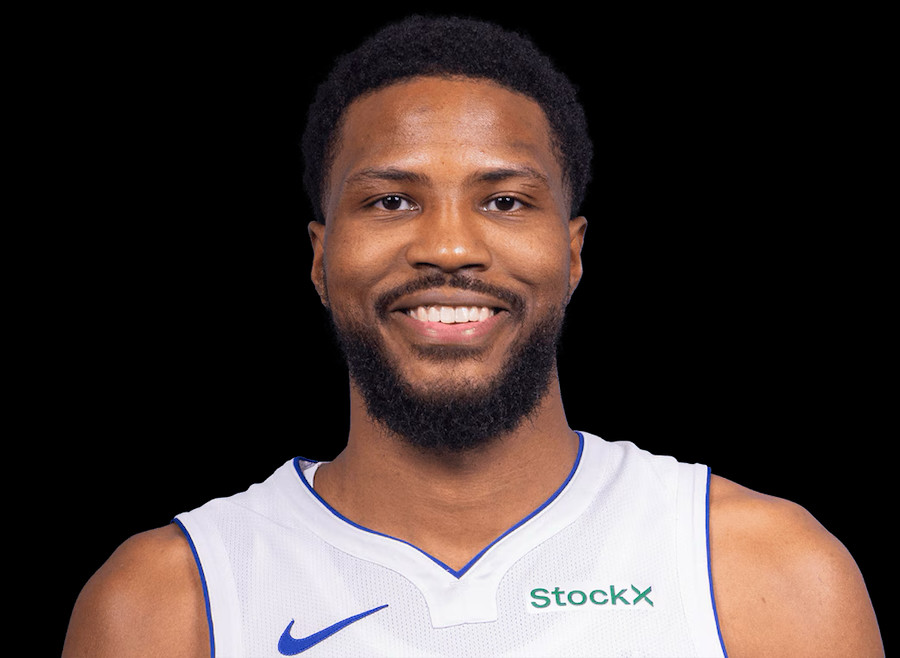
Two former NBA stars have been indicted as part of an alleged sports betting scheme that took place over the 2023-2024 basketball season and included at least four games.
ESPN first revealed that former NBA players Malik Beasley (pictured) and Ed Davis are among six people, including an NBA free agent, named in the indictment.

The indictment – revealed by the US Attorney’s Office for the Eastern District of New York – includes charges of “wire fraud conspiracy, bribery in sporting contests, honest services wire fraud conspiracy, and money laundering conspiracy.”
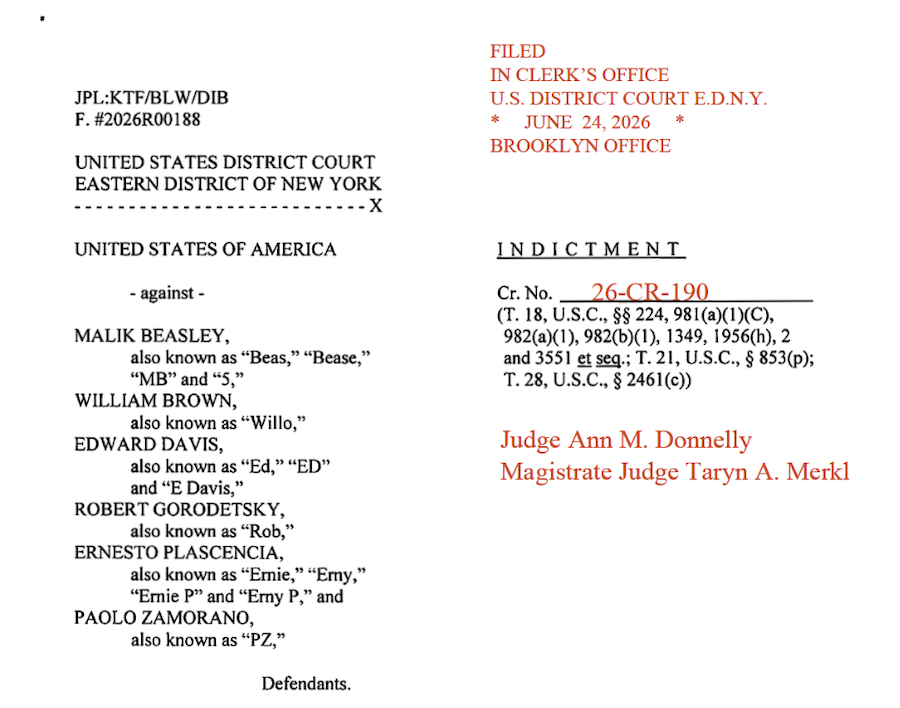
Federal prosecutors allege that Beasley deliberately altered his on-court stats in at least four games while playing for the Milwaukee Bucks in the 2023-24 season, enabling his co-conspirators to win at least US$121,000 on prop bets – wagers on specific events or individual performance.
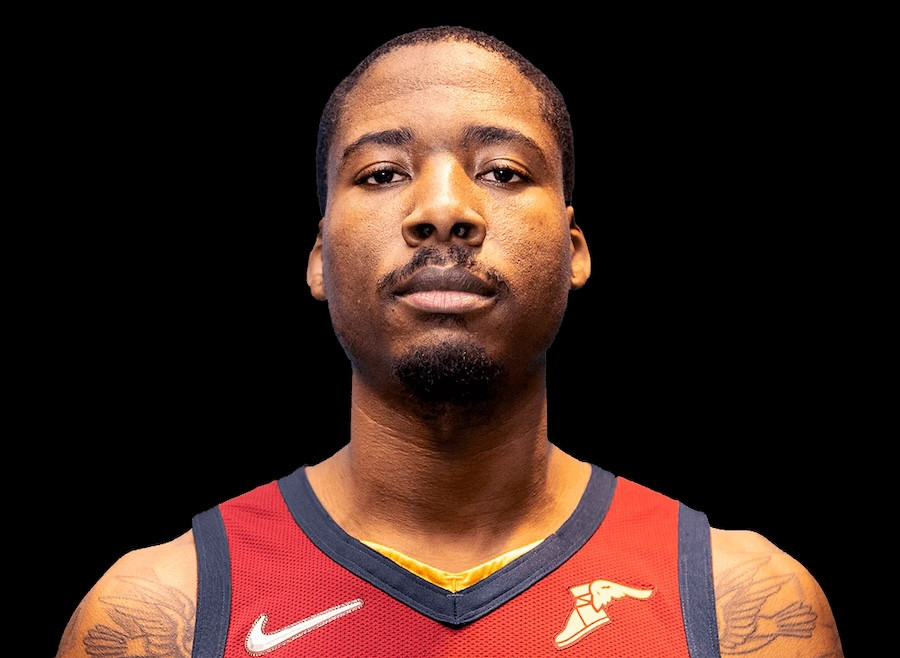
Ed Davis is accused of being an intermediary between Beasley and the bettors and was arrested on Monday along with three other people: Rob Gorodetsky, Ernesto Plascencia, and William Brown.

Beasley and Davis’ ex-agent, Paolo Zamorano, was not part of the arrests.
Beasley’s attorney, Steve Haney, told ESPN that they had been coordinating with the US Attorney’s Office to surrender Beasley this week. He added that they maintained Beasley’s innocence and that an indictment wasn’t proof of guilt.
Prosecutors allege that Beasley received bribes, which were often used to reduce gambling debts he owed to Davis, and that the prop betting scheme targeted four Milwaukee Bucks games between January and March 2024. The indictment claims “Beasley earned tens of millions of dollars during his NBA career” but “also accumulated multi-million dollar gambling losses.”

Court documents reportedly include text messages in which the defendants allegedly talked about betting strategies and Beasley’s planned performances. The documents also reveal the “fraudulent wagers” were placed through betting companies’ “mobile applications and retail sportsbooks.”
Two of the three betting companies identified in the documents are classified as “co-official sports betting partners of the NBA” since “approximately 2021.”
FBI Assistant Director in Charge James C. Barnacle said of the case, “These defendants allegedly operated an illegal betting ring in an attempt to unlawfully earn hundreds of thousands of dollars. As alleged, Malik Beasley allowed himself to be bought and altered his gametime performance to line pockets of Ed Davis and his other co-conspirators. The FBI continues to dismantle fraudulent schemes that erode the integrity of any institution, including our nation’s professional sports leagues.”
Over the past two years, six current and/or former NBA players, including Beasley and Davis, have been named in illegal betting schemes. Three defendants in similar cases filed in the Eastern District Court of New York are considered as co-conspirators in Beasley’s case, including former NBA player Damon Jones, who pleaded guilty in a sports betting case involving Terry Rozier.
Charlotte Capewell brings her passion for storytelling and expertise in writing, researching, and the gambling industry to every article she writes. Her specialties include the US gambling industry, regulator legislation, igaming, and more.

Dig Deeper
Related stories
 2025/08/28: Former GVC boss Kenny Alexander among 11 charged in connection with fraud investigation
 2025/07/01: Federal authorities investigate Malik Beasley in relation to NBA gambling activity
 2025/07/24: Gambler wins Michigan Supreme Court battle in US$3.1 million case against BetMGM
 2025/08/15: NBA player whose brother was banned claims league’s betting problem is only getting worse
2025/08/28: Former GVC boss Kenny Alexander among 11 charged in connection with fraud investigation
2025/07/01: Federal authorities investigate Malik Beasley in relation to NBA gambling activity
2025/07/24: Gambler wins Michigan Supreme Court battle in US$3.1 million case against BetMGM
2025/08/15: NBA player whose brother was banned claims league’s betting problem is only getting worse
The Backstory
Prop bets move from nuisance to federal case
The indictment of Malik Beasley and Ed Davis is the latest escalation in a widening integrity crisis that has followed the rapid expansion of legal sports betting across North America. What began as scattered concerns about suspicious wagering on individual player statistics has become a federal criminal matter involving former and current NBA figures, sportsbook monitoring systems, league partners and regulators.
The central issue is the same one that has shadowed recent cases involving Jontay Porter and Terry Rozier: player prop bets. These wagers are not tied to which team wins but to a player’s points, rebounds, assists or other statistical outcomes. That structure has made them commercially valuable for sportsbooks and highly vulnerable to manipulation, particularly when the wager depends on a narrow performance band or a player’s early exit from a game.
Federal prosecutors have now alleged that Beasley altered on-court statistics during the 2023-24 season while playing for the Milwaukee Bucks, allowing bettors to profit from information that was not available to the public. The charges bring the NBA’s gambling problem closer to the court of play itself and raise a sharper question for leagues and bookmakers: whether the betting products most attractive to customers have become too easy to exploit.
Warning signs surfaced before charges
The Beasley case did not emerge in isolation. In June, federal authorities were reported to be examining gambling activity tied to the guard’s performance during his Bucks season. At the time, sportsbooks had detected unusual betting on Beasley’s statistics, including heavy action ahead of a Jan. 31, 2024, game against Portland on whether he would record fewer than 2.5 rebounds. He finished with six rebounds, meaning those bets lost, but the activity was significant enough to draw attention.
That investigation immediately carried professional consequences. Beasley had been negotiating a three-year, $42 million contract with Detroit, but those talks were put on hold after the inquiry became public. His lawyer emphasized then that an investigation was not a charge and that Beasley was entitled to the presumption of innocence. The NBA said it was cooperating with federal prosecutors, while the Pistons acknowledged awareness of the matter without further comment.
The earlier inquiry, detailed in reports that federal authorities were investigating Beasley over NBA gambling activity, reflected a broader enforcement pattern. Sportsbooks and integrity monitors flag unusual movement in niche markets, leagues pass information to authorities and prosecutors then seek to determine whether wagers were merely speculative or based on corrupt inside information.
Porter case changed the league’s risk calculus
The NBA’s current posture was shaped heavily by the Jontay Porter case. Porter, then a Toronto Raptors player on a two-way contract, admitted in 2024 to leaving two games early to influence bets tied to his individual performance. The league banned him, and his guilty plea gave prosecutors and regulators a template for how player-specific wagering could be manipulated from inside the sport.
The Porter case also exposed the role of lesser-known participants who make such schemes work. A Brooklyn federal judge this year imposed the first prison sentence connected to the NBA betting scandal, giving Timothy McCormack two years for defrauding sportsbooks using nonpublic information related to NBA player performances. The sentencing, covered in the first prison term arising from the NBA betting scandal, underscored that federal authorities view these cases as fraud against both betting operators and the integrity of competition.
Porter’s conduct prompted the NBA to ask partner sportsbooks to remove certain “under” prop markets for players on two-way contracts, a narrow but revealing concession. Those players often have less secure roster positions and lower earnings than established stars, making the league more sensitive to incentives that could lead to manipulation or coercion. Beasley’s indictment, however, suggests the concern is not limited to fringe players.
League and union push for limits
The NBA and the National Basketball Players Association have since aligned behind restrictions on some prop betting markets. Their position reflects an institutional shift from treating integrity concerns as isolated misconduct to recognizing a product-design problem. If bets can be placed on granular player outcomes, and those outcomes can be influenced by a single athlete’s decisions, then monitoring alone may not be enough.
The union has also tied prop betting to athlete harassment and pressure. Players increasingly face direct abuse from bettors who lose wagers tied to individual stat lines, a dynamic intensified by social media and in-game betting. In that context, restrictions are not only about preventing fraud but also about reducing the incentives for fans or gambling groups to target players.
As the NBA union called for bet limits to curb athlete abuse, the league said protecting the integrity of the game was paramount and that “reasonable limitations” on certain prop bets deserved consideration. The stance places pressure on state regulators and sportsbook partners, because leagues cannot unilaterally dictate every market available across legalized betting jurisdictions.
Other sports have moved in the same direction. Major League Baseball has faced micro-betting concerns, and states including Ohio and New Jersey have taken steps to restrict some prop markets. The NBA cases have intensified the debate because they involve one of the most heavily bet leagues in the U.S. and betting categories that are central to sportsbook engagement strategies.
Regulators turn attention to sportsbooks
The fallout has not been confined to players and alleged intermediaries. Regulators are scrutinizing whether sportsbooks properly detected and reported suspicious activity. In Ontario, the Alcohol and Gaming Commission of Ontario proposed a five-day suspension of PointsBet Canada over allegations it failed to report suspicious wagers linked to the Porter scheme. The action would be the regulator’s first such suspension of a sportsbook since Ontario launched legal sports betting in 2022.
The Ontario case, outlined in the proposed PointsBet Canada suspension over the NBA bet-rigging scandal, centered on whether the operator offered bets on Porter’s individual statistics and accurately responded when the regulator sought information. The commission said operators must have systems and staff training capable of detecting and responding to integrity risks.
That regulatory response matters because sportsbooks are both beneficiaries of expanded prop betting and frontline monitors for unusual activity. They have the transaction data, account histories and odds movement records that can reveal suspicious patterns. But their commercial incentive is to offer more markets, faster settlement and higher engagement. The recent cases test whether regulatory obligations can offset those business pressures.
College cases widen the integrity stakes
The integrity problem extends beyond the NBA. College basketball has produced its own cases, where athletes may be more financially vulnerable and compliance systems vary across campuses. The NCAA recently ruled former Iona player Adam Njie Jr. permanently ineligible after finding he agreed to participate in a point-shaving scheme involving first-half wagers, even though he said he did not ultimately manipulate the games.
The Njie matter, described in the NCAA’s point-shaving sanctions against a former Iona player, included alleged communications with a bettor, wagers totaling $15,500 and claims that the athlete was threatened with physical harm. Those details show why leagues and regulators increasingly view gambling integrity as a safety issue as well as a competitive one.
Taken together, the Beasley indictment, the Porter prosecution, the Rozier-related proceedings, sportsbook regulatory actions and college point-shaving cases point to a common vulnerability. Legal betting has brought wagering into transparent markets, but transparency has not eliminated corruption risk. It has made suspicious activity easier to detect while also multiplying the number of bet types that can be targeted.
The stakes for the NBA are significant. The league has embraced betting partnerships and the revenue that comes with them, but its product depends on public confidence that player performance is authentic. Each new indictment or suspension forces the league, sportsbooks and regulators to confront whether current guardrails are strong enough for a market built around real-time, player-specific wagering.
