


Michigan Gaming Control Board cuts ties with National Council on Problem Gambling over Kalshi partnership

The Michigan Gaming Control Board (MGCB) is cutting ties with the National Council on Problem Gambling (NCPG), after the non-profit body partnered with prediction market operator Kalshi.

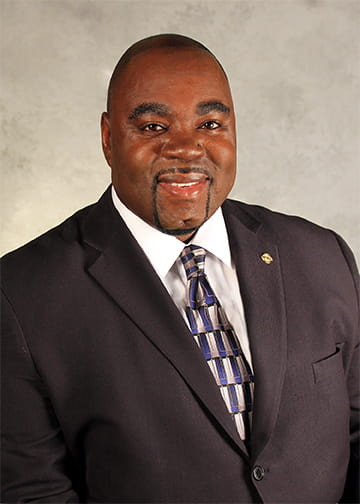
The MGCB’s Executive Director Henry Williams has written a letter to the non-profit, arguing that prediction markets do not have the same licenses as legal gambling platforms, noting that the gaming regulator has a “need to ensure that it is not associated with organizations that are affiliated with companies engaged in illegal gambling.”

This comes amongst an ongoing legal battle to keep prediction markets out of Michigan. On 30 June, the MGCB announced a temporary restraining order against Kalshi, barring the prediction market “from offering unlicensed internet sports betting to Michigan residents.”
Henry Williams at the time said “Kalshi is targeting Michigan’s most vulnerable residents with sports betting dressed up as investing – and without intervention, the harm will keep getting worse.”
A release from the National Council on Problem Gambling from 18 May announced a “US$2 million, two-year investment from prediction market platform Kalshi to support a strategic initiative focused on trader health and safety.”

The group created a new membership subcategory specifically for the prediction market operator, the Financial Services & Trading Subcategory, with Kalshi joining as a Platinum-level member.
Heather L. Maurer, Executive Director of NCPG at the time noted, “Kalshi’s engagement demonstrates a commitment to mitigating harm before it occurs and ensuring support resources are accessible when they are needed.”
The group indicated that Kalshi’s contributions would allow NCPG to “expand consumer education campaigns, increase awareness of the waning signs of problematic behavior, and promote responsible trading and health decision-making.”

In the May release, the NCPG noted that it “maintains a neutral position on the legality of specific gambling, wagering, or prediction products.”
The Michigan Gaming Control Board has urged the NCPG to remove any reference or membership affiliation, with MGCB employees no longer serving on committees or the board of the NCPG or attending events, while also cancelling its paid sponsorship for the non-profit’s annual conference.

Dig Deeper
Related stories



The Backstory
A break rooted in a broader enforcement campaign
The Michigan Gaming Control Board’s decision to sever ties with the National Council on Problem Gambling marks an unusually public rupture between a state regulator and one of the country’s most prominent responsible gambling organizations. The immediate trigger was the council’s partnership with Kalshi, a federally regulated prediction market that has become a flashpoint in the fight over where financial contracts end and sports betting begins.
Michigan’s move did not emerge in isolation. The regulator has spent months drawing sharper boundaries around what it considers legal gambling in the state, repeatedly warning that operators serving Michigan residents must hold the appropriate state licenses. That posture has placed the agency on a collision course with companies that frame their products as something other than gambling, including offshore sportsbooks, sweepstakes-style casinos and now prediction markets.
By withdrawing from the council, the board is signaling that responsible gambling affiliation is not enough to offset concerns about legality. For Michigan, the issue is not only whether consumers may face gambling-like harms. It is whether an organization focused on harm prevention can accept funding from a company the state says is offering unlicensed sports betting to its residents.
Kalshi’s responsible gambling push drew scrutiny
Kalshi’s relationship with the National Council on Problem Gambling began as a bid to place prediction markets inside the responsible gambling conversation. The company became the first prediction market to join the council, committing $2 million over two years to support work on “trader health and safety.” The funding was intended to support research, education and consumer protection tools tied to prediction-market activity.
The partnership also created a new membership category for Kalshi, covering financial services and trading. That structure reflected Kalshi’s core argument: its contracts are financial products, not wagers. The company has maintained that it operates a trading exchange rather than a sportsbook, even as sports-related event contracts have drawn attention from state gambling regulators.
That distinction has become increasingly difficult for states to accept. As Kalshi’s entry into the National Council on Problem Gambling showed, even a company asserting it is outside traditional betting may still need to address risks that resemble gambling harms. The council described its role as neutral on the legality of specific products. Michigan has now rejected that neutrality as insufficient when the organization’s funding and membership ties involve a company the state is actively challenging.
The conflict exposes a growing policy gap. Federal oversight of prediction markets does not necessarily answer state questions about consumer protection, sports wagering restrictions or the integrity of regulated gambling frameworks. As prediction markets expand into events that look familiar to bettors, state regulators are moving to defend licensing systems they spent years building after the legalization of online sports betting.
Michigan has widened its target list
The board’s posture toward Kalshi aligns with a broader crackdown on unauthorized gambling access in Michigan. The agency has repeatedly used cease-and-desist letters to pressure operators that accept wagers from state residents without approval. Those actions have covered traditional sports betting, casino games, horse racing, esports, political markets and other event-based products.
In one recent action, the regulator targeted Panama-based SportsBetting.ag and BetOnline, accusing the sites of taking unauthorized bets from Michigan customers through credit cards, wire transfers and cryptocurrency. The board said the platforms lacked Michigan licenses and violated state gambling laws by offering sports wagering, casino-style games and other betting products.
That enforcement push followed earlier mass actions. The agency issued nine cease-and-desist letters to operators offering casino games and betting services, citing risks tied to unreliable withdrawals, weak oversight and lack of responsible gambling protections. It also ordered 11 illegal online gambling operators to stop serving Michigan residents, warning that unlicensed platforms expose consumers to financial harm, withheld winnings and data-security risks.
The common thread is the board’s insistence that product labels do not determine legality. Whether an operator describes itself as an offshore sportsbook, sweepstakes platform, casino site or trading venue, the regulator has focused on the underlying activity: payment by consumers, uncertain outcomes and the possibility of prizes or winnings. That framework helps explain why Kalshi has become part of the same enforcement narrative.
Consumer protection sits at the center of the dispute
Michigan’s response also reflects the state’s view that responsible gambling policy must be tied to enforceable market rules. Licensed operators in the state are subject to oversight on advertising, withdrawals, data security, tax reporting and safeguards for people at risk of harm. Unlicensed operators, by contrast, can reach consumers without the same requirements, leaving regulators to intervene after the fact.
The board has paired enforcement with prevention efforts. Its partnership with Gamban, which gives Michigan residents free access to blocking software, shows the other side of its strategy. The program allows users to restrict access to gambling websites and apps across devices, including both licensed and unregulated platforms. It does not require enrollment in a self-exclusion program, broadening access to people who may want immediate help without entering a formal registry.
That initiative matters to the Kalshi dispute because it shows Michigan is not dismissing the need for harm reduction in emerging product categories. Instead, the regulator is arguing that harm reduction cannot be separated from licensing and legality. A company may fund education or research into risky behavior, but Michigan’s position is that such efforts do not resolve whether the product should be available to residents in the first place.
The National Council on Problem Gambling’s acceptance of Kalshi funding created a difficult optics problem for state officials. The council is a central voice in prevention and treatment policy, and regulators often participate in its committees, events and initiatives. Michigan’s withdrawal suggests that such collaboration depends on confidence that the organization is not aligned, even indirectly, with businesses the state views as illegal operators.
The stakes extend beyond one partnership
The dispute underscores a larger battle over who will set the rules for prediction markets as they move into sports and other mass-market events. If these contracts are treated primarily as financial instruments, companies such as Kalshi may seek to operate under federal commodities oversight. If states classify the same products as sports betting or gambling, operators would need state licenses and would face restrictions comparable to online sportsbooks.
For regulated gambling companies, the outcome could affect competitive balance. Licensed sportsbooks pay taxes, meet state compliance standards and face limits on where and how they can operate. Prediction markets offering similar exposure without state gambling licenses could be seen as bypassing those obligations. For states, the issue also involves lost tax revenue and weakened authority over consumer safeguards.
For responsible gambling organizations, the Michigan break raises governance questions. Funding from new sectors can support research and education, especially as consumer behavior shifts across betting, trading and gaming products. But accepting money from companies under legal challenge may alienate regulators that are essential partners in prevention work.
Michigan’s decision therefore serves as both a protest and a warning. The regulator is pressing the council to remove Kalshi references and affiliations while ending its own participation in committees, events and sponsorships. That response suggests state agencies may demand clearer lines from national advocacy groups as emerging gambling-adjacent products seek legitimacy through responsible gambling partnerships.
The immediate fight is about Kalshi and the National Council on Problem Gambling. The broader issue is whether companies can use financial-market status to enter territory that states have reserved for licensed gambling operators. Michigan has made clear it will treat that question as an enforcement matter, not a branding debate.
