


Men’s college basketball most wagered sport on Kalshi last month despite NCAA scrutiny

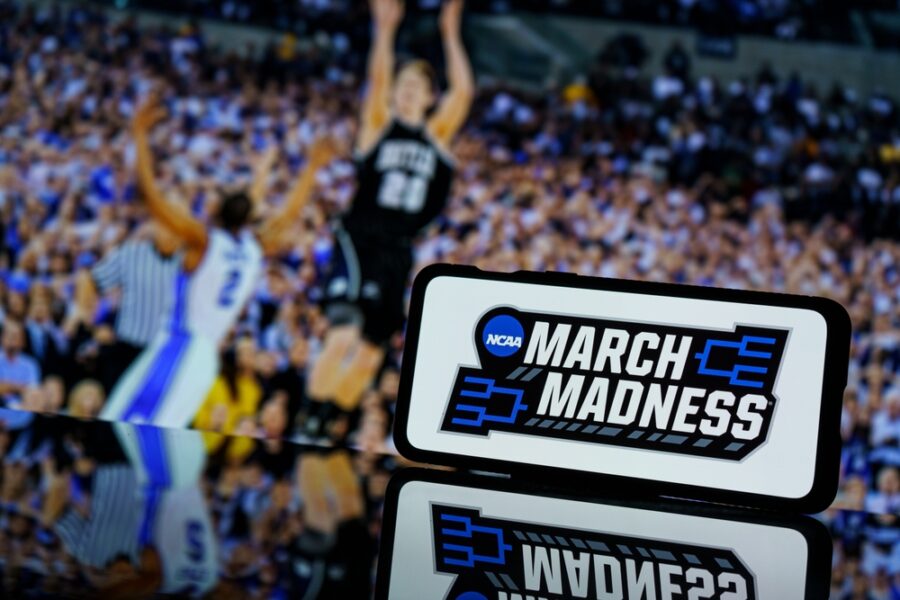
Men’s college basketball generated US$2.3 billion in wagers last month on prediction market platform Kalshi, making it the most bet-on sport for Kalshi in February.
According to Front Office Sports, NFL-related markets generated roughly US$1.8 billion in trading during February, while NBA games generated about US$1.7 billion.

The surge in popularity comes as the NCAA remains at odds with Kalshi.
College athletes, coaches, and athletic department staff are barred from trading on prediction market platforms such as Kalshi and Polymarket. The same rules apply to traditional sports betting.
“The NCAA continues to offer robust in-person and online education about the risks of sports betting, including prediction markets, and urges schools to provide further education to student-athletes, parents and staff,” an NCAA spokesperson said.

Kalshi also found itself in hot water for using the “March Madness” branding for its sports contracts, despite the NCAA not having any involvement in prediction markets. The organization has since asked Kalshi to remove the name, saying it suggested an affiliation between the two groups.
Speaking to Front Office Sports, the NCAA spokesperson added that they were still “following up with Kalshi to take it back down.”
The request followed a dispute in November when the organization challenged language stating outcomes were “verified from NCAA” in contracts tied to college games on Kalshi.

In response to the trademark being available on Polymarket’s international site, the spokesperson added, “we will request immediate removal of NCAA trademarks here as well.”
Charlotte Capewell brings her passion for storytelling and expertise in writing, researching, and the gambling industry to every article she writes. Her specialties include the US gambling industry, regulator legislation, igaming, and more.

Dig Deeper
Related stories
 2026/01/26: Missouri rejects NCAA push to restrict college athlete prop bets
2026/01/16: NCAA urges a ban on prop bets after new point shaving scandal
2025/06/26: NCAA council recommends allowing college athletes to bet on pro sports
2026/01/15: NCAA President calls for CFTC suspension of college sports prediction markets
2026/01/26: Missouri rejects NCAA push to restrict college athlete prop bets
2026/01/16: NCAA urges a ban on prop bets after new point shaving scandal
2025/06/26: NCAA council recommends allowing college athletes to bet on pro sports
2026/01/15: NCAA President calls for CFTC suspension of college sports prediction markets
2026/01/26: Missouri rejects NCAA push to restrict college athlete prop bets
2026/01/16: NCAA urges a ban on prop bets after new point shaving scandal
2025/06/26: NCAA council recommends allowing college athletes to bet on pro sports
2026/01/15: NCAA President calls for CFTC suspension of college sports prediction markets
The Backstory
Why Kalshi’s surge matters now
Men’s college basketball dominating trading on Kalshi in February punctuates a convergence of two powerful trends: rapid mainstreaming of legal sports wagering and intensifying scrutiny of athlete conduct and market integrity. The National Collegiate Athletic Association bars athletes, coaches and staff from betting of any kind, including prediction markets. Yet retail interest keeps climbing and product lines keep multiplying, from regulated sportsbooks to real-money event markets. That tension set the stage for the latest flashpoints over branding, verification language and who gets to monetize March’s marquee tournament atmosphere.
The friction has been building for months. On one side are platforms seeking to channel demand for college sports exposure into novel market structures. On the other are regulators and the NCAA trying to hold the line on amateurism rules, protect competitive integrity and police use of NCAA marks. Kalshi’s use of “March Madness” and prior references to NCAA verification drew formal pushback, underscoring how the association is moving to limit any implied affiliation while also reinforcing education efforts for schools and athletes.
Integrity alarms grew louder before the bans
Long before February’s trading spike, a series of integrity alerts pushed college basketball further into the enforcement spotlight. Fresno State’s season was jolted when two players were linked to prop-bet activity on games they played in. As reported in late February, the program removed Mykell Robinson from the team and suspended Jalen Weaver and Zaon Collins amid an eligibility review, after the head coach reported suspected gambling to administrators, prompting an internal review and NCAA involvement. That sequence is detailed in this report on the Fresno State gambling probe and ensuing suspensions.
The matter escalated. Following an investigation triggered by suspicious prop-bet patterns, the NCAA announced lifetime bans for three Division I men’s players — Robinson, Steven Vasquez and Weaver — for betting on their own games and sharing information that enabled others to do so. The case laid out text communications around player props, including bets on underperforming stat lines and a parlay a player won on himself. The full breakdown is in our coverage of the NCAA’s lifetime bans tied to betting and game manipulation.
The Fresno episode became a cautionary backdrop for February and March. It showed how easily prop markets can intersect with college locker rooms and how quickly enforcement can shift from education to discipline. For platforms courting college hoops traders, the case also sharpened questions about data governance, verification language and the optics of tournament branding that might blur lines for athletes or fans.
State markets keep expanding, even as rules tighten
Legalization momentum has not slowed. Even as the NCAA urges restraint and compliance, individual states are logging stronger volumes and tax inflows that entrench sports betting as a fiscal line item. In North Carolina, regulators reported US$74.5 million in gross wagering revenue for January, a doubling month over month, with handle reaching US$646.9 million. Operators paid US$13.4 million in taxes for the month, part of a broader stream that supports addiction programs and amateur sports. See our look at North Carolina’s accelerating revenue and handle.
Michigan’s February-to-March snapshot shows the same push-pull. Online gaming revenue climbed 9.3% to US$293.5 million in gross receipts, marking the strongest month since January, but online sportsbook receipts slipped even as monthly handle grew 25.1% to US$475.1 million. That divergence — higher betting volume but thinner sportsbook revenue — captures how promotions, pricing and sharper markets can compress hold even in growth periods. Details are in our coverage of Michigan’s March igaming jump and sportsbook softness.
For Kalshi and similar platforms, the state-by-state gains signal a broader comfort with regulated wagering ecosystems, even if prediction markets sit on a different regulatory perch than traditional sportsbooks. The policy landscape, however, is not one-way liberalization; tax and fee experiments are reshaping operator behavior and bettor habits.
Taxes are changing how and what bettors wager
Illinois offers a stark example of how policy tweaks can alter betting patterns at scale. After the state introduced a per-wager tax — US$0.25 per bet up to 20 million annual wagers per operator, then US$0.50 — the total number of bets fell by roughly five million year over year in September 2025. Yet total wagering climbed 9% to a record US$1.4 billion, and average ticket size jumped 28% to US$46.44. Our analysis of the Illinois wager count decline alongside record handle shows how higher fixed costs can push consumers toward fewer, larger bets and spur operators to lift minimums or add fees.
The Illinois case matters for markets tied to college basketball because it hints at the future composition of betting — potentially fewer micro-bets and props if costs rise, and a tilt toward larger, consolidated positions. That could ease some integrity pressure around prop-driven manipulation, but it could also concentrate risk and volatility. Meanwhile, talk of additional local levies in Chicago and efforts to curb offshore operators keep policy uncertainty high for 2026’s marquee sports windows.
What to watch as March turns to April
The NCAA’s hard line on athlete wagering will not soften, especially after the Fresno State findings and permanent bans. Education efforts are likely to expand, with schools reinforcing that prediction markets trigger the same prohibitions as sportsbooks. Platforms seeking to capitalize on college basketball interest will be pressed to avoid any branding or language that implies NCAA involvement.
At the same time, state markets continue to mature. North Carolina’s early returns and Michigan’s mixed March show that demand is resilient but sensitive to product design and tax policy. Illinois’ experiment underscores how fee structures can reshape behavior, a dynamic regulators will monitor as they balance revenue goals with consumer protection and market integrity.
For prediction markets, the February surge was a proof point for product-market fit in college hoops. The next test is whether that momentum can persist under stricter compliance scrutiny, evolving tax regimes and a heightened focus on prop integrity after the Fresno case. Expect more tussles over trademarks and verification claims, sharper guardrails around athlete education and data, and a continued race among operators to capture March’s energy without crossing regulatory red lines.
