


Kambi revenue up 23% in 3Q26, hitting €46 million, as company diversifies

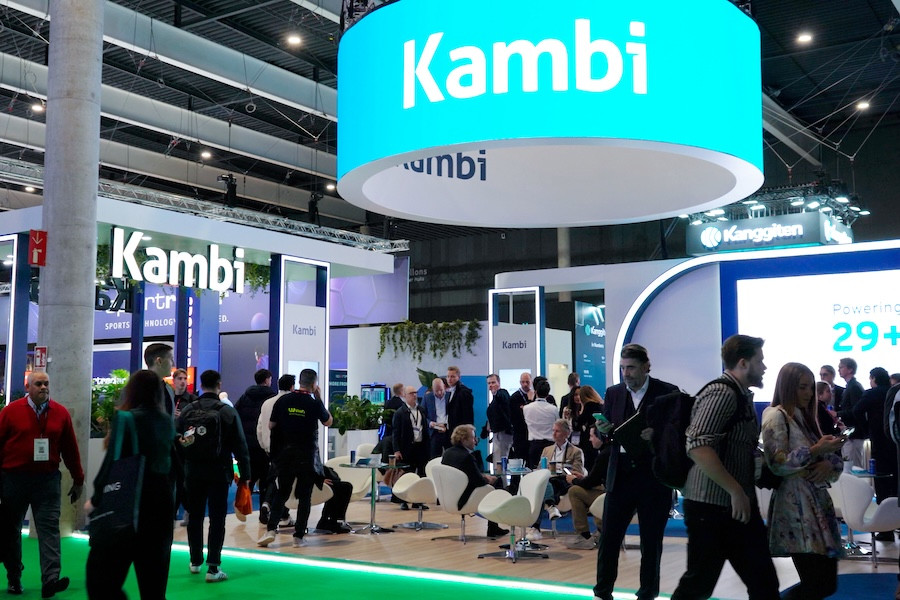
Sports betting technology provider Kambi Group has reported a 23% year-over-year increase in Q3 2026 revenue to €46 million (US$52 million)1 EUR = 1.1234 USD
2026-11-04Powered by CMG CurrenShift.
Operating profit rose to €5.1 million (US$5.7 million)1 EUR = 1.1234 USD
2026-11-04Powered by CMG CurrenShift from €1.6 million (US$1.8 million)1 EUR = 1.1234 USD
2026-11-04Powered by CMG CurrenShift, while adjusted EBITA climbed 161% to €7.9 million (US$8.9 million)1 EUR = 1.1234 USD
2026-11-04Powered by CMG CurrenShift.

For the first nine months of 2026, revenue reached €135.4 million (US$152 million)1 EUR = 1.1234 USD
2026-11-04Powered by CMG CurrenShift, a 13.5% increase.
Kambi updated its full-year adjusted EBITA guidance to around €26 million (US$29 million)1 EUR = 1.1234 USD
2026-11-04Powered by CMG CurrenShift from its previous range of €23 million (US$26 million)1 EUR = 1.1234 USD
2026-11-04Powered by CMG CurrenShift to €27 million (US$30 million)1 EUR = 1.1234 USD
2026-11-04Powered by CMG CurrenShift.
CEO Werner Becher said the adjusted EBITA increase reflected “the strength of our diversified business model, continued cost discipline and favorable FX movements,” adding that the latter stages of the FIFA World Cup contributed to a strong start to the quarter.

Addressing Brazil’s decision to ban online gambling, Becher said the market “accounted for a low single-digit percentage of Kambi’s 2026 revenue, although the development could remove the long-term growth potential of the market.”
Commercial developments in the quarter included a 10-year omni-channel sportsbook and player account management agreement with Station Casinos in Nevada.
Kambi also signed Turnkey Sportsbook agreements with Pure Casino Entertainment and QuinnBet, while supporting several operator launches in Alberta’s regulated online market.

Becher highlighted Kambi’s AI trading system, which he said is handling 85% of bets across its network. Of the live bets traded through the technology, 59% are now accepted with zero-second delays, he indicated.

Dig Deeper
Related stories



The Backstory
World Cup lift followed a tougher reset
Kambi’s third-quarter growth came after a period in which the sportsbook technology supplier had to prove that its operating model could absorb customer migrations, tax pressure and currency swings while still expanding its partner base. The company entered 2026 from a weaker prior-year comparison, having reported declines in both the fourth quarter and full year of 2025. Revenue for 2025 fell 8.2% to €162 million, while fourth-quarter revenue declined 3.9% to €42.7 million.
That backdrop made the first three quarters of 2026 more than a routine recovery. Kambi had warned that the planned departures of FDJ UNITED and LeoVegas would continue to weigh on revenue, creating a need for new operator wins, stronger margins and greater automation to offset lost volume. In its 2025 earnings update, the company pointed to tax increases, foreign exchange pressures and migration effects as key challenges, even as it forecast adjusted EBITA of €20 million to €25 million for 2026.
The latest quarter suggests that Kambi has moved from defense to measured expansion. Revenue of €46 million in the third quarter followed €45.9 million in the second quarter, giving the company a steadier revenue base after a volatile 2025. The updated full-year adjusted EBITA target of about €26 million also signals that cost discipline and improved trading efficiency are now contributing directly to profitability rather than merely cushioning revenue pressure.
AI trading became central to the margin story
Kambi’s commercial recovery has been closely tied to its push toward automated trading. The company has repeatedly framed artificial intelligence as both a product upgrade and a cost-efficiency tool, arguing that faster pricing, broader market coverage and reduced trading risk can support higher sportsbook margins for partners and for Kambi itself.
In the first quarter, Chief Executive Werner Becher said Kambi’s AI trading system was pricing and trading more than 60% of bets across the network. The company was rolling the technology across soccer, tennis, ice hockey and basketball, with additional sports planned. By the third quarter, Kambi said the system was handling 85% of bets across its network, an increase that illustrates how quickly automation has moved from an internal development project to a defining feature of its business model.
The World Cup provided a large-scale test. During the second quarter, Kambi processed more than €1 billion in sportsbook turnover from the tournament, and Becher described it as the first FIFA World Cup to be fully traded by AI. In its second-quarter earnings report, the company said the event helped lift revenue 13.5% year over year and doubled adjusted EBITA from the previous year. That performance strengthened the argument that automation is not only reducing costs but also allowing Kambi to handle major event volume with more scalable economics.
The speed of bet acceptance is another competitive marker. Kambi said 59% of live bets traded through the AI system are now accepted with zero-second delays. In in-play betting, where user experience and risk management collide, that capability matters. Faster acceptance can reduce abandoned bets for operators, while automation can limit the cost of supporting a deeper live offering across more sports and markets.
Canada and the Americas widened the base
Kambi’s return to growth also reflects a broader geographic mix, particularly across North America. The company’s second-quarter results showed how that footprint changed the economics of the 2026 World Cup. Partners in the Americas generated 57% of global network turnover during the tournament, compared with 38% during the 2022 event. That helped offset less favorable kickoff times for many European sportsbooks and underscored the strategic value of Kambi’s Americas expansion.
The supplier has continued to build around lotteries, tribal operators and regulated provincial frameworks. In April, Kambi announced that it had won a joint procurement process to become the sportsbook supplier for Atlantic Lottery Corporation and British Columbia Lottery Corporation. The multi-province Canada contract covered services for Saskatchewan and Manitoba through British Columbia Lottery Corporation and for four Atlantic provinces through Atlantic Lottery Corporation.
That deal fit Kambi’s long-standing focus on state-backed and lottery operators, which tend to value compliance, governance and stability over short-term promotional intensity. It also reinforced the company’s strategy of using regulated markets as anchors for durable revenue. The framework allows multiple provincial operators to share the same technology and trading foundation while maintaining separate jurisdictional control, a model that could appeal to other public-sector gambling bodies evaluating online sports betting.
Kambi has also pointed to tribal opportunities in the United States. The company has an existing relationship with the Potawatomi tribe in Wisconsin, where online sports betting approval created a possible future channel. The timeline remains uncertain because tribal online betting typically requires local and potentially federal steps before launch, but the relationship illustrates Kambi’s positioning in markets where regulation expands gradually rather than all at once.
Latin America brought growth and volatility
Latin America has been one of Kambi’s most important growth corridors, but it has also shown why regulatory exposure can quickly reshape forecasts. The company has highlighted strong positions in Colombia, Argentina and Brazil, along with new commercial agreements that extend its reach across the region. At the same time, tax increases and political intervention have become central risks.
Brazil initially looked like a major pillar of Kambi’s regional strategy. The regulated market opened Jan. 1, and Kambi moved quickly through a sports betting partnership with Stake in Brazil. The deal gave Stake access to Kambi’s turnkey sportsbook under Brazil’s new licensing framework and gave Kambi a high-profile operator partner in one of the world’s most closely watched betting markets.
The opportunity, however, changed sharply with Brazil’s subsequent decision to ban online gambling. In the third-quarter update, Becher said Brazil represented a low single-digit percentage of Kambi’s 2026 revenue, limiting the immediate financial damage. The larger issue is strategic: A market once viewed as a long-term growth engine may no longer contribute the same upside. For a supplier investing in regulated-market expansion, losing future Brazil potential matters more than the near-term revenue hit.
Kambi has tried to offset that uncertainty with additional Latin American deals. Its partnership with RedCap covers Betpro and Starplay, beginning with online launches in El Salvador and Panama and plans for retail rollout and further expansion. The agreement replaced RedCap’s prior supplier and showed Kambi’s ability to win competitive migrations, a valuable source of growth as mature markets become more contested.
Colombia also illustrates the region’s dual character. Kambi has described itself as supplying roughly 70% of that market, but the country’s increased gross gaming revenue taxes created an expected €4 million hit. The issue demonstrates how scale can amplify both opportunity and exposure: A leading market share can drive revenue when conditions are favorable, but tax changes can immediately pressure margins.
Partner diversification now carries the investment case
The common thread across Kambi’s recent updates is diversification. After losing or preparing to lose certain major customers, the company needed to show that no single partner migration would define its performance. The third-quarter agreement with Station Casinos in Nevada, alongside deals with Pure Casino Entertainment and QuinnBet, adds to a growing list of commercial wins across lotteries, casinos, digital operators and regional brands.
That mix is important because Kambi’s model depends on network effects. A broader partner base generates more betting data, which can improve pricing and risk models. Better trading can support sharper odds and more reliable margins, which in turn helps the company win additional regulated-market contracts. The shift to AI accelerates that loop by allowing trading improvements to scale across the network rather than remaining tied to manual operations.
The stakes for Kambi are therefore larger than a single quarter’s revenue increase. The company is attempting to reposition itself as a more efficient, technology-led supplier at a time when operators are demanding lower costs, faster products and compliance support in increasingly complex markets. Its 2026 performance to date suggests progress, but the Brazil setback and continuing tax risks in Latin America show that regulated-market growth is not linear. Kambi’s challenge now is to convert a stronger partner pipeline and AI-led efficiency into durable earnings, even as political and customer-migration risks remain part of the model.
