


Kambi extends LatAm presence with renewed BetWarrior sportsbook deal

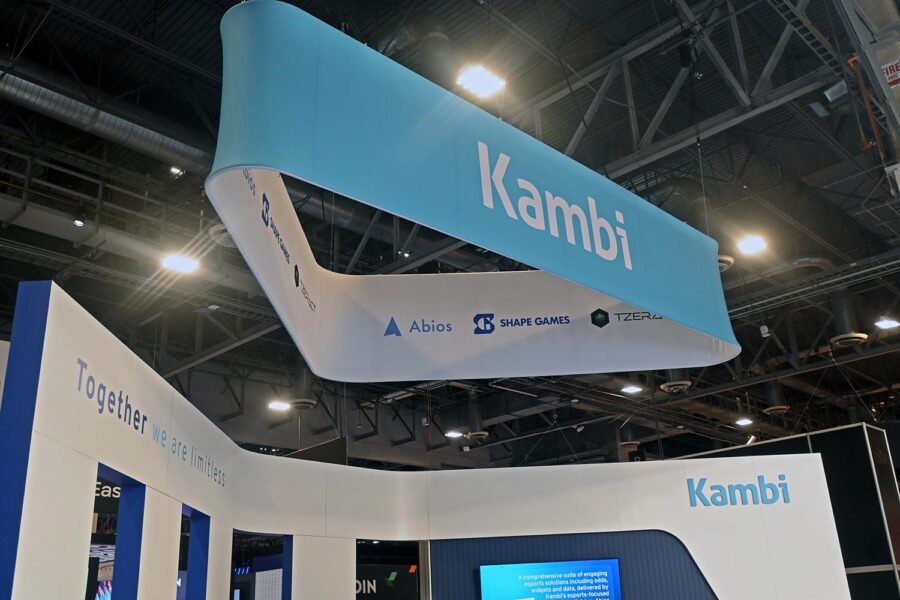
Kambi has inked an extended multi-year deal to provide its sportsbook technology to Argentinian operator BetWarrior. The partnership extension strengthens Kambi’s position in Latin America, where it has been growing its footprint.
BetWarrior, which is backed by Argentinian land-based casino group Dagma, is one of the largest operators in Argentina and has a sizeable presence in Brazil and Peru. Kambi has been supplying sportsbook technology to BetWarrior since 2019, last renewing the partnership in August 2022 via an agreement with player account management platform Ondiss.

“Kambi has been a key strategic partner in our growth to date, providing a high-performance sportsbook that allows us to compete at the highest level,” noted BetWarrior Chief Executive Zeno Ossko. “ Extending this partnership was a natural decision as we look to further strengthen our position in Argentina and regulated markets across Latin America,” highlighted the executive.
In a first quarter earnings call in April, Kambi Group Chief Executive Werner Becher said the company was “supplying around 70% of the market share in Colombia” and pointed to “a lot of momentum in Brazil,” adding that there would be “more to come” in the region.
Commenting on the extended BetWarrior deal, Becher said: “This multi-year agreement further demonstrates Kambi’s ability to support leading operators with a premium sportsbook solution that enables sustainable success in highly competitive and evolving regulated markets across the region.”

Dig Deeper
Related stories
 2025/07/23: Kambi partners with RedCap to launch turnkey sportsbook in Latin America
 2025/01/08: Kambi Group and Stake sign sports betting partnership in Brazil
 2025/07/21: Kambi hires former Sportradar executive Lenoble to lead Latin America sales
 2026/05/22: Kambi expands its presence in the Americas with Canadian Bank Note Company partnership
2025/07/23: Kambi partners with RedCap to launch turnkey sportsbook in Latin America
2025/01/08: Kambi Group and Stake sign sports betting partnership in Brazil
2025/07/21: Kambi hires former Sportradar executive Lenoble to lead Latin America sales
2026/05/22: Kambi expands its presence in the Americas with Canadian Bank Note Company partnership
The Backstory
Latin America becomes the strategic center
Kambi’s renewed multi-year sportsbook agreement with BetWarrior lands at a time when Latin America has become one of the supplier’s most important growth arenas. The deal extends a relationship that began in 2019 and reinforces a pattern that has emerged across Kambi’s recent commercial activity: prioritizing regulated or regulating markets where established operators need compliant sportsbook infrastructure, trading depth and flexibility across online and retail channels.
BetWarrior is a significant partner in that strategy. Backed by Argentine land-based casino group Dagma, the operator has built a sizeable presence in Argentina and has operations or ambitions tied to Brazil and Peru. Its decision to extend with Kambi signals that the supplier’s role is not limited to market entry support. It is also positioned as a long-term technology partner for operators trying to defend share as competition increases and regulation becomes more demanding.
The timing is notable because Kambi has spent the past year layering additional Latin American partnerships across different product types. In one recent move, the company signed a long-term deal with RedCap to provide a turnkey sportsbook across the region, beginning with Betpro and Starplay launches in El Salvador and Panama. That agreement, which replaced RedCap’s previous supplier, highlighted Kambi’s ability to win conversion business as operators reassess their technology stacks. The company also has pointed to strong market share in Colombia and momentum in Brazil, underscoring why the BetWarrior renewal matters beyond Argentina.
Brazil reshaped the supplier race
Brazil’s regulated sports betting market, which launched Jan. 1, has become the region’s most important competitive test for sportsbook vendors. Kambi moved early by partnering with Stake to power the operator’s real-money sportsbook in the newly regulated market. That agreement gave Stake a compliant sportsbook platform and gave Kambi a high-profile position in a jurisdiction expected to drive a large share of Latin American betting growth.
The Brazil partnership with Stake also fit Kambi’s broader pitch to operators: regulated expansion is complex, but suppliers with proven compliance systems and trading capabilities can help brands launch quickly without rebuilding core sportsbook infrastructure. Stake’s entry came as Brazil imposed new licensing and regulatory requirements, raising the value of technology that can adapt to local rules, payments, reporting and responsible gambling obligations.
Kambi has also pursued a more modular route in Brazil and nearby markets. Its agreement with Superbet focuses on providing traded odds through Kambi’s odds feed across Latin American and Central European products, rather than a full turnkey platform. That Superbet odds-feed partnership shows how the company is trying to serve operators at different levels of need: some want a complete sportsbook, while others want pricing, trading and data tools they can plug into their own front-end systems.
The BetWarrior renewal therefore sits between those two models. It preserves a full sportsbook technology relationship with a regional operator that has already scaled in Argentina and is tied to broader Latin American opportunity. It also gives Kambi continuity as Brazil, Peru, Colombia and Central America draw more supplier competition from global trading houses, platform providers and in-house operator technology teams.
Turnkey and modular products widen the funnel
Kambi’s recent dealmaking shows a company trying to reduce dependence on any single market, partner type or product model. The RedCap agreement is important because it combines online launches in El Salvador and Panama with plans for retail rollout and further expansion. It also integrates Kambi’s sportsbook into RedCap’s proprietary player account management system, a structure that may appeal to regional operators with their own technical resources but limited appetite to build trading and risk-management functions from scratch.
The RedCap turnkey sportsbook deal followed Kambi’s appointment of Mateo Lenoble, a former Sportradar executive, as head of sales for Latin America. That personnel move suggested a more deliberate regional sales push, especially in countries where regulation is advancing unevenly and relationships with local operators are essential. Latin America’s market is not uniform. Operators face different rules across Argentina’s provinces, Brazil’s federal framework, Colombia’s mature licensing regime and smaller Central American jurisdictions.
That complexity helps explain why Kambi emphasizes omni-channel capability. Many Latin American operators are rooted in land-based casinos, retail betting or lottery networks and are moving customers online while preserving physical distribution. BetWarrior’s connection to Dagma gives the renewed agreement a similar strategic logic. A sportsbook supplier that can support both digital growth and potentially retail-linked expansion is more valuable in markets where customer acquisition still depends on local brand trust and offline presence.
Regulatory credibility becomes commercial currency
Kambi’s regulatory positioning has also been central to its sales narrative. The company recently secured two licenses from the Nevada Gaming Control Board, allowing it to provide sportsbook technology to non-restricted gaming establishments in Nevada, including Las Vegas. Nevada is not a Latin American market, but the approval matters because it strengthens Kambi’s claim that it can operate under strict regulatory scrutiny.
The Nevada licensing milestone made the state the 15th U.S. jurisdiction where Kambi is licensed, following its 2018 entry into the U.S. sports betting market. For operators in emerging regulated markets, that record can be commercially useful. Regulators increasingly expect suppliers to meet standards for integrity monitoring, reporting, anti-money laundering controls and responsible gambling. Operators choosing a sportsbook vendor are therefore buying not only odds and software, but also regulatory assurance.
That is especially relevant in Latin America, where governments are tightening oversight to capture tax revenue and move betting activity into licensed channels. Higher compliance demands can increase costs for operators, but they also favor suppliers with established processes. Kambi’s renewal with BetWarrior can be read in that context: long-term technology continuity reduces execution risk for an operator competing in markets where regulation and taxation are still evolving.
Financial pressure raises the stakes
The BetWarrior extension also comes as Kambi works to rebuild momentum after a weaker revenue year. The company reported full-year revenue of €162 million for 2025, down 8.2% from €176.4 million a year earlier, citing regulatory changes, higher taxation and macroeconomic pressure. At the same time, it pointed to improved fourth-quarter adjusted EBITA and continued progress in diversifying its partner base.
That 2025 revenue decline sharpened the importance of commercial execution. Renewals with established operators such as BetWarrior can support revenue visibility, while new agreements with Stake, RedCap and Superbet can help broaden Kambi’s exposure across markets and product lines. The company is also leaning on technology upgrades, including AI-driven trading, which it said accounted for 48% of bets processed across its network.
For Kambi, the strategic challenge is to turn regional momentum into durable growth. Latin America offers expansion, but also price competition, tax pressure and operator consolidation. The renewed BetWarrior agreement suggests the company can retain key clients while pursuing new ones, a combination that will be critical if it is to offset market headwinds and convert the region’s regulatory shift into long-term earnings growth.
