


Kambi expands its presence in the Americas with Canadian Bank Note Company partnership

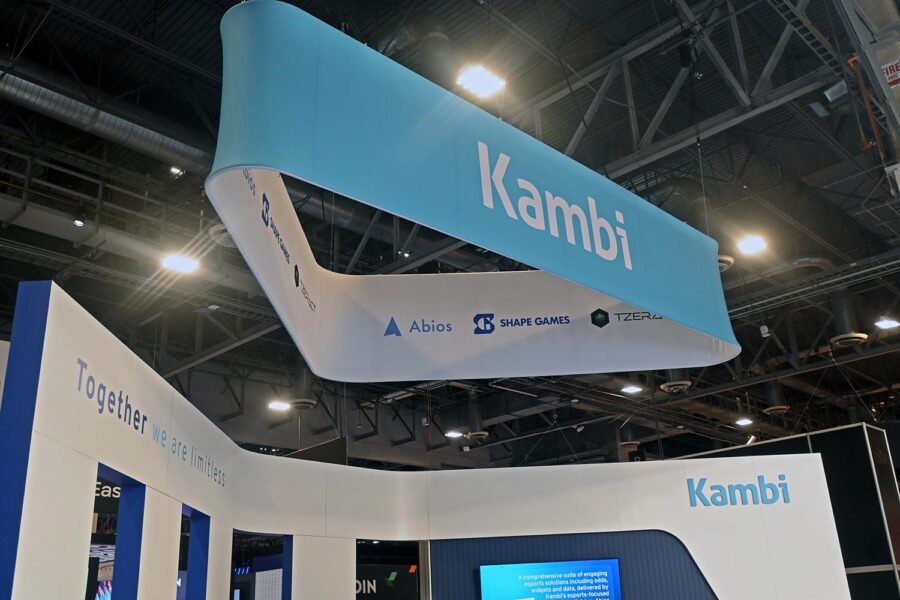
Sports betting technology supplier Kambi Group has entered into a multi-year online sports betting deal with online lottery operator Canadian Bank Note Company, expanding its presence in the LatAm and Caribbean markets.
Under the partnership, Kambi will supply Canadian Bank Note Company’s online betting brands, Let’s Bet and Apostemos, with its turnkey sportsbook technology. Kambi added that the initial focus of the partnership would be Central America, with a Caribbean launch to follow soon.

According to Kambi, its partnership with Canadian Bank Note Company aligns with its goal of expanding across the Americas. The agreement helps Canadian Bank Note Company move away from its usual lottery-focused offerings to include sports betting.
“We are very pleased to have agreed this multi-year partnership with CBN to support their sports betting operations through their Let’s Bet and Apostemos brands. Kambi’s selection is a clear testament to our strong track record in supporting ambitious sportsbook operators throughout the Americas, and we look forward to working closely with CBN and capitalizing on the potential of this deal,” said Kambi Chief Executive Werner Becher.
Kirk Arends, President of Lottery and Gaming at Canadian Bank Note Company, added that the partnership with Kambi was essential in expanding the group’s igaming offerings to include sports betting as they look to expand across South and Central America and the Caribbean.

In April, Kambi announced that its esports division, Abios, had entered into a multi-year partnership with Google.
Charlotte Capewell brings her passion for storytelling and expertise in writing, researching, and the gambling industry to every article she writes. Her specialties include the US gambling industry, regulator legislation, igaming, and more.

Verticals:
Sectors:
Dig Deeper
Related stories
 2026/07/08: Alberta’s Pure Casino Entertainment inks multi-year partnership with Kambi
 2026/06/04: Comtrade Gaming signs platform agreement with Canadian Bank Note Company
 2025/07/23: Kambi partners with RedCap to launch turnkey sportsbook in Latin America
 2026/04/29: Kambi unveils multi-province Canada contract alongside Q1 growth
2026/07/08: Alberta’s Pure Casino Entertainment inks multi-year partnership with Kambi
2026/06/04: Comtrade Gaming signs platform agreement with Canadian Bank Note Company
2025/07/23: Kambi partners with RedCap to launch turnkey sportsbook in Latin America
2026/04/29: Kambi unveils multi-province Canada contract alongside Q1 growth
The Backstory
Why this deal matters now
Kambi Group’s tie-up with Canadian Bank Note Company signals how fast the Americas sports betting supply chain is consolidating around turnkey partners with regional depth. CBN, long rooted in government lotteries, is adding sportsbook capabilities to its digital brands in Central America and the Caribbean. The move tracks a broader shift among lottery-linked operators that want to defend wallet share as online casino content and in-play betting proliferate across Latin America. It also underscores the growing role of cross-border technology stacks that can be switched on market by market as regulations harden and tax regimes evolve. For Kambi, the agreement reinforces a strategy already in motion: win B2B market share in Latin America by offering traded odds, flexible pricing and rapid deployment to operators that own the customer layer but need scale in risk and data.
The timing is notable. Brazil’s regulatory rollout is reshaping supplier priorities and creating a halo effect across the region. As operators race to localize product and payments, suppliers with Latin American infrastructure and partners are best placed to capture recurring fees and upsell data-driven features.
Kambi’s regional footprint was already widening
The CBN partnership builds on Kambi’s recent expansion with larger operators that can spread its trading services across multiple jurisdictions. This summer, Kambi partnered with Superbet Group to supply its odds feed across Superbet’s Latin American and Central European products. That agreement gave Superbet access to Kambi’s full range of traded odds while allowing the operator to own front-end experience and local growth. The model matters in Latin America, where brand equity and localized acquisition are critical but the cost of proprietary trading teams can be prohibitive.
Taken together, the Superbet and CBN deals suggest Kambi is leaning into a modular approach: let operators keep their UX and regional P&L while Kambi monetizes its core trading engine. It is a hedge against regulatory fragmentation and a way to capture volume from both tier-one operators and state-adjacent brands expanding beyond lottery. It also deepens Kambi’s data footprint in emerging live-betting markets, a prerequisite for pricing differentiation and risk control.
Brazil’s gravitational pull on suppliers
Suppliers are building permanent beachheads in Brazil to keep pace with licensing, payments and compliance. Sportsbook software provider Altenar opened a São Paulo office to speed onboarding and invoice in local currency. Local presence is not window dressing; it shortens integrations, enables faster oddsmaking tweaks around national leagues and supports real-time responses to regulatory circulars.
Physical presence also helps recruit Portuguese- and Spanish-speaking trading and risk talent and improves relationships with acquirers and gateways that power instant deposits and withdrawals—must-haves for live betting. As Brazil codifies advertising, AML and data rules, on-the-ground teams become a competitive moat. For Kambi and peers, every additional Latin American office and partner increases operating leverage, improves pricing granularity for domestic competitions, and creates a regional network effect that new entrants will struggle to match.
Content pipelines race to localize
The supply push is not limited to sportsbooks. Casino studios are tailoring portfolios for Brazilian audiences as cross-sell between sports and casino deepens. Playson expanded in Brazil through a partnership with KTO after receiving regulatory approval in February. The deal brings a slate of slots to KTO via Bragg’s aggregation hub, adding recognizable titles that can convert sports bettors during off-peak windows.
For operators, curated content with localized themes and mechanics boosts retention while reducing reliance on bonuses in a competitive market. For suppliers, Brazilian distribution offers scale and data to refine RTP, volatility and feature cadence for regional tastes. That feedback loop can inform sportsbook-casino cross-promotions, from free-spin rewards tied to derby matches to jackpots seeded by parlay volume. As more studios anchor with approved operators, the barrier to entry rises for unlicensed content and increases the value of compliant, high-performing titles.
Live casino and the localization imperative
Live casino is accelerating the need for local studios, native-speaking dealers and regional bet limits that fit household budgets. SkillOnNet extended its Ezugi partnership into Brazil, bringing roulette, blackjack and baccarat with Spanish-speaking dealers and Latin American studio production to PlayUZU and BacanaPlay. Localization in live casino is not cosmetic; hand signals, table etiquette and dealer patter influence session length and tip rates, which in turn affect operator margins.
These features also complement sportsbooks by offering instant, streamable entertainment between fixtures. As betting slips get settled, operators can push personalized live-dealer offers that keep users in the ecosystem. For CBN and others entering sports from a lottery base, a robust live-casino pipeline alongside a sportsbook can smooth revenue volatility and diversify beyond seasonality-heavy sports calendars.
Product diversification reshapes regulated edges
Beyond Brazil, operators are testing adjacent markets that can run in parallel with or independent of full sportsbook licensing. DraftKings expanded its prediction market through a connection with Crypto.com, adding player-specific contracts and signaling intent to scale into politics and entertainment. Because DraftKings Predictions operates in dozens of states, including those where online sports betting remains illegal, it illustrates how product structure and exchange connectivity can unlock distribution even in restrictive regimes.
For Latin America, where regulatory timelines vary by country, prediction-style products and fantasy formats can bridge gaps while sportsbooks await approvals. Suppliers like Kambi can benefit indirectly: the more operators cultivate engaged databases through compliant alternatives, the cheaper it becomes to convert customers to regulated sportsbooks once licenses are live. Conversely, if prediction markets achieve durable traction, sportsbooks will need sharper pricing, deeper props and faster markets to compete for attention.
The stakes for lotteries entering sportsbook
CBN’s move spotlights a choice facing lottery-aligned operators across the Americas: protect incumbency or cede digital share to nimble private brands. Partnering with a trading-heavy supplier reduces execution risk, accelerates time to market and allows lotteries to bundle parlay products, instant-win games and casino content under one account. But it also raises the bar on product quality. Customers accustomed to European-style live betting and same-game parlays will expect comparable speed, market depth and settlement accuracy.
Success will hinge on localized pricing for domestic leagues, seamless payments, and responsible gaming systems that satisfy regulators while minimizing friction. If CBN and similar operators deliver on those fronts, they can leverage retail trust and payouts credibility to grow online. If they lag, regional challengers with stronger tech and local presence—like those aligning with Kambi, Altenar or live-casino specialists—stand to capture the incremental handle as Latin America’s regulated markets mature.
