


Kambi unveils Google esports data partnership

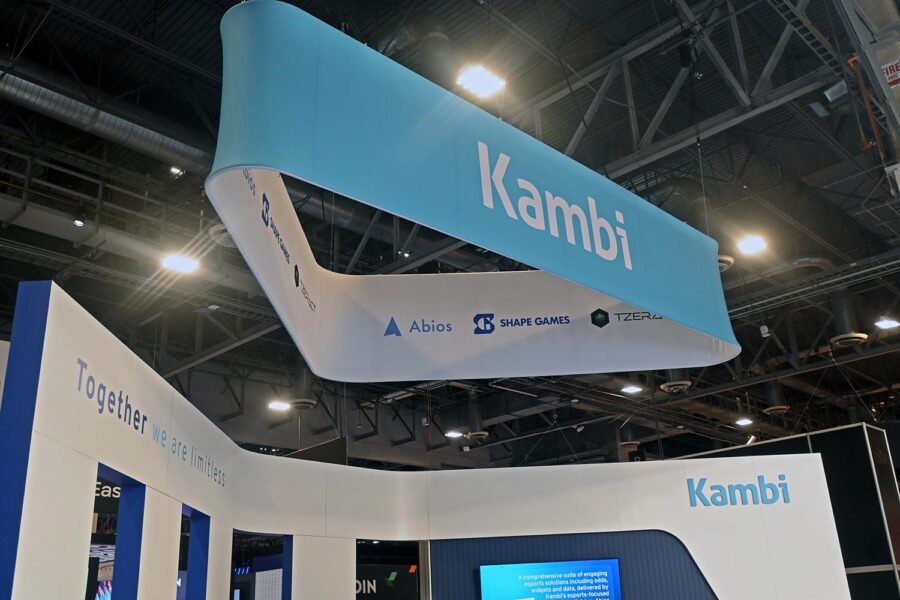
Sports betting technology company Kambi Group has revealed that its esports division, Abios, has signed a multi-year data partnership with Google.
Abios provides esports odds and data feeds across multiple titles. Under the deal, it will supply esports data to Google through four major esports titles: League of Legends, Counter-Strike, Dota 2, and Valorant.

The data will include match schedules, fixtures, competitive statistics, team and player data, and live scoring. This information will then be used on platforms including Google Search and the Google App.
“Partnering with Google is a significant milestone for Kambi and Abios, and a strong endorsement of the advanced data infrastructure and expertise we have developed over many years. With Google’s global scale, this collaboration will help elevate the way esports data is accessed and experienced by audiences around the world,” said Kambi Group Chief Executive Werner Becher.
Google’s Europe, Middle East, and Africa Sports Partnerships Lead, Marvin Brischke, said that esports was growing in popularity worldwide and that this deal would make more esports information available to users of its platforms.

The partnership comes on the heels of Kambi’s full-year revenue results, in which the group recorded an 8.2% year-over-year decrease, with revenue dropping to €162 million (US$191 million)1 EUR = 1.1799 USD
2026-04-14Powered by CMG CurrenShift.

Dig Deeper
Related stories
 2026/05/22: Kambi expands its presence in the Americas with Canadian Bank Note Company partnership
 2026/02/16: Kambi becomes odds provider for ComeOn Group
 2025/07/10: Behshad Behzadi left Google for front row seat at Sportradar
 2025/01/08: Kambi Group and Stake sign sports betting partnership in Brazil
2026/05/22: Kambi expands its presence in the Americas with Canadian Bank Note Company partnership
2026/02/16: Kambi becomes odds provider for ComeOn Group
2025/07/10: Behshad Behzadi left Google for front row seat at Sportradar
2025/01/08: Kambi Group and Stake sign sports betting partnership in Brazil
The Backstory
Why Google is surfacing esports data now
Google’s move to place official schedules, live scoring and player stats for top esports directly into Search and the Google app lands as competitive gaming seeks broader mainstream footing and cleaner data pipes. The company has tapped Abios, the esports unit of sportsbook supplier Kambi Group, to feed data across League of Legends, Counter-Strike, Dota 2 and Valorant. While the partnership showcases a tech-forward distribution play, it also reflects how standardized, real-time data is becoming foundational infrastructure for an industry straddling media, betting and integrity concerns.
On the audience side, esports commands massive digital reach but fragmented information. Centralizing verified fixtures and results reduces friction for fans and raises the bar for publishers and rights holders. On the commercial side, reliable data is the substrate for media experiences, fantasy contests and wagering markets. The collaboration’s timing coincides with a wave of developments tying esports closer to regulated betting and to the broader sportsbook ecosystem, connecting visibility, monetization and oversight.
Kambi’s push to counter a revenue slide with scale plays
Kambi enters the Google agreement after posting an eight-point-two percent revenue decline in 2025, to €162 million, citing regulatory, tax and macro headwinds. Still, the company flagged late-year momentum, including more AI-driven trading and new contracts. Its results update emphasized diversification and product expansion across partners and markets, positioning the Abios deal as part of a wider pivot toward distribution and data-led growth. For detail on the financial reset and strategic posture, see Kambi revenue down 8.2% to €162 million in 2025.
The Google tie-up puts Kambi’s esports data in front of a global audience without Kambi carrying heavy customer-acquisition costs. The exposure can reinforce Abios’ credentials amid intensifying competition from specialist data firms and in-house publisher feeds. It also complements Kambi’s stated emphasis on AI-enabled trading, as richer, standardized inputs can improve model performance across pre-match and in-play markets.
Brazil becomes a proving ground for regulated growth
Kambi has been building a beachhead in Brazil since the country’s regulated market opened Jan. 1, using B2B deals to scale quickly. It struck a turnkey sportsbook partnership with Stake in Brazil, giving the crypto-focused operator access to Kambi’s platform while providing Kambi a flagship presence in a high-growth jurisdiction. The Stake pact followed earlier groundwork supplying odds products to local operators and has been framed by Kambi as a template for entering complex frameworks with compliant tech.
The expansion deepened with a regional odds feed agreement with Superbet, spanning Latin America and Central Europe. For Kambi, the Superbet deal underscores a distribution-first model: pair scalable pricing and trading with operators that will localize the experience and carry marketing risk. For Brazil specifically, where mobile engagement is intense and soccer dominates, esports can ride along as a complementary vertical. If Google-embedded esports data drives broader awareness, it can support top-of-funnel discovery that ultimately benefits regulated operators integrated with Kambi’s feeds and trading stack.
The Brazil strategy also highlights Kambi’s ambition to become the underlying infrastructure for operators’ market entries, supplying compliance-ready tech and, increasingly, the data backbone that informs user experiences. As the country’s enforcement tightens and licensed brands invest in retention, the ability to serve accurate, fast data across sports and esports becomes a defensible edge.
Retail and tribal sportsbooks add stability to the mix
While online distribution garners headlines, Kambi is reinforcing its U.S. retail footprint through tribal gaming partnerships. A new agreement with the Oneida Indian Nation replaces the tribe’s prior sportsbook supplier with Kambi’s full stack—kiosks, point-of-sale, bring-your-own-device functionality and bet builders—across properties in Upstate New York. The company positioned the deal as part of a broader tribal strategy and a way to entrench in one of the largest U.S. betting markets. The details are in Kambi Group agrees to partnership with Oneida Indian Nation sportsbooks.
Retail remains a countercyclical stabilizer, particularly amid digital tax changes and promotional pressure. For data businesses, retail channels are a distribution node too: on-site displays and apps can surface live odds and match stats, an area where esports visualization is improving. The more Kambi embeds in retail and omnichannel environments, the more leverage it has to standardize data presentation and ensure integrity controls carry across formats.
Esports’ uneasy alignment with betting shapes the stakes
The Google-Abios partnership arrives as esports grapples with the role of gambling sponsorships and regulated wagering. Riot Games has drawn heat after enabling betting sponsors on top-tier League of Legends and Valorant teams, arguing that sanctioned partnerships with safeguards are preferable to a largely unregulated status quo. Community reaction has been polarized, with integrity and youth exposure cited as core risks. For context, see Riot Games draws criticism for esports betting sponsorships on Valorant and League of Legends.
This tension underpins why credible, transparent data matters. If audiences can rely on consistent fixtures, live scoring and verified statistics—now more accessible via Google—they have a clearer lens on competition, and stakeholders have stronger inputs for integrity monitoring. For bookmakers and teams operating in regulated channels, standardized data flows also support compliance and responsible gambling tools. The alternative is a patchwork where unofficial feeds and rumor-driven markets fill gaps, heightening manipulation risks.
For Kambi, which must balance growth ambitions with regulatory optics, being the data supplier that powers mainstream, consumer-facing surfaces can bolster trust. It also diversifies revenue away from pure operator volume, insulating against swings in promotional intensity or market-specific tax changes.
What to watch next
Execution will hinge on data freshness, coverage depth and resilience during peak traffic. Google’s integration quality—how prominently and contextually esports information appears—will influence user behavior and, by extension, downstream engagement for rights holders and regulated operators. Expect further tie-ins where official publisher data, betting integrity services and media distribution converge.
Kambi’s near-term markers include how Brazilian partnerships translate to handle growth, whether the Oneida rollout accelerates additional tribal wins and if late-2025 momentum carries into improved conversion and margins. On the esports side, the industry’s navigation of sponsorship optics and regulatory framing will shape commercial headroom. If policy trends continue to favor regulated approaches, the premium on reliable, auditable data—now stitched into Google’s consumer layer—will only rise.
