


IBIA study points to Brazil betting ban sending market underground

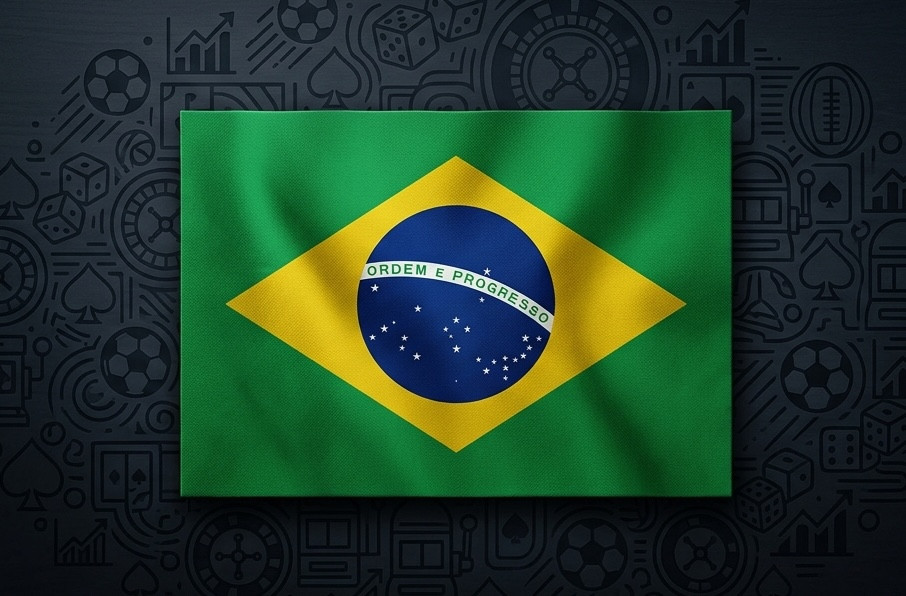
The International Betting Integrity Association (IBIA) has released a study that casts scrutiny on Brazil’s online betting ban, saying the prohibition will only drive the market offshore and could introduce new risks.
On 25 September, Brazilian President Luiz Inácio Lula da Silva signed a new executive order banning online gambling and fixed-odds betting in the country. The decree came into effect immediately, and operators had until 6 October to shut down operations. The ban is only provisional unless it gains Congressional approval within 120 days to remain in effect.

The IBIA’s study presents evidence of what could happen if the gaming ban remains in place.
First, the IBIA warns that it won’t stop the demand for online gaming; it will only shift it to offshore markets. According to data obtained by market analysts at H2 Gambling Capital, an estimated BRL25 billion (US$5.0 billion)1 BRL = 0.1981 USD
2026-10-15Powered by CMG CurrenShift will continue to be wagered on unlicensed platforms. H2 also predicts that the illegal market could reach BRL42 billion (US$8.3 billion)1 BRL = 0.1981 USD
2026-10-15Powered by CMG CurrenShift under the ban.
As the market moves underground, players will also lose the safeguards they would have had through licensed operators, including payment risk mitigation and KYC protocols, among other protections.

The IBIA goes on to explain that Brazil will also lose potential tax revenue, as well as sponsorship money for the country’s football clubs. It adds that sporting integrity will also be affected, with suspicious betting going undetected.
Under a regulated market, the IBIA reminded Congress that in under two years, the country’s gaming market had made significant progress. It had authorized over 80 operators, targeted illegal operators, introduced safeguarding measures to protect players, and had a regulatory framework value rating of 77 (out of 100).
“The value of Brazil’s regulatory framework lies in the intelligence it generates: suspicious betting patterns can be identified, assessed and shared with regulators, sports bodies and law enforcement,” the IBIA explained in its release.

“Without a functioning licensed market, much of that intelligence becomes harder to obtain, weakening the ability to detect and investigate potential manipulation,” it furthered.
The IBIA maintains that Congress should reconsider the provisional ban and that the country could strengthen safeguard measures rather than dismantle the industry.
Charlotte Capewell brings her passion for storytelling and expertise in writing, researching, and the gambling industry to every article she writes. Her specialties include the US gambling industry, regulator legislation, igaming, and more.

Dig Deeper
Related stories
 2026/07/24: Football tops suspicious betting alerts worldwide in 2Q26 IBIA report
 2026/08/26: Alberta’s largest casino group Pure Casino joins International Betting Integrity Association
 2026/08/25: Total Philippines gambling ad ban seen handing market back to illegal operators, data from five countries show
 2026/09/27: Brazil bans all sports betting and online casino gaming
2026/07/24: Football tops suspicious betting alerts worldwide in 2Q26 IBIA report
2026/08/26: Alberta’s largest casino group Pure Casino joins International Betting Integrity Association
2026/08/25: Total Philippines gambling ad ban seen handing market back to illegal operators, data from five countries show
2026/09/27: Brazil bans all sports betting and online casino gaming
The Backstory
Brazil’s abrupt reversal
Brazil’s online betting market moved from regulation to prohibition in less than two years, creating the policy backdrop for the International Betting Integrity Association’s warning that demand is likely to migrate offshore rather than disappear. The federal regulated fixed-odds betting market had become fully operational Jan. 1, 2025, under the Secretariat of Prizes and Betting within the Ministry of Finance. By late September, President Luiz Inácio Lula da Silva had signed a provisional measure that barred the operation, offering, intermediation and advertising of fixed-odds betting across physical and online channels.
The measure, detailed in Complete iGaming’s report that Brazil banned sports betting and online casino gaming, took effect on publication Sept. 25. Operators were ordered to stop taking new deposits and bets immediately, give customers until Oct. 5 to withdraw funds and make websites and apps inaccessible in Brazil from Oct. 6. The text also ended pending authorization applications and provided no refund of fees paid by operators that had entered the regulated market.
The change was not a narrow compliance adjustment. It dismantled the central premise of Brazil’s new betting regime: that licensed operators, under federal supervision, would channel existing demand into a taxable and monitored system. It also placed the political burden on Congress, which must approve the provisional measure within the required period for it to remain in force.
A legal market cut short
Before the ban, Brazil had been building the mechanics of a conventional regulated market. The model gave federal authorities visibility over operators, payments, advertising and integrity obligations. It also created a legal point of contact for betting companies that had paid authorization fees and made investments in marketing, compliance, staffing and technology.
The provisional measure disrupted that framework while leaving demand unresolved. Industry groups had warned before publication that prohibition would not eliminate betting. The Brazilian Association of Games and Lotteries said the ban could push more than 30 million bettors toward illegal operators. That concern was amplified by Brazil’s existing enforcement burden: from January 2025 to September 2026, authorities blocked 66,482 domains linked to unauthorized betting platforms, while ANJL identified 6,409 illegal domains in one week in September.
Those numbers matter because they show the illegal market was not theoretical. Brazil already faced a large offshore sector even while licensed platforms were available. Removing licensed operators narrows the state’s direct leverage over the market and makes enforcement more dependent on domain blocking, payment restrictions and policing of advertising, all of which can be evaded by operators outside Brazil’s jurisdiction.
Congress becomes the pressure point
The ban’s durability now rests with Congress, and early signals suggest lawmakers are divided over how far prohibition should go. Complete iGaming reported that a majority of proposed amendments to Brazil’s betting ban supported maintaining sports betting, particularly in a more restricted form focused on main match outcomes and final scores.
Some amendments would allow licensed operators to continue operating while strengthening action against unlicensed offshore sites. Others would preserve the full ban and add sanctions, bank liability for payment blocking and new crimes related to operating or promoting bets. A further group would soften the commercial impact by letting companies run out existing licenses without renewal.
The amendment process underscores the policy split at the center of the debate. Supporters of prohibition argue that betting has created social harms that justify a hard reset. Opponents counter that closing the legal market removes the operators most exposed to sanctions while leaving offshore brands with an expanded addressable audience. The congressional timetable adds urgency: if lawmakers do not complete deliberations by the deadline, the provisional measure expires.
Integrity arguments gain weight
IBIA’s intervention is significant because its focus is not only consumer protection or tax revenue. The group’s core argument is that regulated betting markets produce information that helps detect match manipulation. Suspicious betting patterns can be identified, assessed and shared with regulators, sports bodies and law enforcement only when operators are inside a monitored system.
IBIA’s broader monitoring work provides context for that claim. In its second-quarter integrity report, the association recorded 76 suspicious betting alerts across nine sports, with football accounting for the largest share. South America reported 17 alerts, the second-highest regional total after Europe. The report also said IBIA gathers data from more than 90 companies and 200 betting brands, monitoring more than 1.5 million sporting events a year across 80 sports.
That network effect is central to the stakes in Brazil, where football dominates sports culture, sponsorship and betting interest. A licensed market can require operators to share integrity information and cooperate with investigations. An offshore market can take the same wagers without reporting suspicious patterns to Brazilian authorities. The result is not merely lost tax revenue but a thinner intelligence layer around sport.
Canada shows the contrast. After Alberta launched a regulated igaming market, major operators were required to work with approved independent integrity monitors. Pure Casino, Alberta’s largest land-based casino group, later joined the International Betting Integrity Association as part of its compliance framework. The Canadian example reflects the model Brazil had begun to follow: embed monitoring requirements as the market opens, rather than trying to police betting from outside the legal system.
Advertising bans offer a parallel warning
The Brazilian ban also sits within a wider global debate over whether restrictions on legal gambling operators can inadvertently benefit illegal ones. That issue has been especially visible in the Philippines, where lawmakers have considered a total gambling advertising ban. A Complete iGaming analysis found that a total Philippines gambling ad ban could hand the market back to illegal operators by silencing licensed brands while offshore sites keep marketing through informal digital channels.
The comparison is not exact: Brazil’s measure goes beyond advertising and shuts the licensed market itself. But the channelization logic is similar. Regulators seek to move players from illegal sites to licensed platforms by making the legal option visible, viable and safer. When legal operators lose the ability to reach customers, or are removed entirely, the illegal market may gain relative strength.
International experience cited in the Philippines debate points in the same direction. Italy’s 2018 advertising and sponsorship ban was followed by persistent illegal-market concerns and later moves to soften the rules. The United Kingdom, by contrast, permits gambling advertising under strict content, placement and targeting standards and has kept a high share of online play within licensed channels. For Brazil, the question is sharper: whether prohibition can succeed in a digital market where offshore operators already have scale, payment workarounds and domain-shifting capacity.
The stakes for Brazil’s next move
Brazil’s decision now tests two competing theories of gambling policy. One is that the harms associated with betting require a broad legal shutdown, even if enforcement is difficult. The other is that demand is better contained through licensing, taxation, consumer checks, payment controls and integrity monitoring. IBIA’s study squarely supports the second view, warning that billions of reais in wagering could continue on unlicensed platforms under the ban.
The financial implications are immediate. Licensed operators lose access to a market for which they paid and prepared. Football clubs risk losing sponsorship revenue. The state loses potential tax collections and, more importantly, visibility into where bets are placed and by whom. Players lose formal safeguards such as identity checks, responsible gambling tools and dispute channels. Sports bodies lose access to betting intelligence that can help detect manipulation.
Congress can still reshape the measure. Amendments that preserve sports betting, restrict higher-risk products or strengthen enforcement against offshore sites would mark a partial retreat from prohibition while addressing political concerns over gambling harm. A full approval of the ban would make Brazil one of the most consequential test cases for whether a major digital betting market can be closed without expanding illegal supply.
That is why the IBIA report lands at a pivotal moment. It reframes the issue from whether betting should be encouraged to whether the state can afford to make it invisible. In Brazil, the evidence lawmakers weigh over the next stage will determine not only the fate of operators but also how much of the country’s betting activity remains within reach of regulators, tax authorities and sports-integrity investigators.
