


Four Singaporeans identified as personal assistants for Chen Zhi’s global scam operation: report

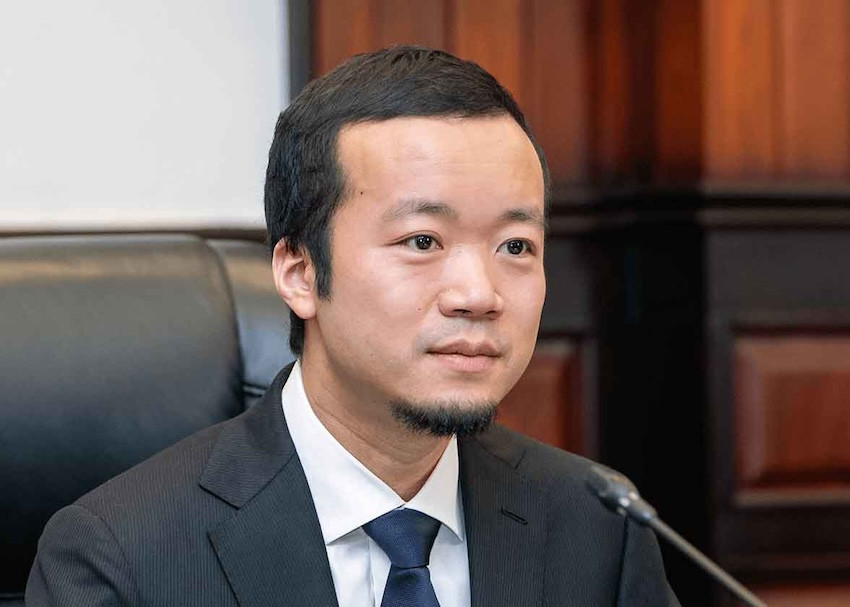
A new report highlights how four Singaporean businessmen were hired to work as personal assistants for individuals and companies linked to Cambodian national Chen Zhi, the chairman of Prince Group.
Authorities in January announced that Chen Zhi had been detained and was in custody in China, after he was accused of running a network of illegal online gambling, fraud and other operations trans-nationally.

US and other authorities have levied indictments against Chen Zhi and the Prince Group for their illegal operations, including large-scale scam centers operating out of Cambodia.
A new investigation by the Straits Times has found that four Singaporeans – Alfred Law Hon Kit, Ryan Lee Chee Keong, Jason Teo Jing Shen and Alex Lim Zhongliang – were hired as part of the Prince Group’s operations. Three of the businessmen – Law, Lee and Teo told the publication that they did not have knowledge of criminal activities and had cut ties with Chen Zhi and his associates when the US unveiled sanctions and criminal indictments against him, his associates, Prince Group and other companies linked to the conglomerate.
The ST found that Lee and Teo’s names were on a flight manifest for a 23 April, 2019 flight from Singapore to Palau, along with top associates linked to Chen Zhi. The US in October of 2025 accused Prince Group of expanding its operations into Palau via a luxury resort.

ST indicates that the two men were hired to work as personal assistants to Chinese nationals Chen Sokly – who was identified in the October indictments, and Xiong Huajun, who has not been listed on any sanctions to date.
The plane that they were travelling on belonged to Chinese national Hu Xiaowei, identified as Chen Zhi’s second-in-command. Xiaowei was also named in the US sanctions.
The investigation details an extensive list of business connections and travel between the Singaporeans and Chen Zhi and his associates and companies, ranging from 2017 to 2025 and ranging across a wide range of countries including Cambodia, Taiwan, Singapore, Canada and the US, as well as the jurisdictions of Hong Kong and Macau.

The Singaporeans contacted by the ST have denied engaging in illegal activities.
New charges from Chinese prosecutors reveal that Chen Zhi could face the death penalty.

Dig Deeper
Related stories
 2026/07/02: Gaming Associates supporting International Association of Gaming Regulators as year-long Titanium Sponsor
 2026/01/09: Chen Zhi detained in China over online gambling and fraud allegations
2026/06/18: Member of Chen Zhi-linked illegal gambling network extradited from Cambodia to China
2026/01/09: Chen Zhi detained in China over online gambling and fraud allegations
2026/06/18: Member of Chen Zhi-linked illegal gambling network extradited from Cambodia to China
 2026/02/09: Hana Bank President joins South Korea campaign against youth igaming
2026/07/02: Gaming Associates supporting International Association of Gaming Regulators as year-long Titanium Sponsor
2026/01/09: Chen Zhi detained in China over online gambling and fraud allegations
2026/06/18: Member of Chen Zhi-linked illegal gambling network extradited from Cambodia to China
2026/02/09: Hana Bank President joins South Korea campaign against youth igaming
The Backstory
China’s custody of Chen shifted the case into a new phase
The identification of four Singaporean businessmen as alleged personal assistants to figures tied to Chen Zhi’s network adds a new layer to a case that has moved from sanctions and indictments into criminal custody, extraditions and widening scrutiny of cross-border enablers.
Chen, the chairman of Prince Group, became the central figure in one of Asia’s highest-profile illegal online gambling and fraud investigations after authorities accused him of overseeing a transnational operation built around Cambodia-based scam centers, gambling platforms and related businesses. The case escalated sharply after Chen was detained in China over online gambling and fraud allegations, following cooperation between Beijing and Phnom Penh.
Chinese authorities framed the detention as a major joint law enforcement outcome. U.S. prosecutors, meanwhile, alleged that Chen’s network generated enormous daily revenue and defrauded victims worldwide of billions of dollars. The combination of Chinese custody and U.S. indictments has turned what had been a sprawling set of allegations into a coordinated enforcement campaign that now reaches into corporate registries, travel records, banking links and personal networks across Asia.
That matters because large criminal gambling and scam groups rarely operate only through their alleged leaders. Investigators often seek to map the wider ecosystem around them: assistants, nominee directors, logistics personnel, lawyers, financiers, property companies and technology vendors. The reported Singapore connections fit that broader investigative pattern. Even when individuals deny wrongdoing, their proximity to sanctioned or indicted figures can help authorities reconstruct how a network moved people, money and assets across jurisdictions.
Prince Group’s public profile obscured mounting allegations
Before the latest enforcement actions, Chen’s public image was anchored in philanthropy, real estate and political access. He held honorary titles in Cambodia and had served as an adviser to senior political figures. Prince Group grew into a visible conglomerate with interests that appeared legitimate on the surface, a common feature in cases where authorities later allege that legal businesses helped shield illicit activity.
U.S. and Chinese allegations describe a different structure beneath that public profile. Prosecutors have linked Chen and associated entities to illegal online gambling, fraud compounds and money laundering. Chinese court records in related cases have repeatedly connected Prince-linked operations to gambling activity aimed at mainland Chinese nationals, for whom gambling remains illegal in most forms.
The Cambodia connection is central. Over the past decade, parts of the country became a hub for online gambling operators serving Chinese-speaking markets. When Cambodia moved to ban online gambling, many operators were forced underground or shifted into fraud operations, including telecom and investment scams. The region’s casino infrastructure, weak enforcement in certain localities and access to migrant labor created an environment in which illegal gambling and cyberfraud groups could overlap.
That overlap is critical to understanding why Chen’s case carries stakes beyond gambling regulation. Authorities have increasingly treated illegal online gambling networks as part of a broader criminal economy involving human trafficking, forced labor, money laundering, kidnapping and cyber-enabled fraud. The same compounds and payment networks used to run gambling platforms can be repurposed for romance scams, fake investment schemes and other frauds targeting victims globally.
Extraditions show Beijing’s expanding reach
China’s handling of Chen and related figures reflects a broader push to pursue overseas gambling operators that target Chinese citizens. Beijing has long viewed offshore online gambling as a threat to capital controls, social stability and financial security. In recent years, that position has translated into pressure on Southeast Asian governments to arrest and repatriate suspects.
The extradition of alleged Chen associate Liu Ren from Cambodia underscored that momentum. Chinese police said a member of a Chen-linked illegal gambling network was extradited from Cambodia to China as part of a criminal investigation into fraud and illegal online gambling. Authorities accused Liu of helping establish Jinbei Group, which they said ran online gambling platforms targeting Chinese residents before expanding into telecom fraud compounds in Cambodia.
That allegation illustrates the evolution of these networks. A platform initially designed to draw bettors can become part of a larger criminal system once operators have payment channels, customer data, technology teams and secure locations. Chinese authorities said Liu also faced allegations tied to intentional injury and illegal detention, reflecting the violent control methods often reported in scam compounds.
China’s enforcement reach is not limited to Cambodia. Thailand’s approval of the extradition of She Zhijiang, another major gambling figure, showed the same regional pattern. A Thai appeals court upheld the transfer after Chinese authorities accused She of operating extensive illegal gambling networks. The case, described in Thailand’s approval of She Zhijiang’s extradition to China, involved hundreds of gambling websites and alleged activity linked to Myanmar’s Shwe Kokko area, another hub associated with casinos, online gambling and scam operations.
Singapore links raise questions about professional support networks
The reported involvement of Singaporean businessmen is significant because Singapore is a financial and logistics hub with strong corporate services, banking infrastructure and regional connectivity. Its citizens and companies often play legitimate roles across Southeast Asian business ventures. That same regional reach can also make Singapore-linked individuals attractive to criminal networks seeking administrative support, reputational cover or access to international systems.
The four Singaporeans named in the report have denied engaging in illegal activities or said they did not know about criminal conduct. Those denials are important. Being hired by, traveling with or assisting people later accused of crimes does not by itself prove participation in criminal conduct. But such relationships can become relevant when investigators examine whether a network relied on trusted intermediaries to arrange travel, manage companies, move funds or coordinate meetings.
The reported flight records, cross-border business ties and work as assistants to Chinese nationals linked to Chen’s circle point to a recurring challenge in transnational crime cases: the boundary between routine business services and facilitation. Large illegal gambling groups need corporate structures, bank accounts, leases, aviation logistics, communications systems and investment vehicles. Some of those services may be supplied by people who are unaware of the underlying activity. Others may involve willful blindness or active assistance.
For Singapore, the reputational stakes are clear. The city-state has tightened anti-money laundering controls after major financial crime cases exposed the use of local assets, banks and service providers by foreign criminal groups. Any suggestion that Singaporean intermediaries helped a sanctioned network, even indirectly, will invite scrutiny from regulators, banks and law enforcement agencies.
Regional crackdowns are converging
The Chen investigation is unfolding as Asian governments intensify action against illegal online gambling and its social effects. South Korea has moved against overseas gambling rings and launched public campaigns aimed at youth gambling. The issue reached the financial sector when Hana Bank’s president joined a national campaign against youth igaming, warning that illegal online gambling targeting young people is a scam they cannot win.
Those campaigns may appear distant from the Chen case, but they are part of the same enforcement environment. Illegal gambling operators depend on cross-border marketing, payment channels and consumers who may be far from the physical location of the platform. Governments are responding with criminal prosecutions, extraditions, financial monitoring and public education. Banks, payment companies and technology providers are being pushed to identify suspicious flows and prevent access by illegal operators.
Regulators are also trying to coordinate across jurisdictions because illegal gambling groups exploit gaps between national systems. The International Association of Gaming Regulators has expanded work on policy alignment and illegal gambling issues, with industry compliance groups supporting those efforts. The sponsorship described in Gaming Associates’ support for the International Association of Gaming Regulators reflects a broader recognition that technical standards, testing and regulatory cooperation are part of the response.
The immediate legal risk for Chen and his alleged associates is severe, with Chinese prosecutors reportedly bringing charges that could carry the death penalty. But the broader significance lies in how the case may reshape enforcement expectations across the region. Authorities are no longer focusing only on gambling website operators. They are pursuing financiers, compound managers, corporate affiliates, travel facilitators and other people who made these networks function.
That is why the Singaporean assistant allegations matter. They suggest the investigation is moving outward from the alleged command structure toward the professional and logistical support that allowed the network to operate internationally. The outcome could influence how regional hubs police corporate services, how banks screen clients and how authorities define culpability in the business networks surrounding illegal online gambling and fraud.
