


Fanatics promotes Alex Smith to Chief Legal Officer

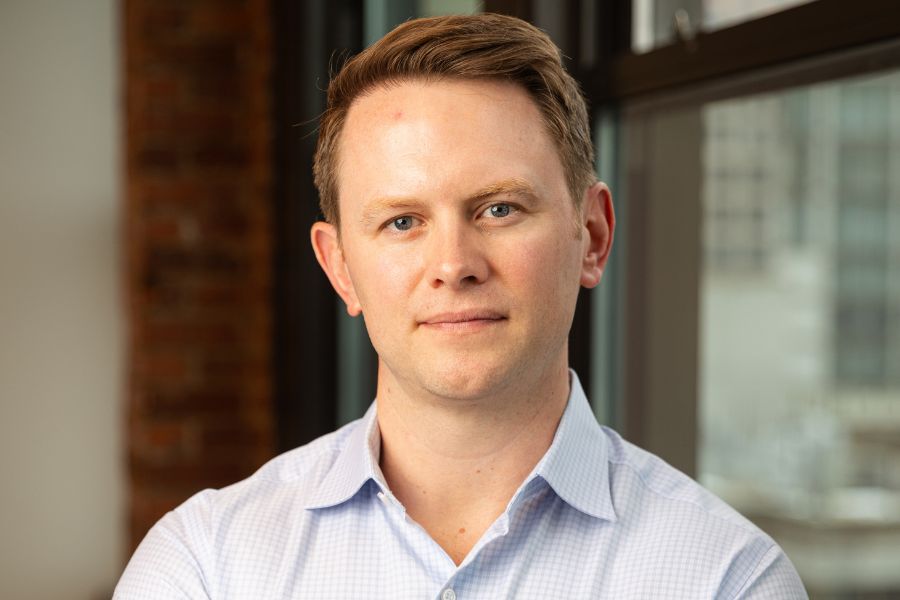
Fanatics has appointed Alex Smith as Chief Legal Officer and promoted Sara Tait to Senior Vice President and Head of Legal and Regulated Industries.
Smith will report directly to Chief Executive Matt King, joining the executive team. He will oversee legal, regulatory, compliance, and government affairs strategy for the firm’s sports betting and online gambling departments.

Smith joined the company in 2021 as Vice President of Legal and Regulatory Compliance. During his time in that job, he was involved in the rollout of Fanatics Sportsbook across multiple US states.
King said, “Alex was one of our first hires and he helped build our legal and regulatory apparatus that has allowed us to launch products rapidly in legal sports betting, icasino and prediction markets. As we continue to grow, Alex is the perfect person to lead our legal and regulatory functions into the future.”
Tait, who will report directly to Smith, will take on responsibility for legal support across regulated gaming and market products. Her role includes managing relationships with regulators, overseeing licensing requirements, and participating in initiatives related to government and the gambling industry.

The appointments come at a time of multiple challenges for gambling companies across the US, including changing regulations and the impact of prediction markets.
Fanatics said its new legal leadership structure will support ongoing growth while addressing rising compliance and regulatory demands across multiple states.

Dig Deeper
Related stories
 2025/07/08: Sue Schneider: Holding the door open for igaming innovators
 2026/07/28: Fanatics brings prediction market fully in-house with Water Street Labs acquisition
 2025/12/04: Fanatics moves into prediction markets amid rising demand for speculative trading
 2026/05/28: Fanatics Markets launches World Cup prediction market hub
2025/07/08: Sue Schneider: Holding the door open for igaming innovators
2026/07/28: Fanatics brings prediction market fully in-house with Water Street Labs acquisition
2025/12/04: Fanatics moves into prediction markets amid rising demand for speculative trading
2026/05/28: Fanatics Markets launches World Cup prediction market hub
The Backstory
A legal pivot amid new bets
Fanatics’ elevation of Alex Smith to chief legal officer lands at a consequential moment for the company’s betting ambitions. The sports retail giant has been racing to build a full-stack wagering business spanning sportsbook, online casino and, most recently, event contracts. Smith helped stand up the initial scaffolding for that expansion. Now the portfolio he inherits is larger, the regulatory perimeter is shifting and the margin for error is slimmer. Building a centralized legal and compliance hub is less about hierarchy than speed: Fanatics needs to clear licensing hurdles, interpret fast-changing rules and preempt enforcement action across dozens of jurisdictions while launching products that blur lines between gambling and trading.
The decision also formalizes a succession path inside the legal team by elevating Sara Tait to oversee regulated industries and day-to-day licensing. That creates dual tracks: Smith steering strategy and external risk, Tait managing execution and regulator relationships. The structure effectively acknowledges that growth will be gated by compliance throughput as much as by marketing dollars.
Event contracts redraw the compliance map
Fanatics’ move into prediction markets underscores why legal leadership matters now. The company has begun offering event contracts in 24 states on outcomes that extend beyond sports into finance, politics and culture. As Fanatics moves into prediction markets amid rising demand for speculative trading detailed, the sector sits in a regulatory gray zone: federal commodities rules intersect with state gambling laws, and platforms such as Kalshi and Polymarket have faced constraints while volumes climb.
For Fanatics, the prize is access to a younger, market-savvy demographic that already bets on games and trades headlines. The risk is that regulators classify event contracts as gambling in some states and financial products in others, triggering conflicting oversight. Smith’s remit will include crafting frameworks that satisfy both gambling regulators and, where applicable, financial market authorities. That means Know Your Customer protocols that meet higher standards, market surveillance to detect manipulation around news events and disclosures that distinguish speculation from investment.
The operational implications are immediate. Product design choices—how contracts are settled, how limits are set, what categories are offered—will be legal decisions as much as commercial ones. Any misstep could draw scrutiny that slows approvals in core sportsbook markets. Fanatics has signaled early outreach to regulators; codifying that engagement is now a top-layer legal function.
States recalibrate oversight and responsibility
The compliance burden is not only about novel products. State agencies are shoring up their own guardrails and personnel. In New England, the New Hampshire Lottery named a new chief compliance officer, Cooley Arroyo, with a mandate to tighten reviews across contractors and licensees. That hire reflects a broader posture among lotteries and gaming commissions: experienced legal talent is moving in-house to scrutinize vendors and speed rulemaking, but also to enforce it.
At the same time, responsible gambling has become a policy throughline. The National Council on Problem Gambling rolled out 1-800-MY-RESET as the U.S. National Problem Gambling Helpline, designed to be easier to recall and less stigmatizing. The Council cited research indicating that nearly 20 million adults reported gambling-related harm in the past year. For operators, that figure is not an abstract statistic; it informs advertising standards, deposit limits and data-sharing expectations with helpline networks. Legal chiefs now sit at the nexus of compliance and public health, translating voluntary safeguards into enforceable policy that can withstand legislative sessions and election cycles.
The takeaway for Fanatics’ legal office: anticipate more state-by-state variance, tighter attestations around marketing and promotions, and escalating disclosure requirements about predictive products that could appeal to risk seekers beyond traditional sports bettors.
Market growth tests operating discipline
Even mature sportsbook products are evolving as states celebrate anniversaries and compare outcomes. Vermont, which launched online wagering in January 2024, posted a $23.8 million handle in January 2025, up nearly 20% year over year, with three operators active, including Fanatics. Basketball and football dominated bets, but the report spotlighted cross-border dynamics: out-of-state players accounted for more than $9.7 million in handle and wagered roughly twice as much per bet as in-state users.
That pattern highlights compliance pressure points. Geo-fencing, source-of-funds checks and marketing guardrails near state borders are not mere technicalities. They are recurring audit items for regulators and potential friction points for consumers if implemented poorly. Smith’s team will need to calibrate for these local realities while Fanatics pursues national scale, ensuring product consistency without tripping over Vermont’s, or any other state’s, unique statutory quirks.
Tax take is another lever shaping legal strategy. Vermont booked more than $800,000 in taxes from January handle. As legislatures assess revenue against problem gambling data and consumer complaints, they could move to adjust tax rates, tighten promotional deductions or restrict certain bet types. A proactive legal posture—backed by data sharing and transparent reporting—can help stave off abrupt changes that would ripple through pricing and product strategy.
Executive churn signals a tighter governance cycle
Fanatics is not the only gaming company retooling its leadership bench. Supplier-side moves point to a broader recalibration of governance around growth. Games Global’s chief financial officer, Tim Mickley, resigned after four years, following the earlier departure of its chief legal officer. The content supplier expanded into U.S. igaming with a B2B acquisition last year, then began reshaping its C-suite as it integrated assets and private capital structures.
For operators and suppliers alike, executive turnover often coincides with inflection points: entering new markets, absorbing acquisitions, or navigating heightened oversight. The pattern reinforces why Fanatics is elevating in-house legal leadership as it layers on new products and jurisdictions. Strong governance is not only about satisfying regulators; it is also a condition for accessing capital and securing partnerships with leagues, data providers and payments firms wary of compliance drag.
The competition for seasoned legal and compliance talent will intensify as event contracts, casino content and state rulemaking evolve in parallel. Companies that lock in that expertise early are better positioned to move first when new categories open—or to pull back quickly when the rules turn.
The stakes: speed without shortcuts
The immediate task for Fanatics’ legal office is to keep product velocity high while lowering regulatory risk. Prediction markets promise engagement and revenue but invite novel oversight. State agencies are hiring compliance specialists and rewriting playbooks. Responsible gambling is shifting from a moral imperative to an operational requirement with measurable KPIs. And leadership turnover across the industry suggests investors and partners are demanding tighter controls.
How Fanatics sequences launches, structures consumer protections and partners with regulators will shape its trajectory as much as odds and promotions will. Smith’s promotion formalizes who owns those choices. The measure of success will be visible in approvals won, inquiries avoided and the company’s ability to scale across states like Vermont while holding the line on compliance in a market that is getting faster—and less forgiving.
