


Conor McGregor becomes 1xBet global ambassador ahead of key fight

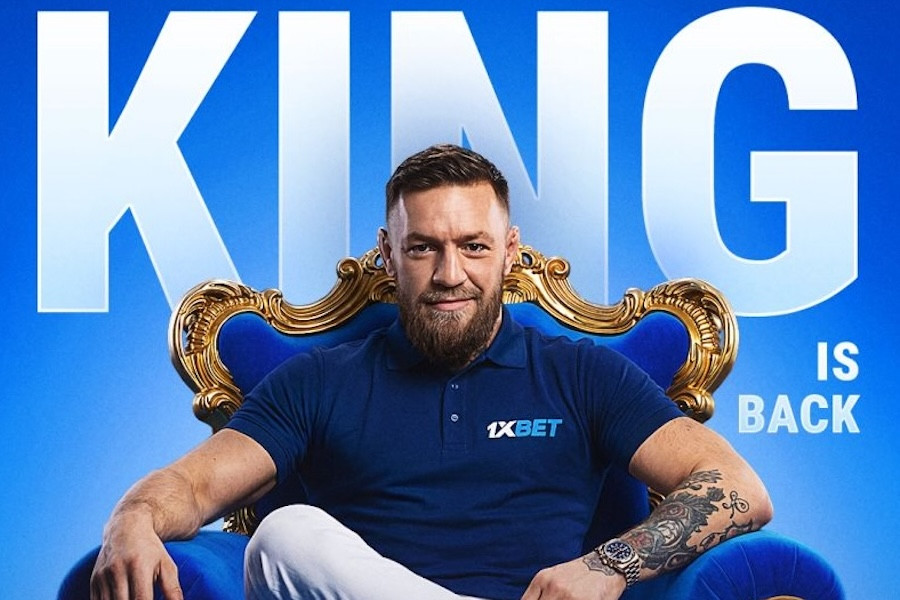
MMA superstar and UFC double-champion Conor McGregor has joined the Curacao-based online sports betting group 1xBet as its global brand ambassador ahead of his upcoming fight against Max Holloway on 11 July.
In a social media post, 1xBet said it looked forward to working with McGregor for the next chapter of his career, with the partnership coming at a pivotal time for both the operator and McGregor, as he returns to the ring in a rematch against Holloway at UFC 329 in Las Vegas.

McGregor isn’t the only athlete to join 1xBet’s sports celebrity roster, with 1xBet already signing ex-Real Madrid star Roberto Carlos, Philippine basketballer Kai Sotto, MMA fighter Mark Striegel and South African cricketer Heinrich Klaasen, among others.
The UFC is also not shy about gambling sponsors. In March, global sports betting operator Bet365 joined the organization as its official sports betting partner in the US and Canada. Under the deal, its sportsbook is integrated throughout live broadcasts, including on-screen betting tickers, fighter and intro odds and same-game parlay features.
The UFC’s partnerships are not limited to traditional sportsbooks. In November of last year, the UFC and its parent company, TKO Holdings, partnered with Polymarket as the UFC’s exclusive prediction market partner.

The expanded interest in gambling has grown at the behest of UFC President Dana White. White appears to be a staunch supporter of gambling sponsorships, even writing a letter to President Donald Trump in May urging Congress to repeal a provision in the One Big Beautiful Bill that would place a 90% limit on gambling loss deductions, claiming it would ultimately harm bettors.
Charlotte Capewell brings her passion for storytelling and expertise in writing, researching, and the gambling industry to every article she writes. Her specialties include the US gambling industry, regulator legislation, igaming, and more.

Dig Deeper
Related stories



The Backstory
McGregor deal lands in a crowded combat-sports betting market
Conor McGregor’s appointment as a global ambassador for 1xBet is less an isolated celebrity endorsement than the latest step in a broader convergence of combat sports, online betting and influencer-led gaming. The Irish fighter remains one of the most commercially potent names in mixed martial arts, and his return against Max Holloway gives 1xBet a high-profile marketing window tied to one of the UFC’s most bankable storylines.
The timing matters. Operators and gaming suppliers have increasingly targeted UFC audiences, which skew younger, digitally engaged and accustomed to pay-per-view events, live odds and social media promotion. For betting brands, that makes fighters and fight-adjacent creators valuable conduits to fans who follow athletes beyond the cage. For the UFC and its commercial partners, it expands a sponsorship category that now stretches from traditional sportsbooks to crash games and prediction markets.
1xBet has built a roster around recognizable sports figures, including former soccer, basketball, MMA and cricket names. McGregor gives the company a global personality whose appeal extends beyond his active fight schedule. But the deal also arrives as offshore and online betting brands face intensifying scrutiny in several jurisdictions, particularly where celebrity promotion has become part of enforcement probes.
UFC’s gambling ties have moved from the margins to the broadcast
The UFC has become one of the clearest examples of how gambling promotion has shifted from peripheral advertising to embedded fan engagement. In March, Bet365 became the organization’s official sports betting partner in the U.S. and Canada, with sportsbook integrations across live broadcasts, including betting tickers, fighter odds and same-game parlay features. Those broadcast elements make wagering part of the event presentation rather than a separate activity.
The promotion’s commercial orbit has widened further through gaming suppliers. Spribe, the studio behind Aviator, signed a multiyear UFC partnership in 2023 that put Aviator branding inside the octagon at pay-per-view and Fight Night events. The company has since layered athlete and creator endorsements on top of that venue exposure, including a deal under which UFC heavyweight champion Tom Aspinall became an Aviator ambassador. Aspinall joined a campaign group that includes other MMA figures such as Alex Pereira, Johnny Walker and Merab Dvalishvili.
Spribe also moved beyond fighters by signing MMA content creator Nina-Marie Daniele, better known as Nina Drama, to promote Aviator to her large social following. That Nina Drama ambassador deal underscored how betting-adjacent brands are using personalities who shape the online conversation around fight week, not just athletes who compete on the card.
McGregor fits squarely into that model. He is both a fighter and a media event, with a fan base that responds to personality, rivalry and spectacle. For 1xBet, the endorsement offers reach across markets and platforms. For the broader industry, it reinforces the UFC’s role as a key battleground for gaming brands seeking global visibility.
Integrity concerns are the counterweight to sponsorship growth
The commercial momentum has been accompanied by a sharper focus on betting integrity. The UFC recently pulled a fight involving Michael Johnson and Alexander Hernandez after a gaming integrity service flagged suspicious wagering activity. Dana White said he received a tip and acted immediately, though the organization did not detail the irregularity or say whether a fighter was suspected.
That incident, covered in the report on a UFC bout canceled over betting integrity concerns, followed another case involving Isaac Dulgarian’s fight against Yadier del Valle. In that earlier episode, unusual odds movement before the bout drew attention, Dulgarian lost and he was later cut from the roster. White has said he wants fighters to understand the consequences of rigging or attempting to manipulate outcomes, including possible law enforcement involvement.
Those episodes explain the tension behind the UFC’s embrace of gambling sponsors. Betting integrations can increase fan engagement and revenue, but they also raise the cost of maintaining trust in outcomes. Combat sports carry particular sensitivities because individual competitors, smaller teams and late odds shifts can create perceptions of vulnerability. If a fight result appears compromised, the damage extends beyond a single card to sportsbooks, sponsors, regulators and the league’s credibility.
For an operator such as 1xBet, aligning with McGregor provides marketing upside. Yet the same fight environment that makes odds and promotions powerful also demands robust integrity controls. Every new commercial tie deepens the need for monitoring, information sharing and clear separation between promotion and competition.
Prediction markets add another layer of complexity
The rise of prediction markets has further blurred the line between sports engagement and financial-style wagering. The UFC and parent company TKO Holdings partnered with Polymarket last year, making it an exclusive prediction market partner. That arrangement positioned event contracts alongside more traditional betting formats in the sports ecosystem, giving fans another way to speculate on outcomes and developments.
Other major leagues have begun formalizing such relationships with regulatory guardrails. Major League Baseball recently made Polymarket its official prediction market exchange after reaching information-sharing and review arrangements with the Commodity Futures Trading Commission. The MLB-Polymarket partnership gives the platform access to MLB branding and official data, while the league said the structure would help it set boundaries and mitigate integrity risks.
That model is important for combat sports because it shows how leagues are trying to bring emerging speculative markets inside a controlled framework rather than leaving them entirely outside the tent. Official data, contract reviews and regulator communication can help leagues identify risks sooner. But they also normalize a wider range of wagering-like products around live sports, increasing the number of touchpoints between fans, markets and athletes.
For McGregor’s 1xBet role, the context is significant. The sponsorship does not exist in a narrow sportsbook lane. It sits within a sports economy where traditional betting, casino-style games, crash games and prediction markets compete for attention around the same events. The more integrated those products become, the more regulators and leagues will scrutinize how they are marketed and to whom.
Celebrity endorsements face sharper legal scrutiny abroad
1xBet’s global profile also brings jurisdictional risk. In India, the Enforcement Directorate has questioned several celebrities and former athletes as part of a money laundering investigation involving the online betting platform. Former international cricketer Yuvraj Singh appeared before the agency in connection with the case, according to The New Indian Express, which reported allegations tied to money laundering, tax evasion and defrauding the public.
The investigation, detailed in the report on Yuvraj Singh’s appearance before the Enforcement Directorate, has also included questions for other former cricketers and influencers. Authorities are examining how endorsers were contacted, how they were paid and whether promotional payments could be treated as proceeds of crime. India recently moved to ban nearly all igaming platforms after concerns about large-scale consumer losses.
That enforcement backdrop highlights why ambassador deals can carry consequences beyond marketing performance. Celebrities give betting brands legitimacy and reach, but regulators increasingly view endorsements as part of the chain connecting platforms to consumers. If a product is illegal or under investigation in a market, promoters can be drawn into inquiries even if their role was limited to advertising.
McGregor’s stature amplifies both sides of the equation. He can deliver global attention at a moment when UFC betting partnerships are expanding, but his endorsement also attaches one of combat sports’ biggest names to a company already visible in regulatory debates. The deal shows how far gambling sponsorship has penetrated mainstream sports entertainment. It also shows why the next phase will be shaped as much by integrity systems and enforcement risk as by audience reach.
