


UFC fight pulled due to betting integrity concerns

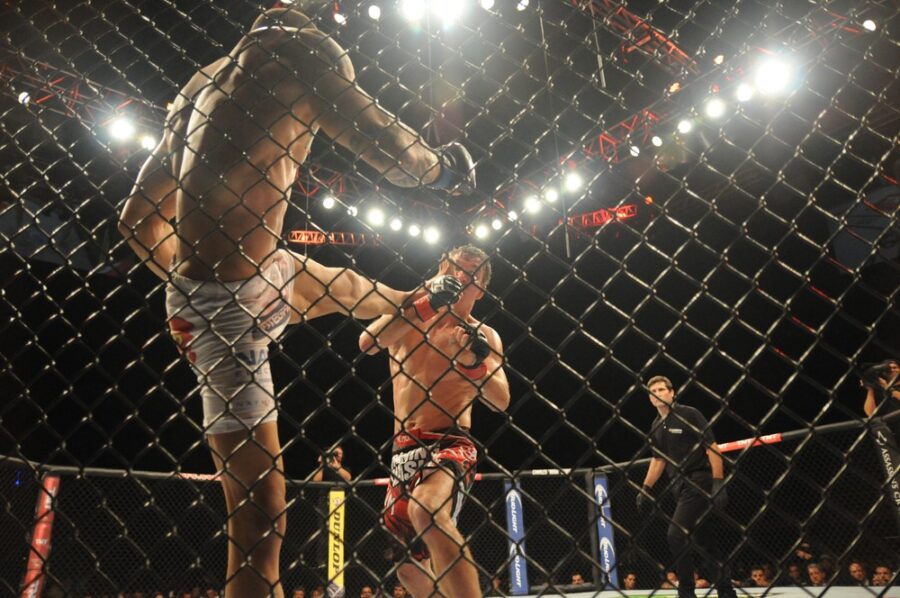
A UFC match has been pulled from the fight card having faced scrutiny over suspicious online sports betting.
UFC Chief Executive Dana White is reported to have received a call from the promotion’s gaming integrity service, according to MMAWeekly.com.

The fight featuring Michael Johnson and Alexander Hernandez was quietly canceled on Saturday due to a sports betting irregularity being picked up.
White confirmed at a press conference that he had received a tip from a gaming integrity service that led him to pull the match immediately.
However, White did not confirm the nature of the irregularities or whether a fighter was suspected of causing them.

White said he is working to ensure that all fighters on the UFC roster know he will prosecute anyone caught rigging fights, and has contacted the FBI to ensure they crack down on those attempting to rig the system.
The Saturday night controversy follows a similar incident involving Isaac Dulgarian’s fight against Yadier del Valle last year. Strange betting activity was flagged when Dulgarian’s odds went up from -250 to -154 just before the fight.
Dulgarian was promptly cut from the UFC’s roster, as commentators expressed disbelief as to how he could have lost the fight.

Last year, UFC announced, along with Zuffa Boxing parent company TKO holdings, a partnership with Polymarket to introduce real-time prediction markets to its live sports.
Abi Bray brings strong researching skills to the forefront of all of her writing, whether it’s the newest slots, industry trends or the ever changing legislation across the U.S, Asia and Australia, she maintains a keen eye for detail and a passion for reporting.

Dig Deeper
Related stories



The Backstory
Why this cancellation reverberates beyond one card
The late scratch of a UFC fight over suspicious wagering is more than a scheduling wrinkle. It spotlights the collision of surging real-time betting and a sport built on competitive credibility. UFC chief Dana White said a third-party integrity alert prompted the decision and that he contacted federal authorities. That follows last year’s oddsmaker shock tied to Isaac Dulgarian’s bout, where a dramatic line move preceded an outcome that drew disbelief and cost the fighter his roster spot. These episodes underscore how fast-moving markets can flag anomalies but also how thin the margin for error is when public trust and fighter livelihoods are on the line. Regulators, leagues and sportsbooks are racing to thread a needle: expand engagement without inviting manipulation or the perception of it. The stakes are clear. If fans think outcomes or prop markets can be gamed, viewership and legal betting growth falter, sponsors get skittish and regulators push for tighter rules that can reshape business models across combat sports.
Leagues push Washington as prediction markets surge
Concerns extend well beyond the Octagon. The NBA has urged the Commodity Futures Trading Commission to move cautiously as prediction platforms expand into sports contracts. In a letter to Acting Chair Caroline Pham, the league warned that prop-style markets on player performance, officiating and injuries could outpace oversight and threaten competitive integrity. The league contrasted state-regulated sportsbooks with prediction venues that fall under a commodities framework with no sports-focused unit. The NBA’s appeal to the CFTC followed a similar warning from Michigan’s regulator and reflects a broader anxiety: if federal rules greenlight sports event contracts, state-by-state guardrails may be undermined. For fight sports, which already navigate weigh-in drama, short-notice changes and insider knowledge risks, the NBA’s posture signals a pivot point. A federal blessing for expansive prediction markets could normalize live, microlevel conjecture on athlete performance and refereeing, amplifying integrity alerts like the one that triggered the UFC cancellation.
UFC’s tech bet meets integrity headwinds
At the same time, the UFC’s corporate parent is leaning into prediction tech. TKO Holdings struck a multi-year pact with Polymarket to bring real-time prediction markets into live combat events, positioning UFC and Zuffa Boxing as first movers in pairing trading-style mechanics with fight broadcasts. The agreement promises live sentiment data and the ability for fans to buy and sell positions as momentum swings. Proponents pitch it as complementary to regulated sports betting, a second-screen tool that deepens engagement without dictating official wagering lines. Still, it raises obvious questions in light of fight-day integrity alerts. If markets react to every feint, cut or corner whisper, surveillance needs to keep pace to detect manipulation and prevent informational asymmetry from eroding fairness. Read more on TKO’s deal with Polymarket and its plan to integrate market data into live fights. The juxtaposition is stark: a sport pushing innovation to grow audience while its leaders call the FBI when trading signals flash red.
Sovereignty, state power and a legal trench war
The integrity debate is also a jurisdictional fight. A coalition of Native American tribes is backing the Ho-Chunk Nation in a bid to block prediction market contracts they argue function as unlawful sports wagering on tribal lands. Their brief supports efforts to curb offerings by Kalshi and its distribution partner Robinhood, contending the products sidestep state and tribal regimes that fund essential services. Several states have issued cease-and-desist orders as platforms argue that federal oversight shields them from state action. The tribes frame the issue as existential, warning that unregulated or federally preempted contracts siphon revenue and weaken sovereignty. That legal backdrop matters for combat sports. If federal bodies permit broad event contracts while states and tribes resist, fight promotions could face a fragmented compliance map where integrity programs must span overlapping, sometimes conflicting, rules. The latest developments are captured in coverage of the tribal coalition backing Ho-Chunk Nation against Kalshi and Robinhood.
Marketing tailwinds, reputational risk
The industry’s growth engine is powerful. UFC-linked sponsorships and game tie-ins are expanding, even as scrutiny rises. Spribe, maker of crash game Aviator, deepened its multi-year UFC marketing plan and added welterweight and middleweight contender Michael “Venom” Page as a brand ambassador to front global campaigns. UFC-branded placements have helped the title scale from 10 million to 60 million monthly players, showing how fight-night visibility converts casual viewers into gaming customers. That momentum can complicate the optics when integrity alarms sound. Fighter-led promotions blur lines between athletic identity and gaming, elevating expectations for disclosure, education and compliance. For details on the campaign and its rapid user growth, see Spribe’s partnership with UFC and Michael “Venom” Page. The message from regulators and leagues is consistent: marketing and innovation are fine, but only if controls scale as fast as engagement.
Global regulators flex to protect trust
The integrity push is not just a U.S. story. In the Philippines, national regulator PAGCOR ordered a licensee to terminate an advertising deal with an online TV show featuring sexualized content, citing a need to protect the industry’s reputation. The action followed a public complaint and an internal review that disputed some allegations but still found the ad tie-up unacceptable. PAGCOR also reiterated strict know-your-customer rules and age limits for licensed platforms and payment providers. The move shows regulators are willing to cut into marketing to defend public confidence, even absent direct evidence of match fixing or financial crime. That posture aligns with league and state unease over fast-evolving prediction products and props. Read more about PAGCOR’s enforcement decision and how reputational risk drives policy. For UFC and its partners, the lesson is clear: integrity protections, transparent data policies and rapid intervention will determine whether interactive betting augments the spectacle or overshadows it.
