


Congress stalls on betting and prediction market reform

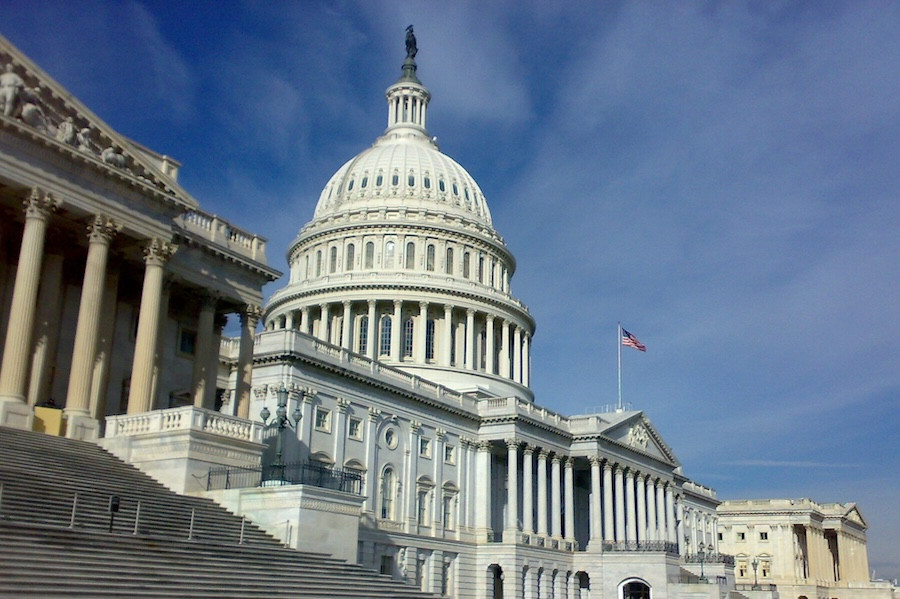
Momentum has stalled in the US Congress on plans to reform sports betting and prediction market regulations, with lawmakers admitting progress is unlikely before the upcoming midterm elections.
One of these proposed measures is the SAFE Bet Act, which is aimed at defining new minimum federal standards for online sports betting along with updated consumer protections.

The measure has not advanced in the Senate, despite bipartisan concerns over sports integrity and potential gambling-related harm, reports The Hill.
Supporters of the bill argued that online sportsbooks need stronger oversight to address risks, such as gambling addiction and corruption.
However, Senator Richard Blumenthal – one of the co-sponsors of the bill, said efforts by industry lobbyists have been a factor in the bill’s lack of progress.

“For one, these issues are relatively recent. But second, these gambling and prediction market companies are throwing their weight around here,” he said.
“They’re using their resources, lobbying, lawyers and money to try and stop us,” cited the publication.
When referring to bill opposition, Senator Blumenthal ties traditional sports betting operators – regulated by individual states and tribes, to prediction market companies – regulated at the federal level by the Commodity Futures Trading Commission (CFTC) – two very different groups with conflicting interests who are unlikely to cooperate in lobbying efforts.
Charlotte Capewell brings her passion for storytelling and expertise in writing, researching, and the gambling industry to every article she writes. Her specialties include the US gambling industry, regulator legislation, igaming, and more.

Dig Deeper
Related stories



The Backstory
Federal momentum runs into election-year politics
The stalled push in Congress to reshape oversight of sports betting and prediction markets reflects a broader problem that has been building since legal wagering expanded across the U.S.: lawmakers are trying to retrofit older regulatory systems around products that now move faster than state legislatures, federal agencies and sports integrity monitors.
The current debate centers on two markets that often overlap for consumers but sit in different legal lanes. Online sportsbooks are licensed mainly by states and tribes, with tax rules, responsible gambling mandates and enforcement varying by jurisdiction. Prediction markets, by contrast, have argued they operate as federally regulated exchanges under the Commodity Futures Trading Commission, even when their contracts are tied to sports outcomes. That split has made Congress the natural venue for a national fix, but also a difficult one. Any bill must navigate gambling policy, tribal sovereignty, state revenue, financial regulation and election-year lobbying.
The SAFE Bet Act and related proposals were framed as attempts to set minimum national standards for online sports betting, including consumer protections and integrity rules. But the policy terrain widened as sports event contracts became more visible. Lawmakers now face pressure not only from responsible gambling advocates and sports leagues but also from licensed gaming operators, tribes and prediction market companies that see federal oversight as central to their business model.
Prediction markets built a Washington presence
Prediction market firms have moved quickly to professionalize their political operation. A newly created advocacy group, the Coalition for Prediction Markets, brought in former members of Congress as it sought to keep regulation of event contracts at the federal level. The coalition named former Democratic Rep. Sean Patrick Maloney as president and chief executive and former Republican Rep. Patrick McHenry as a senior adviser, a sign that the industry expects the fight to be decided as much in Washington as in courtrooms.
That hiring push came as platforms including Kalshi and Robinhood faced state-level challenges over whether sports-linked contracts are unlicensed gambling. The companies have argued they fall under a federal commodities framework, while state regulators say sports event contracts function like wagering and should require local gambling approval. A federal judge’s decision to temporarily block Tennessee from halting Kalshi’s operations underscored how quickly these disputes can shape the market while broader questions remain unresolved.
The coalition’s arrival gave prediction markets a more formal voice against state and tribal gaming interests. As covered in the prediction market coalition’s recruitment of former lawmakers, the industry’s core argument is consistency: national products, it says, need national rules. Opponents counter that this framing allows platforms to sidestep the consumer protections, licensing fees and local controls imposed on sportsbooks.
Gaming groups push for a hard line
The licensed gambling industry and tribal gaming groups have responded by urging Congress to draw a bright line around sports event contracts. The American Gaming Association and the Indian Gaming Association have told lawmakers that such contracts are “indistinguishable from legal sports betting” and should not be allowed to expand under the label of financial products.
The concern is partly commercial. State-regulated sportsbooks pay fees, taxes and compliance costs that prediction market platforms may avoid if they remain under federal commodities oversight. But the policy argument is broader. Gaming groups say the CFTC was not designed to police gambling harms, geolocation rules, self-exclusion programs, college athlete protections or state-by-state restrictions on wager types. They also warn that contracts marketed as trading products could reach younger users without the safeguards built into gambling regulation.
Those themes appeared in industry letters seeking congressional action. In one effort, gaming representatives asked senators to block sports-linked contracts and preserve the state and tribal framework for wagering. The letter argued that prediction market platforms had created nationwide sports betting in practical terms by branding it as federally regulated trading. The campaign, described in gaming industry groups’ request for a ban on sports-event contracts, shows how the dispute has become a test of whether federal market law can coexist with gambling law when both touch the same underlying event.
A later joint push by the AGA and IGA tied the issue to cryptocurrency market structure legislation, urging Congress to prevent gambling from being offered through the CFTC. As reported in the associations’ letter on sports event contracts, the groups pointed to rapid product expansion, including parlays and potential college-related markets, as evidence that regulatory inaction could accelerate the shift.
CFTC oversight becomes the central question
The CFTC’s role is at the heart of the dispute because prediction market firms have relied on its jurisdiction to argue they are not gambling operators. That argument gives platforms access to a federal regulatory structure, but it also puts pressure on an agency built primarily to oversee derivatives markets, not sports integrity or gambling addiction.
Members of the House Agriculture Committee have begun examining whether the CFTC is equipped for the task. At a hearing, lawmakers questioned whether existing commodities law contemplated sports outcome contracts and whether Congress needs to clarify the agency’s authority. The hearing followed calls from the AGA and IGA for sports event contracts to be banned from prediction markets, as well as warnings from sports organizations about risks to athletes and collegiate competition.
The issue has drawn increased lobbying on both sides. Kalshi and gambling groups have each spent heavily to influence the debate, reflecting the financial stakes in determining whether event contracts can scale nationally without state-by-state gambling licenses. The possibility that the matter could reach the Supreme Court has added urgency. As detailed in lawmakers’ questions over whether the CFTC is fit to oversee prediction markets, Congress is no longer merely watching a regulatory novelty. It is assessing whether the agency’s mandate is sufficient for products that resemble betting to consumers, even if they are structured as financial contracts.
That uncertainty helps explain why congressional reform has slowed. A national sports betting bill alone would be complex. Combining it, explicitly or implicitly, with prediction markets forces lawmakers to decide whether they are writing consumer protection rules, closing a perceived loophole, preserving state authority or redefining the boundary between finance and gambling.
State-level casino debates show the same tensions
The federal fight also mirrors state debates over online casino expansion, where lawmakers are weighing tax revenue against regulatory capacity and social harm. Virginia offered a recent example when a bill to legalize online casinos failed in a Senate subcommittee. The proposal would have allowed each casino to offer up to three platforms, with fees attached, but concerns about retail casino effects, problem gambling and oversight helped derail it.
That debate, covered in Virginia’s stalled online casino push, is not the same as the prediction market fight, but the policy pattern is similar. Supporters argued that residents already gamble online through unregulated sites and that legalization would bring activity into a taxable, supervised system. Opponents questioned whether existing regulators could manage another major product category and whether safeguards were strong enough.
The comparison matters because it shows why Congress is struggling to impose national standards. States have built gambling systems around local choices: which products to allow, how much to tax them, who regulates them and how to fund responsible gambling services. Prediction market platforms challenge that model by offering event-based products through federal financial channels. Online casino bills challenge it from the other direction, asking state lawmakers to expand legal gambling while ensuring that oversight keeps pace.
In both cases, technology is moving faster than regulatory consensus. Lawmakers may agree that consumer protections are needed, yet disagree on who should write them. They may accept that unregulated activity is a problem, yet resist legalization or federal preemption as the solution.
Why the delay raises the stakes
Congressional inaction does not freeze the market. It leaves state regulators, federal agencies and courts to make interim decisions that can shape the industry before lawmakers settle the rules. Each injunction, enforcement action or agency interpretation can shift leverage between prediction market operators and gaming regulators. Each product expansion can make later restrictions more disruptive.
For sportsbooks and tribes, delay risks allowing competitors to build national customer bases without equivalent licensing obligations. For prediction market firms, delay creates legal uncertainty that can limit partnerships, investment and product design. For consumers, the risks are uneven safeguards, unclear dispute processes and confusion over whether sports-linked contracts are investments, wagers or something in between.
The stalled reform push therefore reflects more than congressional gridlock. It marks a fight over regulatory architecture. If sports outcomes can be traded under federal commodities law, the U.S. gambling framework may need a fundamental update. If Congress blocks those contracts or pushes them into state gambling systems, prediction markets will face a narrower path. Until lawmakers act, the market will continue to grow through litigation, lobbying and regulatory gaps rather than a settled national policy.
