


CFTC liaising with Major Sports Leagues to prevent prediction market insider trading

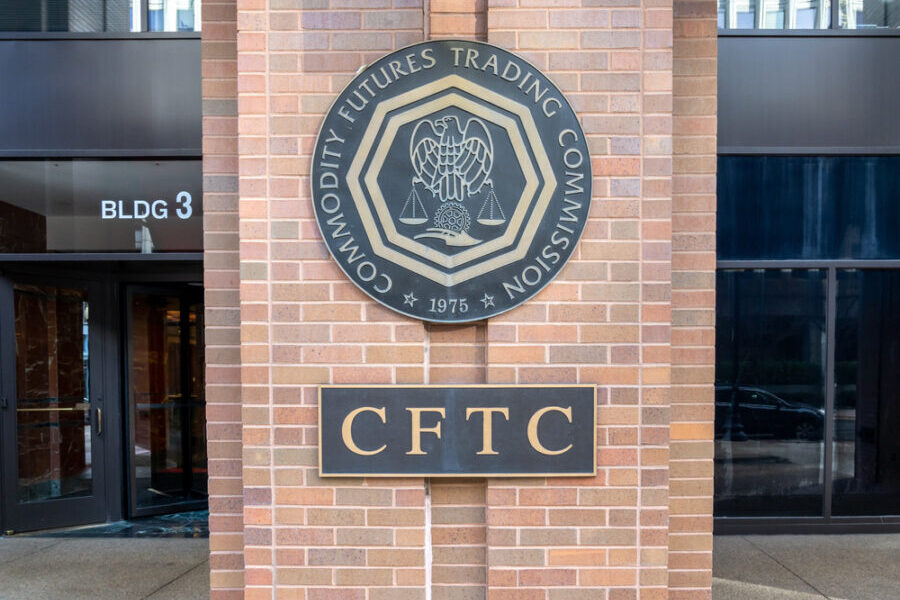
Commodity Futures Trading Commission Chairman Michael Selig has said the regulator is in talks with every major US professional sports league to strengthen oversight of sports-related prediction markets and crack down on potential insider trading.
“We’ve entered into a memorandum of understanding with Major League Baseball, and we’re in talks with all the professional sports leagues,” he told brokerage conference, FINRA, in Washington on Tuesday, according to Coindesk.

The cooperation is intended to help the regulator identify suspicious trading activity and possible market manipulation tied to event contracts offered by platforms such as Kalshi and Polymarket.
Selig’s comments come as prediction markets come under fire from both state lawmakers and the gambling industry.
In an interview with Axios this week, Selig argued that prediction markets and traditional sportsbooks are “different products, parallel regimes,” maintaining that event contracts should fall under federal derivatives law rather than state gambling regulations.

That position has intensified an ongoing jurisdictional battle across the US. This week, the Commodity Futures Trading Commission backed Kalshi in its legal fight against Ohio regulators, filing an amicus brief arguing that the state had overstepped its authority by attempting to treat sports-event contracts as unlicensed gambling products.
At the same time, more states are attempting to combat the fast-growing sector by introducing regulations.
Pennsylvania lawmakers have introduced new legislation that would impose oversight and taxes on prediction market operators amid mounting concerns about consumer protections and the risks of insider betting.

In April, Minnesota lawmakers also advanced their own measure that would ban and regulate certain markets offered by prediction market operators.
Charlotte Capewell brings her passion for storytelling and expertise in writing, researching, and the gambling industry to every article she writes. Her specialties include the US gambling industry, regulator legislation, igaming, and more.

Dig Deeper
Related stories
 2025/10/17: Kraken eyes prediction market launch with acquisition of CFTC-licensed Small Exchange
 2026/02/18: CFTC files amicus brief to keep prediction markets federally regulated
 2025/10/28: Trump nominates crypto regulator Michael Selig to lead Commodity Futures Trading Commission
2026/05/28: White House reviews CFTC prediction market proposal
2025/10/28: Trump nominates crypto regulator Michael Selig to lead Commodity Futures Trading Commission
2026/05/28: White House reviews CFTC prediction market proposal
2025/10/17: Kraken eyes prediction market launch with acquisition of CFTC-licensed Small Exchange
2026/02/18: CFTC files amicus brief to keep prediction markets federally regulated
2025/10/28: Trump nominates crypto regulator Michael Selig to lead Commodity Futures Trading Commission
2026/05/28: White House reviews CFTC prediction market proposal
The Backstory
How a policy fight spilled into the sports world
Federal oversight of prediction markets has been building toward a collision with state gambling regulators for more than a year. The Commodity Futures Trading Commission has asserted that event contracts are derivatives subject to federal law, not wagers for state gaming boards. In May, the agency reaffirmed its authority to police prediction markets after Kalshi disclosed it had sanctioned users for trading on nonpublic or influenceable information. The CFTC underscored it can pursue insider trading, wash trades and manipulation on event exchanges. That enforcement stance set the table for deeper cooperation with market operators and, crucially, with entities that control information flow and outcomes in sports.
The jurisdictional line hardened when the commission filed an amicus brief defending federal primacy over event contracts amid a wave of state actions. Chairman Michael Selig warned in an op-ed and on social media that the CFTC would challenge attempts to reclassify federally regulated swaps as illegal gambling. He amplified the point in a post on X, signaling the agency would “see you in court” if states pressed bans, a note that drew attention from market participants and regulators alike. Selig’s stance has since shaped how platforms respond to insider risk and how new entrants seek licenses.
This back-and-forth is not academic for sports. If leagues and teams share data or exert control over lineups and venues, they also sit closest to information that could tip markets. That proximity to price-moving inputs is why the CFTC’s outreach to leagues marks an escalation from policy rhetoric to practical gatekeeping.
Insider trading concerns forced new guardrails
The headline risk in event markets has been misuse of inside information. After several high-profile cases of questionable activity surfaced on social media, Kalshi and Polymarket tightened policies this spring. They introduced new restrictions that bar certain politicians, athletes and other figures with influence over outcomes from trading related contracts and added whistleblower tools to flag suspicious activity. The step aimed to close obvious loopholes yet also highlighted the challenge of screening the wide orbit of people with potential access to nonpublic data in politics and sports.
Critics said the measures fell short. Rep. Alexandria Ocasio-Cortez argued that the rules left gaps for staff, advisers and family members who could still trade on privileged information. She made her case in a public post on X, saying the updates were “not enough,” which she reiterated in a thread read widely by lawmakers and regulators. The CFTC’s own summary of Kalshi’s internal cases, including a penalty against a political candidate who traded on a market tied to his career, underscored the speed at which platforms must detect and deter conflicts.
As leagues weigh cooperation with federal regulators, they will be asked to furnish data feeds, injury reports and other signals that could reduce asymmetries while preserving team confidentiality. That is a delicate balance in a media environment where even a sideline video can move odds. Coordinated protocols on what is disclosed, to whom and when are the next test for the CFTC’s “parallel regimes” argument that separates swaps from sportsbooks but recognizes similar integrity risks.
States push back while Congress stirs
State regulators have not stood down. Nevada, New Jersey and Massachusetts have each signaled skepticism that sports event contracts are anything but wagers when tied to athletic outcomes. The debate moved from guidance to litigation as the CFTC sided with exchanges in court and promised to challenge prohibitions. Selig’s agency vowed in its amicus that it would defend its turf, and he amplified the message on X to underline the stakes.
Lawmakers are also testing the perimeter. In Pennsylvania, a new proposal would pull event markets under state oversight and levy taxes on operators. The measure, House Bill 2497, reflects mounting concern about consumer protection and the risk of insider betting as platforms expand into sports. Minnesota advanced a bill in April aimed at banning and regulating certain contracts. On Capitol Hill, a push led by Nevada’s delegation seeks to block sports event markets nationwide. Each step tightens the vise on operators that want to list sports outcomes while staying inside federal derivatives rules.
The CFTC’s talks with leagues are therefore not just about policing bad actors. They are also an attempt to show states and Congress that a federal framework can mitigate insider risk in a domain—sports—where outcomes are public but inputs are not evenly shared.
Big names move in despite the fog
Even amid legal uncertainty, market infrastructure is taking shape. In a bid to build a U.S.-native derivatives stack, Kraken bought the CFTC-licensed Small Exchange for $100 million. The company said the deal would support spot, futures and margin offerings, and a spokesperson confirmed interest in event markets. The acquisition, detailed here, signals crypto-native firms want the credibility and access that federal licenses confer and see prediction markets as a growth lane if rules stabilize. Read more on Kraken’s plan to enter the space with its Small Exchange acquisition.
Others are lining up. Daily fantasy operators are pursuing National Futures Association approvals. A sports betting exchange revived a CFTC application to become a designated contract market. Each move bets on federal pathways staying open even if states resist. The league-CFTC cooperation described in the main story adds a missing piece: buy-in from rights holders who can validate data and integrity processes without endorsing betting.
A regulated on-ramp for sports contracts
Startups are also seeking to match venue with clearing. ProphetX applied to register both as a designated contract market and a derivatives clearing organization, pitching what it says would be the first U.S. exchange and clearinghouse built for sports event contracts. The firm’s filing describes an RFQ parlay tool meant to bring institutional trading mechanics to multi-leg sports exposures. The timeline runs through 2026 as it works with the commission on safeguards. Details on the dual bid are here: ProphetX seeks CFTC approval.
Whether those plans advance may hinge on the CFTC’s success knitting a compliance net with the leagues. If exchanges can demonstrate robust insider controls, real-time surveillance and clean data provenance, the commission’s case for exclusive jurisdiction strengthens. If not, states will point to gaps as evidence the products function as unregulated sports betting.
The stakes are clear. Event markets promise hedging tools for media, advertisers and even teams exposed to playoff-dependent revenues. They also invite abuse if material information remains concentrated in front offices and locker rooms. The CFTC-league détente is the latest attempt to square that circle before courts or Congress do it for them.
